Archive for November, 2010

28
Nov

Happy First Sunday of Advent

   Posted by: Dorothea Preis    in News

Today marks the first Sunday of Advent and we would like to take the opportunity and wish all our readers a very happy advent period.

Tags:

27
Nov

The December General Meeting

   Posted by: Julia Redlich    in Meetings

This is just to remind you about our last meeting for 2010 on Saturday, 11 December; at the usual time of 14h00 at the Sydney Mechanics School of Arts, 280 Pitt Street, Sydney.
Dorothea Preis will be talking about Medieval Pottery, Judith Hughes has something very interesting to test your skills, and there will be something light-hearted from myself.  And, of course, we shall enjoy our usual Christmas celebration tea.  Judith has suggested that those of you bringing a plate of something delicious to enjoy might like to keep plates to a modest size rather than present a plethora of platters!

Another Christmas item will be a Bring and Buy Stall with our usual suggestion of “bring two and buy two” – which of course doesn’t prevent you bringing more and buying more! This is a great opportunity to find small, useful gifts for guests – invited and unexpected – who visit you at Christmas time.

The next Affinity Newsletter will be sent out in the New Year when we will have more information for our activities in 2011.

The committee hopes to see many of you on 11 December.

Tags:

26
Nov

Book Review: David Santiuste, Edward VI and the Wars of the Roses

   Posted by: Dorothea Preis    in Bookworm

A new contribution for the bookworms among our readers:

David Santiuste, Edward IV and the Wars of the Roses.  Pen & Sword Books Ltd, 2010.  ISBN   9781844159307 (Hardback)

As the title indicates the aim of this book is not to offer a comprehensive biography of Edward IV, but as the author says “to illuminate Edward’s personal role during the Wars of the Roses”.  So the focus is on Edward’s military career.   I have to admit military matters do not normally interest me much, but I found this book very rewarding and interesting. Read the rest of this entry »

Tags: , ,

24
Nov

The View from Scotland

   Posted by: Win Tonkin    in Quotes

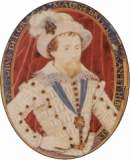
At our last general meeting we had the pleasure of listening to Win’s fascinating talk on aspects of Scottish history.  She used pictures from the 2003 Historic Scotland Calendar to illustrate her talk.  The calendar also contains for each month a quote from James VI of Scotland / James I of England, which we all found very interesting.

James was born on 19 June 1566 at Edinburgh Castle.  After his mother Mary Queen of Scots was forced to abdicate in his favour when he was thirteen months old, on 24 July 1567, he became King James VI of Scots.  He gained full control of the government in 1581.

In 1603 he succeeded Elizabeth I, who died without issue, as King James I of England.  Both countries remained legally separate, but were ruled by the same monarch. Read the rest of this entry »

Tags:

23
Nov

Sensational find at the Towton Battlefield

   Posted by: Dorothea Preis    in News

Sensational find at the Towton Battlefield

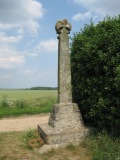
Towton Cross

Sensational find at the Towton Battlefield

The Battle of Towton was fought on Palm Sunday 29 March 1461 between Edward IV’s Yorkists and the Lancastrians fighting for Henry VI.  The weather was atrocious, very cold with wind and snow.  The Yorkists won a decisive victory, securing the throne for Edward IV, however at huge cost of lives.  It is estimated that up to 28,000 soldiers were killed on a single day, approx. one per cent of the English population at the time, which makes it one of the bloodiest battles to ever take place on English soil. Read the rest of this entry »

Tags: , , ,

22
Nov

John Rous on Richard III as Builder

   Posted by: Dorothea Preis    in Quotes

Richard and his family (from The Rous Roll)

We have recently looked at a few of the collegiate churches founded by Richard while Duke of Gloucester or later as Richard III and will continue with a few others.

One chronicler who tells us about this is John Rous (1411-1491). Rous spent most of his life under the patronage of the Beauchamps and – after the marriage of Anne Beauchamp to Richard Neville (the “Kingmaker”) – the Nevilles.   During Richard’s reign Rous wrote The Rous Roll, a history of the Earls of Warwick, which is full of praise of Richard, the son-in-law of Richard Neville.

Once Henry Tudor was king he changed his tune completely and went on all out attack in his Historia Regum Anglie (History of the Kings of England).  This is origin of the legend that Richard’s mother was pregnant with him for two years and when he was born he had teeth and shoulder-length hair.  He also accuses him of personally killing Henry VI and poisoning his wife.

Unfortunately for Rous, copies of both texts have survived, which brought him “the distinction of being the most despised of the chroniclers”.  However, even among all the accusations of his later work, he sometimes can’t help himself and praises Richard, like in this passage where he talks about Richard’s building programmes:

This King Richard was praiseworthy for his building, as at Westminster, Nottingham, Warwick, York, and Middleham, and many other places, which can be viewed. He founded a noble chantry for a hundred priests in the cathedral of York, and another college at Middleham. He founded another in the church of St. Mary of Barking, by the Tower of London, and endowed the Queens’ College at Cambridge with 500 marks annual rent. The money which was offered him by the peoples of London, Gloucester, and Worcester he declined with thanks, affirming that he would rather have their love than their treasure.

I would not have thought that a Richard who would rather have his subjects’  “love than their treasure” fitted in well with the Tudor world view.  This is hardly a sentiment that Henry VII, with whom Rous wanted to ingratiate himself at that time, would have shared.

Bibliography:

Antonia Gransden, Historical writing in England, Volume 2. Routledge, 1982.  ISBN 978-0-415-15125-2, pp.309-316

Jeremy Potter, Good King Richard?  An Account of Richard III and his Reputation.  Constable, London, 1994 (pbk).  ISBN 0 09 468840 0, p.88 (incl. quote from History of the Kings of England)

Tags: , , ,

20
Nov

John Morton by Cresacre More

   Posted by: Dorothea Preis    in Quotes

While researching something else I recently came across Cresacre More’s biography of his great-grandfather Thomas More.  His Life of Sir Thomas More was probably first published in 1631.  This is what he has to say about his ancestor’s mentor, John Morton, who was Bishop of Ely during the reign of Richard III:

… the most worthy prelate that then lived in England, both for wisdom, learning and virtue, whose like the world scarce had, Cardinal Morton, archbishop of Canterbury, and lord high chancellor of England, whose grave countenance and carriage was such that he easily allured all men to honour and love him: a man, as Sir Thomas More describes him in his Utopia, of incomparable judgment, a memory more than credible, eloquent in speech, and, which is more to be wished in clergymen, of singular wisdom and virtue; so that the king and the commonwealth relied chiefly on this man’s counsel, as he by whose policy king Henry the seventh both got the crown of England from Richard the usurper, and also most happily procured the two houses of Lancaster and York to be united by marriage.

This glowing report is a masterpiece in what is being left out.  When we are told that John Morton’s “grave countenance and carriage … easily allured all men to honour and love him”, I can think of several people, who have taken me in by their air of seriousness and reason which hid a very calculating mind.  It can be a very useful tool in getting other people to do what you want.  Interesting that Richard of Gloucester did not fall for the “allure” and did not trust Morton.

Morton was certainly “eloquent in speech”, as he is usually credited with talking Henry Stafford, Duke of Buckingham, into taking part in the 1483 rebellion.

No doubt “the king and the commonwealth relied chiefly on this man’s counsel”, when it came to devising ways of increasing tax revenue.  And we never doubted that he was had something to do with getting the crown for the usurper Henry Tudor.

Notes:

Cresacre More, The Life of Sir Thomas More with a Biographical Preface, Notes and other Illustrations by the Rev. Joseph Hunter.   William Pickering, London, 1828

At Google Books:  http://books.google.com.au/books?id=I6YEAAAAYAAJ&printsec=frontcover&dq=The+Life+of+Sir+Thomas+More&hl=en&ei=PtvlTMG-FoLSuwOG2KjCCA&sa=X&oi=book_result&ct=result&resnum=2&ved=0CC4Q6AEwAQ#v=onepage&q&f=false

Information on Cresacre More:  Andrei Volgin, Dictionary of National Biography: Volume 38. Milman – More.  Adamant Media Corporation, 2001. ISBN-13: 978-1402170652, p.448

Tags:

19
Nov

The 2011 Convention

   Posted by: Dorothea Preis    in News from Other Branches

The next Australasian Convention will be hosted by the Victoria Branch and will take place from 5 to 7 August 2011 at the Victoria Hotel, 215 Little Collins Street, Melbourne.  You can find all the  information and the registration form on their branch website.  It promises to be an interesting and entertaining weekend and as always it will be a great opportunity to catch up with old friends and to make many new friends.

The Australasian Conventions (for more info on past conventions click here) are held every second year.  Since the first one in 1997 our they have become the favourite feature in the calendar of Australasian Ricardians and their friends.  All that you need to bring along is interest in the period, no specialised knowledge is required.  Do come along for a fascinating weekend!

Tags:

14
Nov

George Bernard Shaw on Shakespeare’s Richard III

   Posted by: Julia Redlich    in Quotes

During a cleanup the other day I was debating whether to throw out theatre programmes and found this.  It is from the Bell Shakespeare production of Richard III in 2002.

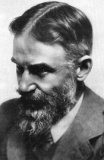
The world being yet little better than a mischievous schoolboy, I am afraid it cannot be denied that Punch and Judy holds the field in the most popular of dramatic entertainments.  And of all its versions, except those which are quite above the head of the man in the street, Shakespeare’s “Richard III” is the best.  It has abundant devilry, humour and character, presented with luxuriant energy of diction in the simplest form of blank verse.  Shakespeare revels in it with just the sort of artistic unconscionableness that fits the theme.  Richard is the prince of Punches, he delights Man by provoking God, and dies unrepentant and game to the last.  His incongruous conventional appendages, such as the Punch hump, the conscience, the fear of ghosts, all impart a spice of outrageousness which leaves nothing lacking in the fun of the entertainment, except the solemnity of those spectators who feel bound to take the affair as a profound and subtle historic study.

George Bernard Shaw in December 1896, after a performance at London’s Lyceum Theatre of Shakespeare’s play.

Tags:

12
Nov

Hatfield, Hertfordshire

   Posted by: Dorothea Preis    in Ricardian Places

Hatfield, Hertfordshire

Hatfield, Hertfordshire – History in Reverse

This continues my quest to discover a Ricardian or Yorkist connection to places in Hertfordshire.  Hatfield was fairly high on my agenda as I spent a year as a foreign language assistant teaching German at two schools, one of which was in Hatfield, in 1980/81.

After arriving on a Saturday evening in late August 1980, our first visit the next day was to Hatfield House.  As the first thing you see is the latest building on the site, this story will be going chronologically backwards. Read the rest of this entry »

Tags: , , ,