29
Aug

29 August 1479

   Posted by: Dorothea Preis   in Ricardian Calendar

Treaty of Picquigny between Louis XI of France and Edward IV, Edward IV and many of his nobles were paid a ‘pension’ to return to England and not to take up arms against France again in his claim to the French throne.  Richard Duke of Gloucester (later Richard III) is said to have opposed the treaty and refused the pension.

Tags: , ,

25
Aug

25 August 1485

   Posted by: Dorothea Preis   in Ricardian Calendar

Execution of William Catesby by Henry Tudor.  Catesby was Chancellor of the Exchequer under Richard III and Speaker of the House of Commons of the Parliament of 1484.  He fought for Richard at the Battle of Bosworth and was one of very few men of note who were executed afterwards.  It has been suggested that he expected a different treatment from the Stanleys because in his will he asks them “to pray for my soul as ye have not for my body, as I trusted in you.”

Tags: ,

25
Aug

25 August 1482

   Posted by: Dorothea Preis   in Ricardian Calendar

Death of Margaret of Anjou at Anjou, France

Tags: ,

23
Aug

Treason

   Posted by: Jane Roberts   in Medieval Miscellany

Another Scrabble talk in form of a PowerPoint presentation, this time on the letter “T”.

Treason doth never prosper, what’s the reason?
For if it prosper, who dare call it treason
.*

* Sir John Harington, Epigrams

Origins in Roman and Germanic Law
•    Treason Laws in England in the later middle ages had roots in Germanic and Roman Law
•    German – betrayal or breach of trust by a man against his lord (treubruch).  Direct lord rather than hostility towards the king
•    Roman – insult to those with public authority (maiestas – greatness, dignity, majesty)
•    Concepts that were inherited from the Roman concept:

  • plots as well as open acts
  • trials after death
  • damnation of memory
  • confiscation of property
  • denial to heirs of inheritance

Early Anglo-Saxon laws
•    First reference to treason appears to be in law of Alfred the Great.
•    Separated plotting against lord from plotting against king.

Achievement of absolutism
•    Notion of the king as supreme in temporal matters within a kingdom (emperor)

  • Fealty as compared to obedience
  • Fealty was reciprocal
  • Homage – tacit acceptance of ‘right’ to disobey

•    The Law of Treason in England in the Later Middle Ages – J.G. Bellemy

Treason Act 1351 (25 Edw. 3 St. 5 c 2)
•    Codification of the common law.
•    High Treason

  • Disloyalty to the Sovereign
  • Penalty – hanging, drawing and quartering (man) or drawing and burning (woman)
  • Property  – to Crown

•    Petty Treason

  • Disloyalty to a Subject  (murder of a superior)
  • Penalty – hanging and drawing (man) or burning (woman)
  • Property – immediate Lord

•    “when a man doth compass or imagine the death of our lord the King, or of our lady his Queen or of their eldest son and heir; or if a man do violate the King’s companion, or the King’s eldest daughter unmarried, or the wife the King’s eldest son and heir; or if a man do levy war against our lord the King in his realm, or be adherent to the King’s enemies in his realm, giving to them aid and comfort in the realm, or elsewhere, and thereof be probably attainted of open deed by the people of their condition:. . . and if a man slea the chancellor, treasurer, or the King’s justices of the one bench or the other, justices in eyre, or justices of assise, and all other justices assigned to hear and determine, being in their places, doing their offices: and it is to be understood, that in the cases above rehearsed, that ought to be judged  treason  which extends to our lord the King, and his royal majesty”
•    Last used to prosecute William Joyce in 1946 for collaborating with Germany in WWII.

Richard III
•    October 1469 – Constable of England

  • Treason involving raising war against Sovereign

•    April 1483 – Actions of Earl Rivers and Richard Grey not treason – Richard not then Protector
•    Compare Hastings in June 1483

Henry VII
•    Battle of Bosworth – 22 August 1485
•    Henry VII backdated his reign to 21 August 1485
•    Consequently Henry could charge with treason those who fought for Richard.
•    Treason Act 1495  (11 Hen. 7, c. 1)
–    An Acte that noe person going wth the Kinge to the Warres shalbe attaynt of treason

Tags:

22
Aug

22 August 1485

   Posted by: Dorothea Preis   in Ricardian Calendar

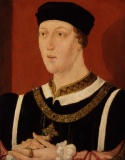
On this day we remember King Richard III, who fell at the Battle of Bosworth, and those who were faithful to him.

Loyaulte me lie.

Illustration on the left:  King Richard III,  © Andrew Jamieson, www.medieval-arts.co.uk

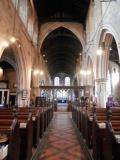
on the right:  The Church of St James, Sutton Cheney, where the Richard III Society commemorates King Richard III in its annual memorial service in August. It is said that Richard III heard his last Mass at this church.


Tags: , ,

21
Aug

Heaven & Hell in the Late Middle Ages

   Posted by: Xavier de Saint Simon   in Medieval Miscellany

The following was presented as a PowerPoint presentation as a Scrabble talk for the letter – yes, you guessed it! – “H”.

Questions?
•    What did the church have to say about those concepts?
•    How did the laity imagine heaven and hell?
•    How the great schism influenced the system of beliefs?
•    Who went to heaven and who went to hell?
•    How did those concepts influence political decisions?
•    What other concepts were available?
•    Should Richard III have been afraid to where he would end up in the after life?
•    Should Henry the VII have been afraid to where he would end up?
•    Could you choose where you ended up?

What did the church have to say about those concepts?
•    At the core of church doctrine as to where individuals will go in the afterlife.
•    Solemn offering of liturgy more important than personal religion.
•    Coming out of the grand schism, the papacy is reclaiming moral authority in triumphant ways.
•    Recognised the existence of purgatory officially at the Second Council of Lyon (1274) and the Council of Florence (1438–1445).
•    All are accountable to punishment or salvation until the last judgement when all will be saved except the pope whose automatic sanctity should save him de facto?

How did the laity imagine heaven and hell?
•    Those were physical locations in the sky and underground.
•    They were very real!
•    Unquestioned existence
•    Every life decision had to be weighed with this two afterlife options.
•    Indulgences the only respite?
•    Importance of relics and helping the church for redeeming

How the great schism influenced the system of beliefs?
•    Although still very powerful and respected, the church after the great schism has created the germ for dissent.
•    The multiplication of indulgences left the poor and rich question their value.
•    The church doesn’t know it yet, but it has offered the future reformers all the weapons they need to undermine its power.
•    Helped to start heresies (Wycliff’s lollards)

Who went to heaven and who went to hell?

To Heaven:
•    The meek
•    The good kings
•    The monks
•    The pope?

To hell:
•    The rich
•    The bad kings
•    The bad priests
•    The pope?

How did those concepts influence political decisions?
•    Religion was always a part of political intrigue and decision.
•    Any ruler needed tacit church approval to exert its power.

What other concepts were available?
•    Past heresies did not survive.
•    Closest heresy was from John Wycliff who created the Lollard movement.
•    The concepts of heaven and hell are still ever present in their doctrine, just the church’s role and some dogma such as transubstantiation are questioned?

Could you choose where you ended up?
•    The church accommodates the rich with indulgences and reassures the poor by promising heaven.
•    The importance of donations to the church in exchange of salvation if you could not have a perfect Christian life

Points for Discussion
•    Should Richard III have been afraid to where he would end up in the after life?
•    Should Henry the VII have been afraid to where he would end up?

Tags:

19
Aug

The Union of the Hanseatic Merchants

   Posted by: Leslie McCawley   in Medieval Miscellany

The following is the first in our collection of Scrabble speakers at our branch’s general meeting on 14 August 2010.

Introduction

A few months ago, when as a Scrabble Speaker volunteer I drew the letter “U”, I must admit I had no idea what to do a talk on – I could not think of even one Ricardian topic that started with the letter “U”!

But to my great relief our branch’s social secretary, Kevin Herbert, kindly came to my rescue with many suggestions, one of which was the Union of the Hanseatic Merchants, and another was the city of Utrecht.

The Union of the Hanseatic Merchants caught my imagination because Doug and I had, some years back, read a historical fiction series by Dorothy Dunnett, The House of Niccolo [i], which featured several Hanseatic captains’ derring-do on the high seas – and I was eager to learn more of the real history of the organisation.

I was also interested to know how the Hanseatic Union impacted the England of Richard III. Thank you, Kevin! You were a life saver.

Foundation of the Hanseatic League in Hamburg, c. 1241

Origins

Hansa is the old, High German word for fellowship, league or union. The Hanseatic Union was first formed in the middle of the 12th century by German (I use the word loosely since Germany did not yet exist) seafarers and merchants to lend each other mutual aid, and to protect themselves from pirates, Vikings and highwaymen as they travelled on their northern European trade routes by land and sea.[ii]

This was at a time in which there were no national navies to protect such merchants or their cargoes while in transit. There were also no authorities whose responsibility it was to regulate tariffs and trade practices, and few ports had any authorities to oversee their orderly use; people were on their own.

These enterprising German merchants chose to band together to negotiate trade agreements, provide protection for their ships’ personnel and cargo, and to make the ports safer for use by assuring proper maintenance was carried out.

The Connection with Richard III?

Some knowledge of the history of the Hanseatic Union is of interest to us as Ricardians because the Union monopolised all commodities being traded during the era of Richard III, and controlled the sea routes around England, as well as with all of England’s northern trading partners.

When Cecily Neville sent her sons Richard, Duke of Gloucester and his younger brother, George, Duke of Clarence, across the English Channel to the city of Utrecht for safe-keeping after their father Richard Plantagenet, Duke of York, was killed at the Battle of Wakefield in December 1460, the boys were taking refuge in an important Hanseatic city of nearly 200 years standing.

Although at that time they were still children, Richard and George would have learned about the mercantile practices and power of the Union as they grew up, and may have observed the extent of the Hanseatic fleet of ships as they arrived in and departed from Utrecht.

Background

The first attempts at union linked the commercial centre of Lübeck, and several other German towns, but the advantages were quickly noted and taken up by other German towns along their routes – at last encompassing over 100 cities throughout the northern seas, and as far east as the current day Estonia, Latvia and Lithuania. (The actual number differs according to the source.)

The Extent of the Hanse, c. 1400.

At its peak, the Hanseatic Union merchants secured the control of trade over the entire North Sea and Baltic Sea Regions, and hundreds of miles up the inland rivers of northern Europe and the Low Countries.

When Bruges joined the Union it became its most powerful city, as it was the major trade centre of all Europe in its heyday.

The products they transported were generally various grains, flax for sail-making, hemp for ropes, timber, wax, amber, furs, leather, salt herring and cod.[iii]

Though Hansa relations were primarily economic in nature, the League became very powerful both politically and in military might during the 14th Century. This was when the League waged war against Denmark and won.

The Hanseatic Legislative Assembly

A Hanseatic Diet, or legislative assembly, was established in 1284, but did not actually begin meeting regularly until the year 1356 – about 70 years later! The Diet concerned itself with negotiations with foreign towns and rulers, ratification of trading agreements, blockades, and financial and military issues.

However, some scholars consider the Diet was nothing more than a “meeting” because the Hanseatic Union had no executive officers and no common council.

And, as the scholars point out, the Hanseatic Union deliberately (and rather cagily) avoided classifying itself as a society or corporation, in order to avoid legal action against it. To quote one author:

After having deteriorated since the middle of the 15th century, English relations with the Hansa reached their lowest point when, in the summer of 1468, English ships were seized in the sound by Danish vessels.

King Edward IV straight away imprisoned the Hanseatic merchants in London and confiscated their goods in order to compensate the English merchants. The Hansa, he explained, was a society, cooperative or corporation, originating from a joint agreement and alliance of several towns and villages, being able to form contracts and being liable as joint debtors for the offences of single members.

In the Hanseatic reply the Lübeck syndicate stated that the Hansa was neither a society nor a corporation, it owned no joint property, no joint till, no executive officials of their own; it was a tight alliance of many towns and communities to pursue their respective own trading interests securely and profitably.

The Hansa was not ruled by merchants, every town having its own ruler. It also had no seal of its own, as sealing was done by the respective issuing town. The Hansa had no common council, but discussions were held by representatives of each town. There even was no obligation to take part in the Hansa meetings and there were no means of coercion to carry through their decisions. So, according to the Lübeck syndicate, the Hansa could not be defined by Roman law and was not liable as a body.[iv]

It was reported that when the King Edward IV’s men went to arrest the Hanseatic merchants, the foreigners’ true identities were tested by whether or not they could pronounce “bread and cheese” without a German accent!

Despite this action by Richard’s older brother, in general the English kings found it beneficial to support the Hanseatic Union in exchange for their support against the French.

The English merchants and the Parliament, however, resented the many Hanseatic privileges.

Despite their objections the relationship had precedence, for a Hanse of German merchants had concluded a treaty with Henry II of England as early as 1157 to be allowed to trade at fairs  throughout the country.[v] From Richard I they had purchased their freedom from owing certain tolls throughout England some years later.

It was at the height of its prestige that Richard III granted preferential trade status to the Union, and for a century afterwards there was great prosperity for the traders.

Overall the Union was a force for good: it spread new centres of trade and civilisation everywhere it went: it contributed to the development of agriculture, improved commerce, perfected and upheld a standard of weights and measures, constructed canals, lighthouses and highways. And it had such an impressive navy that many sovereigns sought alliances with the Union.

Kontors, the term for these German merchant trading posts, were situated in various regions with some of the most prominent being in Russia, the Island of Gotland (Sweden), Bergen (Norway), Bruges (Flanders) and London (England). The merchants were usually confined to their own areas, with minimal interaction with the public except for trade.

The German Hansa merchants living in England were referred to by the English as “Easterlings”, since they were from the East. In London the Easterlings lived and traded at what was called the Steelyard. The Easterlings’ currency and trade practices were so dependable that, according to some sources, that is the origin of the term “sterling”, meaning quality. As in Easterling.

Hans Holbein, Georg Gisze, a German merchant in London – an Easterling (1532)

The eventual decline of the Hanseatic Union was the result of a number of factors: the growth of Dutch and English naval power, the discovery of the Americas, the founding of a new trade route to India, and the rise of sovereign states throughout other parts of Europe.

Oddly enough, the final revocation of the Hansa designation for the Hanseatic Cities in Germany occurred only in 1934 under the Nazi regime – but on Wikipedia I learned that Hamburg, Bremen and Lübeck still proclaim themselves officially to be „free and Hanseatic cities‟.

The Holstentor in Lübeck

And I don’t blame them for being proud of their heritage, as the Hanseatic Union was a very impressive medieval organisation.

And it is not forgotten. I found online that there are several board games featuring the Hanseatic League available, and that in the US State of Florida keen re-enactors appear as Hanse merchants at medieval and renaissance fairs around the southern USA.

Summing Up

The Hanseatic League’s power in the economy of England in the 12th through 17th centuries would have been ubiquitous, the daily reality faced by all the monarchs. It is, therefore, worth our while to learn more about them in our mission to understand the world of Richard III.

Notes:
i    http://en.wikipedia.org/wiki/The_House_of_Niccol%C3%B2

ii    http://en.wikipedia.org/wiki/Hanseatic_League

iii   Kurlansky, Mark. Cod: A Biography of the Fish that Changed the World

iv   Postel, Prof. Rainer. The Hanseatic League and its Decline.  http://www2.hsu-hh.de/hisfrn/hanse.html,  accessed 5 August 2010

v     Medieval Sourcebook Online http://www.fordham.edu/halsall/source/1194hanse-koln-london.html

Tags: ,

17
Aug

17 August 1473

   Posted by: Dorothea Preis   in Ricardian Calendar

Birth of Richard of Shrewsbury, second son and sixth child of Edward IV and Elizabeth Woodville, at Shrewsbury.

Tags: , ,

16
Aug

It’s not size that counts!

   Posted by: Dorothea Preis   in News

A 36ft (approx. 11 m) long sign has been erected at Bosworth Battlefield saying “Bosworth 525”.  It is supposed to draw attention to the Anniversary Re-enactment of the Battle.  The sign is so large that it can be seen from a mile away.

This year marks the 525th anniversary of the Battle of Bosworth in which King Richard III was killed on 22 August 1485.

It is questionable whether such a Hollywood style sign is appropriate to mark the death of a person, whatever your personal view of him.  It creates the image of a Disney World extravaganza rather than an interpretation of an actual battle based on factual evidence.

Source:  BBC Leicester

Tags: ,

14
Aug

14 August 1479

   Posted by: Dorothea Preis   in Ricardian Calendar

Birth of Catherine of York, ninth child and sixth daughter of Edward IV and Elizabeth Woodville, at Eltham Palace, Greenwich.  Married to William Courtenay, 1st Earl of Devon.  After his death on 9 May 1511 she took a voluntary vow of chastitity.  Died on 15 November 1527 at Tiverton Castle, Devon.

Tags: , ,