Our committee decided a while ago that our branch logo needed to be brought into the 21st century. According to our old logo we were the “Sydney Branch”, but it has been a long time since we only had members from Sydney. Thanks to Judith we were in contact with Terry who designed our new artwork. After a lot of consultations and discussions, we can at long last show you our new logos. Hope you like them, we certainly do!
Archive for November, 2011
In the ‘Spectrum’ supplement to today’s Sydney Morning Herald and The Age in Melbourne there is an article by Elissa Blake about the Old Vic production of Shakespeare’s Richard III, which is coming to Sydney the coming week. Should you have a print copy of either paper, you can have a look, otherwise there are links below.
For her article Elissa wanted to get a variety of views of the role. She talked to John Bell, the artistic director of Bell Shakespeare, who had played the role three times; to Ewen Leslie, who played Shakespeare’s baddie in last year’s production of the Melbourne Theatre Company; and Pamela Rabe, who played Richard III in the Sydney Theatre Company production of The War of the Roses in 2009.
However, last but not least, she talked to one of the “enthusiasts in the worldwide Richard III Society”. Elissa interviewed me by phone about 10 days ago. It was just a short conversation, but obviously I tried to cram as much information as possible into it – needless to say that only a small part made it into her article. We welcome Elissa’s interest and appreciate that she was prepared to look past the theatrical Richard to the real Richard. And we feel honoured that she left us with the last word in such an illustrious group of interviewees.
You can find the article here:
Sydney Morning Herald
The Age
Tags: NSW Branch, Richard III, Shakespeare
We asked our new branch member, Barbara Gaskell Denvil, about her personal background in writing Satin Cinnabar, wonderful novel set in Ricardian times. Here is her answer:
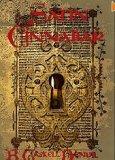
I’ve always been attracted to English medieval history, being taken around castle ruins as a child, smelling that old damp mystery and the insistent intrigue of long forgotten secrets. So I read a considerable amount on the subject over the years but it wasn’t until a comparatively short ago when I wanted to start writing full length novels, that I became more consistently involved and studied in greater depth.
I come from a literary family (my sister is an author and my father was a playwright) and so started young myself, working for BOOKS AND BOOKMEN as a critic and publishing numerous short stories and articles. But after a tortuous marriage and producing three daughters, I needed escape. I explored the Mediterranean and its islands for many years but when my much loved partner died, I looked to escape again. Perhaps I am simply dedicated to escapism. Hence Australia (I am half Australian, half British) and the call of the novel.
Medieval England was the inspiration I needed and so once again I picked up my researches. Like so many Ricardians, I actually delved into the latter half of the 15th century after falling for the charismatically dastardly Richard of Shakespeare’s imagination. The wild exaggerations apart, I was quite prepared to believe in a ruthless king who did anything for power and deserved his ignominious end. Not that I was in favour of Henry Tudor’s usurpation I hasten to add, for my reading had already shown him to be a coldly calculating and devious creature who I did not warm to at all. But – shamefully – my researches up until then had not given a single clue as to Richard’s real character, and that Tudor propaganda continues to reign 500 years later is an absolute disgrace. Hail the Richard III Society.
Back to the point! I was looking for a delightfully evil king but I was soon disappointed. The man I discovered, even in those books which despised and insulted Richard, was a person of responsible authority, a man who lived according to high standards, a man who respected his wife (whether or not there was any genuine romance) and who – if indeed he usurped the crown – did so for very good reasons. Then I moved on to Paul Murrey Kendall, and the usurping, murdering hunchback of outrageous villainy was lost to me forever.
So I did not choose my opinion – the truth of Richard’s character was forced on me through my researches and now this much maligned king heads the very short list of my historical ‘heroes’ and the only one who was possibly heroic in fact.
SATIN CINNABAR is a very small, very indirect tribute to the man I now so greatly admire, but my story is based more especially in the medieval London which fascinates me so much. I do not claim to be an historian or expert of any kind, but I know a good deal of what it was like to live then, and I have never read another book which attempts to bring that teeming, suffocating, wayward atmosphere to life. I have also long been haunted by the great battles of history, and the incredible toll they took not just on those who had to fight them, but on the relatives left behind, the ruined countryside, and the wandering shadows left to trouble men’s dreams. If ghosts do indeed exist, then what must have tramped across England’s battered pastures for so many long wretched years? We have recently come to understand something of the mental anguish now experienced by men who have witnessed appalling suffering in war. How much more did simple men feel 500 years ago when the cause they fought for was barely understood, and when they stood face to face with a neighbour, hacking desperately at his face as he hacked at yours? Surviving such butchery must have been the cause of thousands of lifetimes haunted by a hundred thousand nightmares. So that is where I began my book, during the aftermath of Bosworth, and the misery it spread then and afterwards.
But this book is no tragedy. Certainly many historians accept that the people of the past thought entirely differently to us, being influenced principally by the standards of the time, the habits of a backward society and of a domineering church. But as a good reading of more down to earth contemporary writing supports, I believe that human nature changes remarkably little. The people of the past had to accept the limitations forced on them, but they were not so different at heart. And that is how I have written this book. I just hope my readers find some enjoyment in my writing.
SATIN CINNABAR is published online for all formats, Amazon Kindle, ipad Barnes & Noble etc..
Please feel free to visit Barbara’s blog!
Tags: Books, Richard III

As reported previously the next triennial conference of the Richard III Society will be taking place next year. Now the full programme is available and it sounds truly exciting.
It will be held at Burleigh Court, Loughborough, from 20 to 22 April 2012. The theme is “all about new discoveries and new thinking: from the discovery of the new site of Bosworth and the war graves of Towton to new thinking about battle records, armour and weapons.” The five speakers are experts at the forefront of their fields. One of them is Professor Anne Curry, who will explore the representation of battles in contemporary records. Prof Curry was one of the speakers at the ‘Blood and Roses’ conference in Oxford and a lively and fascinating speaker.
On the Saturday afternoon there will be an optional guided visit to Bosworth and the battle-field centre, which sounds too good to be missed.
You can find the full details and the application form on the website of the Richard III Society in the ‘What’s New’ section.
I know that one of our branch members is planning to attend and we are all looking forward to hearing everything about her experience. And the good news for the rest of us is that there should be another triennial conference in 2015!
Tags: April, Conventions, Richard III Society
The British Library is at present showing an exhibition of royal manuscripts which were collected over a period of more than 600 years, by kings from Athelstan (893/4–939) to Henry VIII (1491–1547).
The beautifully illuminated pages are glowing in their original colours. The organisers tell us that it is likely that these manuscript were not only collected by the kings, but also handled and admired by them and their families. One of the earliest books is Athelstan’s copy of the Gospels and on one page there is a note describing the king’s release of a slave named Eadhelm after his coronation in 925.
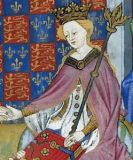
The collection was started by Edward IV to display the greater glory of God and his chosen sovereigns and country, which of course were the Yorkist leaders rather than the Lancastrian ones. Though we find these as well on the illuminated pages: There is the book which was a wedding present from the 1st Earl of Shrewsbury to Margaret of Anjou, whom we can see on one page receiving the present.
Detail of the illumination showing Mragaret of Anjou (in the public domain, obtained through Wikimedia Commons)
Edward himself bought manuscripts of history books for £250, possibly for the education of his sons.
Another highlight is the route map for a 13th century pilgrim to Jerusalem by Matthew Paris, who lived approx. 1200–1259 and was a monk in St Albans. Though not much is known about Matthew we know that his only international trip took him to Norway. In spite of this his map shows us exactly how to get to Jerusalem, travelling through Kent, France and Italy and then by boat, including the must-see landmarks en route.
One reviewer criticises that the captions of the exhibits focus on the illustrations to the detriment of their historical context. As an example she tells us that
The one that says flatly that Edward IV’s ‘two young sons…died in the Tower of London after his death’ is a woeful “princes in the Tower” rehash with no basis in historical certainty. (A later caption, more sensibly, adds the word “presumed”.) [Flanders]
We can only applaud her sentiments.
Unfortunately other reviewers are themselves not so sure of their history as the one who informs us that there are “prayer books belonging to queens such as Margaret Beaufort, Henry VI’s wife”! [Bates]
An impressive slideshow of some of the exhibits can be seen on the BBC website: http://www.bbc.co.uk/news/entertainment-arts-15667183. For this link my thanks go to the facebook page of the Richard III Society.
The exhibition is shown until 13 March 2012. For us down-under we can only suggest that the British Library needs to redecorate. The perfect place for their beautiful books would be to display them in Australia. This system seems to be working very well for other museums, think of the huge success of the Musee d’Orsay in Canberra, the Städel Museum Frankfurt in Melbourne or the Picasso exhibition here in Sydney right now.
Sources:
Stephen Bates, ‘Medieval monarchs’ books showcased by British Library’, The Guardian (10 November 2011). URL: http://www.guardian.co.uk/books/2011/nov/10/medieval-monarchs-books-british-library Date accessed: 11 Nov 2011
Mark Brown, ‘British Library digs out decorative paintings to brighten up dark ages’, The Guardian (25 August 2011). URL: http://www.guardian.co.uk/books/2011/aug/25/british-library-dark-ages-exhibition Date accessed: 11 Nov 2011
Judith Flanders, ‘Royal Manuscripts: The Genius of Illumination, British Library’, The Arts Desk (10 November 2011). URL: http://www.theartsdesk.com/visual-arts/royal-manuscripts-genius-illumination-british-library-0 Date accessed: 11 Nov 2011
Mary Mcconnell, ‘Might be worth a look, Wills: The medieval manuscripts that told England’s monarchs how to be a king’, Mail online (31 October 2011). URL: http://www.dailymail.co.uk/news/article-2055338/Medieval-manuscripts-told-Englands-monarchs-king.html Date accessed: 5 Nov 2011
Scot McKendrick, ‘Exhibition in focus: Royal Manuscripts, British Library’, The Telegraph (11 Nov 2011). URL: http://www.telegraph.co.uk/travel/destinations/europe/uk/london/8865233/Exhibition-in-focus-Royal-Manuscripts-British-Library.html Date accessed: 12 Nov 2011
Tags: Books
Lets keep “dribbling”!
To continue from our recent media retrospective, here is another example that those who work with Shakespeare’s work are well aware of the difference between play and reality. Don Crane is a professional actor and teaching artist with The Shakespeare Theatre in Washington, D.C. and is at present directing a production of Richard III at a school, Westfield High. This is what he had to say about the play and the man:
It’s a story of good triumphing over evil, but also a propaganda piece Shakespeare wrote for the Tudors. The character of Richard III is depicted as a spider — deformed, disgusting and rotten from within and without. But of course, it’s all a lie.
We can but hope that the audience of this production as of all others that the fascinating character of the play is “all a lie”!
Source:
Bonnie Hobbs, ‘Westfield Presents ‘Richard III’ – Not your father’s Shakespeare’, Centre View (10 November 2011). URL: http://www.connectionnewspapers.com/article.asp?article=355709&paper=62&cat=104 Date accessed: 11 Nov 2011
Tags: Richard III, Shakespeare
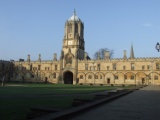
After Christ Church College’s Special Interest weekend ‘Blood and Roses’, Oxford offers another reason for the Ricardian to visit this beautiful city.
This morning a member of the Yahoo Group of the American Branch of the Richard III Society posted that the ‘Oxford Experience’ is running a course on Richard III next year.
The “Oxford Experience” is a Summer School of the Department for Continuing Education of Oxford University.
Anything concerning Richard III gets my attention, but this course should be special. Its stated aim is “to present an accurate and balanced assessment of a much maligned man and monarch”. The course runs for a week, 1 to 7 July 2012, and includes an array of fascinating topics:
• The Fifteenth Century: the political and social background and royal genealogies of the houses of Lancaster, York and Tudor.
• Richard, Duke of Gloucester: traces the early life of Richard, his roles and duties and relationships with brother Edward and other members of the nobility.
• The Princes in the Tower: examines the evidence leading to the incarceration of the princes and assesses the various debates on Richard’s role.
• King Richard: assessment of his brief reign, his achievements and the conspiracies against him.
• Myths and Legends: examination of Richard’s legacy, the myths and legends which were generated upon his death and why Tudor propaganda shaped his reputation for centuries to come. The course will end with an opportunity to present your own case for or against King Richard III.
Participants of the course will be accommodated at Christ Church and can thus experience “A Slice of Student Life”.
What a great opportunity it would be to attend this course on a historical person in whom we are so interested in such beautiful surroundings as Oxford in general and Christ Church in particular!
You can find out more about the course at http://www.conted.ox.ac.uk/courses/details.php?id=V210-22&Category=900
Tags: Oxford, Richard III
Recently there were a few mentions of Richard III in the media, which differentiate clearly between Shakespeare’s evil tyrant and the historical person.
The first was Allan Massie, famous Scottish writer and columnist, who wrote on 23 October a column in the UK Telegraph on Gaddafi’s death (we reported). Massie is careful to distinguish between the literary Richard III and the historic Richard III as represented by the Richard III Society, which he mentions explicitly. This is what he had to say (highlights mine):
To forestall complaints from members of the Richard III Society who think him a much maligned figure, a victim of scurrilous Tudor propaganda – and that much is certainly true – let me say that it is Shakespeare’s Richard, not the historical Richard of whom one knows little for certain, that I am talking about. Shakespeare’s Richard then is a scoundrel, a liar, seducer, murderer and tyrant, granted only two redeeming qualities – wit and courage.
The second was Michael Dobson in a review of the film Anonymous in the Guardian on 26 October 2011. He is director of the Shakespeare Institute at the University of Birmingham and emphasises that Shakespeare was not and did not want to be a historian evaluating sources to establish a truthful presentation of his object to appeal to our intellect. No, he was a man of the theatre and wanted to appeal the audience’s imagination:
He gave his audiences Richard III, the hunchbacked wicked uncle, rightfully destroyed by the good avenging prince, for instance, rather than the complex politician of history, defeated and killed by an invading opportunist. History may provide good raw material for drama, but it will need a bit of underlying myth if it is really going to stay in the imagination.
This point was also made by Shakespeare actor John Bell during a recent talk he gave in Sydney.
The last mention (so far) was found by our never-tiring secretary Julia in today’s Australian Daily Telegraph. She tells us that its education page deals with Shakespeare’s villains:
Some of his most interesting creations are his villains. Some are evil incarnate, cruel, vengeful and beyond redemption. Others seem to be victims of their own excessive desires. In some cases, Shakespeare redeems his villains, in others they get what they deserve.
Of course, Richard III features here – Kevin Spacey photo as illustration; others are Macbeths, Iago, Claudius and Aaron from Titus Andronicus. The first part of the article on Richard III is all about Shakespeare’s Richard, but then it continues:
The real Richard was neither deformed not as heartless and ambitious as Shakespeare’s character, but may have been the victim of Tudor propaganda. Shakespeare lived under a Tudor monarch and it had been a Tudor who had defeated Richard to become the first of a new dynasty.
Clearly, our message is being heard, but that does not mean that we can rest on our laurels. After 500 years it is high time that a historically more accurate view of Richard III should prevail, rather than the distorted image that is still found too often. As Julia remarked: “A small dribble on the stone of persuasion, but it all helps!”
Sources:
Allan Massie, ‘Gaddafi’s death shows that there is always pathos in the destruction of the powerful’, The Telegraph (22 October 2011). URL: http://blogs.telegraph.co.uk/culture/allanmassie/100057193/gaddafis-death-shows-that-there-is-always-pathos-in-the-destruction-of-the-powerful/ Date accessed: 23 Oct 2011
Michael Dobson, ‘Out, damn’d conspiracy! Shakespeare was no fraud’, Guardian.co.uk (26 October 2011). URL: http://www.guardian.co.uk/stage/2011/oct/26/shakespeare-is-no-fraud Date accessed: 26 Oct 2011
Troy Lennon (ed.), ‘Shakespeare’s Villains’, Daily telegraph – Classmate (8 November 2011). URL: http://resources.news.com.au/files/2011/11/09/1226189/951723-dt-classmate-villians.pdf Date accessed: 8 Nov 2011
Tags: Richard III, Shakespeare