Archive for August, 2012

31
Aug

Leicester Update 31.8.12

   Posted by: Dorothea Preis    in Greyfriars Dig, News

It has been established that the remains of walls, which have been found during the dig, are indeed from the medieval period.  The next step is to establish the alignment of these walls.  However, otherwise there is “Relatively little to report right now. Richard III still dead”, as the update from the University of Leicester puts it – short and precise.

We are hoping for more info tomorrow, as there will be a press briefing at 11.00 (UK time) today, which means 20.00 EST in Australia.

ITV has also an interesting article and video on the dig on their webpage.  Their remarks on Richard’s supposed deformities are particular welcome.

Tags: , , ,

30
Aug

Leicester Update 30.8.12

   Posted by: Dorothea Preis    in Greyfriars Dig, News

Just heard on the trusted Ricardian grapevine – in this case the Facebook page of the Richard III Society – that due to all our emails urging them to make a documentary about the dig,  Channel 4 has changed its mind and is definitely filming the dig and the documentary will be aired in the UK later this year.

Maybe we could start a similar campaign to encourage our ABC (probably the most likely channel in Australia) to buy and show the documentary here.

A big “Thank you” to all our members and friends who contacted Channel 4!

Unfortunately the archaeologists at the dig were not yet able to assess the remains of walls, which were found on Tuesday, any further, as heavy rain stopped the work.

The University of Leicester has included some photos in its latest update on the dig.  You can find a link in their update of 29 August 2012.

Tags: , , ,

29
Aug

Leicester Update 29.8.12

   Posted by: Dorothea Preis    in Greyfriars Dig, News

The archaeological investigation of the site of the former Greyfriars in Leicester, where Richard III was buried, started at the end of last week.

The project started by using ground-penetrating radar to help find the best places to dig.  Over the weekend machinery was brought in to dig two trenches in the opposite direction of the where the walls of the church are expected to be (running west to east).  As with all archaeological digs, the most recently deposited material is on top, so the researchers will have to dig through several layers till they reach the one where the medieval church is expected to be.

Yesterday the University of Leicester announced that they discovered several remains, which are believed to be medieval walls, but this would need further assessment.  If these remains turn out to be from the walls of the church, this would give the archaeologists vital clues on where are the best places to dig.

The University also announced that the dig is being filmed for “a forthcoming Channel 4 documentary to be aired later this year”.  After the rather negative remarks most of us received when we send emails urging Channel 4 to make such a documentary, irrespective of whether Richard’s remains were found or not, this sounds more positive.

Keep up to date with the latest developments on site at the University of Leicester.

And last but not least, I would like a share cartoon with you which my Google Alert found for me.  Click here, but disregard the hump!

Tags: , , ,

24
Aug

THE day is here: The dig for Richard III’s remains begins

   Posted by: Dorothea Preis    in Greyfriars Dig, News

Today we have really exciting news for all our readers!

After being killed in the Battle of Bosworth by the invading forces of Henry Tudor, the body of King Richard III was brought back to Leicester and eventually buried at the church of the Greyfriars, a Franciscan Friary.  Over time the exact location of the friary was lost, but archaeologists think it might be under what is now a carpark.

After long planning, tomorrow, 25 August 2012, a dig is to start at the site to try and establish the exact location of the former Greyfriars church and to find any remains of those, who were buried in the church.

The dig is carried out in cooperation by the University of Leicester and Leicester City Council in association with the Richard III Society.  It is the first ever search for the lost grave of an anointed King of England.

The work of John Ashdown-Hill has established a descendant in the all-female line of Richard’s mother, Cecily of York, in Canada, whose DNA could be used to establish whether any remains are indeed those of the lost – but not forgotten – king.

For more information, as well as a call on Channel 4 to commission a programme on this historic dig, go to the What’s New page of our parent Society.  Please do support the campaign for the programme!

The official page on the project by the University of Leicester can be found here.

You can read a press release by Richard Buckley of the University of Leicester here.

The search for Richard’s DNA is explained in:  John Ashdown-Hill, The Last Days of Richard III.  The History Press, Stroud, 2010.  ISBN 978 0 7524 5404 7 – also available for Kindle

Tags: , , ,

15
Aug

The Medieval Cookbook

   Posted by: Julia Redlich    in Bookworm

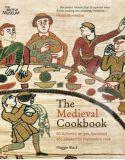
The Medieval Cookbook

Book Review:  The Medieval Cookbook

Maggie Black, The Medieval Cookbook:  50 authentic recipes translated and adapted for the modern cook.  British Museum Press.  ISBN 978 0 7141 2829 0 (PB)

(Available from the Book Depository)

The title says it all. The authentic recipes are given at the top of the page, but let’s give thanks to the late Maggie Black who has converted them to modern English for easy reading and adapted them for up-to date means of preparation and cooking.

So there is no need to “first catch your hare”, as suggested by the redoubtable Mrs Beeton, before tackling “Civey of Hare”. In fact you may prefer to catch a couple of rabbits at the butcher instead if, like me, you have coped with a hare proudly brought back by ardent game shooters in the family. There is so much meat on a full grown hare – and delicious it is too – but using all of it is a challenge. Forget the struggle with variations on turkey and ham leftovers after Christmas;the hare wins paws down.

Hare is also an ingredient of the “Grete Pye” which was a essential at Christmas time. Many other meats were involved, as well as spices and dried fruits. The version here would be fabulous for a large family gathering in cooler months, and the ideas for soups are delicious.

Need a dessert? “Fig and raisin ‘crème’” is truly scrumptious thanks to the addition of wine and spices and can be used hot or cold. Add ice-cream as a bonus.

Afterwards though, you might like to refer to the latter pages with their herbal remedies and cures. This is the advice from a Leechbook, or Collection of Medieval Recipes of the Fifteenth Century, for cleaning your teeth:

To cleanse and make them white. Take the root of mallows and rub thy teeth and thy gums therewith. And after that take a rough cloth, and rub thy teeth therewith. If thou washest thy mouth once a month with water or with wine that titemall, that is spurge, is seethed in, the teeth shall never fall. Knotgrass kneaded and laid to the teeth is a good medicine.

You don’t find this kind of advice in every cookbook, so relish the help and happiness this one offers. The illustrations of life in medieval times showing the enjoyment of great cooking are delightful.

Tags: ,

13
Aug

Wet, Windy and Welcome!

   Posted by: Julia Redlich    in Meetings, News, NSW Branch News

Saturday, 11 August, saw our first meeting at our new venue, the Harry Jensen Centre in Argyle Street, Millers Point. Despite pouring rain and wild winds, a welcome number of rugged-up and weather-proofed Ricardians arrived. It certainly helps to have the bus stop and shelter at the entrance!

Our chairperson Judith opened the proceedings. There were apologies from those laid low with winter ills, a summary of activities since our last meeting that included Rosemary’s and Julia’s visit to the ‘Richard Loves Richard’ presentation at Carriageworks. Apparently more light was needed to appreciate the format, but they managed to talk to other visitors about Richard and the Society.

Treasurer Judy reported on the Branch finances that were in good order and they would be dealt with in more detail in the annual report at the AGM in October.

Dorothea, our Webmaster, reported on her visit to Europe where, as a new member of the Bulletin committee, she had attended a meeting, had been warmly welcomed and her fellow members had sent good wishes to our Branch. She apologised for the limited number of postings while she was away, but in fact there had been plenty on the Ricardian Calendar to keep us interested. Since her return she had posted two items with a Ricardian link from her travels: a visit to Lambeth Palace Library for an exhibition on the Book of Common Prayer, including Richard’s Book of Hours. And seeing his original handwriting – compact and so legible – was an enormous thrill. The other visit was to Bosworth Battlefield Centre to visit the battlefield, the church, rest on the Paul Murray Kendall bench presented by the Society – and to indulge in the gift shop, where mementos of Richard III soundly trounced anything Tudor.

Sales Officer Lynne, who had battled trackwork closures on the rail line from Newcastle to reach us, said that sales had been slow. She was checking the price of the pewter boar brooches, in which several people showed interest. It had been suggested that requests and money should be given to Lynne for orders and she would send for them at limited intervals to ease the transfer costs.

Secretary Julia welcomed everyone to the new venue. Our next Ricardian event would be the Bosworth Service, on Sunday, 19 August at 10am at St Mary’s Church, Birrell Street, Waverley. They had given us a great welcome last year. Afterwards there would be lunch at Arthur’s Pizzeria, 139 Oxford Street Mall, Bondi Junction, and a very short bus ride from outside St Mary’s in Bronte Road. This had been tested by Kevin, Rosemary and Julia and found to be warm, welcoming and very reasonable – and licensed. More that just pizzas with many toppings, there were also mains of veal and chicken, vegetarian options, pasta dishes  with a great range of sauces, salads and plenty of tea and excellent coffee. Members were encouraged to contact Kevin to confirm attendance.

The next meeting would be the Annual General Meeting and documents regarding this would be sent at the end of August. Judy would be waiting for your membership renewals , and Julia for nominations for the committee. It was very important to have more people involved and to help an over-burdened committee with all the work for the Australasian Convention next July.

The speaker at the this meeting would be Kevin, repeating his talk on the Dukes of Norfolk that he gave in Melbourne last August.

Julia drew attendtion to a special showing of the film “Barrymore” starring Christopher Plummer, showing at selected cinemas on the weekend of August 25 – 26. It opens with Barrymore preparing for his famous role in “Richard III”. Contact www.sharmillfilms.com.au?p=1835 for more information.

David Mee, a popular speaker at Mittagong in May, had told us about an auction in the USA in September of a very rare Richard III gold angel. Opening bids were starting at US$4,750 …

Judith then introduced our first Scrabble speaker: Judy Howard who had picked the letter A and elected to speak on Anne, Duchess of Exeter, the older sister of Edward IV and Richard III. Judy’s talk has been posted separately on our website. Don’t miss it because Anne was a fascinating woman and was left for too long in the shadow of the other siblings – Elizabeth, George and Margaret.

Our next Scrabble speaker was a welcome new member, Cynthia Gregan, who had taken up the cudgels and the letter L, electing to speak on medieval London. Those of us who had been sightseeing in that city courtesy of the televised Olympic Games, were treated to a wonderful journey through the sites and buildings of a very different era, when the heart of London was so close to the area that had been the world focus for two weeks. Cynthia’s talk was well researched and there were some wonderful illustrations.

Finally, Kevin took the floor, standing in for Moya who was unable to be with us, using the letter V as the basis for his talk on the Valois queens. Family trees showed the connections of the women of the house of Valois with the English monarchy. Chief among these of course was Isabella, wife to Edward II and mother of Edward III, and more familiarly known as the She Wolf of France. Then came another French princess, Isabella, who, at the age of eight, married Richard II after the death of his beloved first wife,Anne of Bohemia.  Isabella was devoted to Richard who treated her with kindness, and it was some time after his death before she married Charles of Orleans. Her sister Catherine, married to Henry V and the mother of Henry VI, later married Owen Tudor and became grandmother of Henry Tudor.

This lively meeting finished with our usual raffle draw, followed by afternoon tea in the capable hands of Rosemary.

Tags:

12
Aug

Duchess Anne of Exeter

   Posted by: Judy Howard    in Medieval Miscellany, Medieval People

It is a tradition in the NSW branch that at the August general meeting we have “Scrabble Talks”.  Once a year, members draw Scrabble tiles out of a bag and then prepare a short talk on a topic starting with their letter.  The following is Judy’s talk on ‘Duchess Anne of Exeter’.  This was a particularly fitting, as the day before our meeting was Duchess Anne’s birthday.

Duchess Anne of Exeter

I’ve been allocated the letter ‘A’ for my talk at the August general meeting of the NSW branch, so I would like to tell you about Princess Anne Plantagenet, better known as Duchess Anne of Exeter, who was the eldest sister of Edward IV and Richard III and apparently Edward’s favourite sibling.  You will be familiar with this memorial brass to Anne and her second husband, which I think is the only likeness of her to survive.


Anne’s story is a very good example of a high born woman who became a pawn in the political manoeuvres of her male relatives.  But we can presume she found happiness towards the end of her life.

Anne was born in 1439 and was the eldest surviving child of the Duke of York and Cecily Neville.  She was betrothed in 1445 at the age of 6 years to Henry Holland, who was 15 years old and the son of the Duke of Exeter.  York paid a huge dowry of 4,500 marks, the largest known in late medieval England. Within five years of this, you will recall, was around the time that the King, Henry VI, began showing signs of his illness and the Wars of the Roses was beginning to seriously foment.  It is believed York’s motive in securing the betrothal was partly political and he was hoping for Exeter’s alliance in his attempt to return to France.  It was also a dynastic move as Exeter was the next closest male relative of Henry VI and descended from John of Gaunt and Blanche of Lancaster.  York took the opportunity to combine two great dynasties but in fact, in both personal and political terms, it was a disaster.

Anne and Henry married soon after their betrothal and Henry inherited his father’s titles and land in 1450 and as the Duke of Exeter and became admiral of England, Ireland & Aquitaine and Constable of the Tower of London.  Their first and only child, also called Anne, was born in 1455, and she went on to marry Elizabeth Woodville’s son, Thomas Grey in 1467.  The young Duke of Exeter, Henry, was described as an unappealing character, violent, cruel and lacking in any real experience and was unintelligent – not the makings of a great husband or political ally!!

During York’s Protectorate in 1453 – 54, young Exeter (York’s son-in-law) played a prominent role in the serious breakdown of local law and order and the uncontrollable violence, particularly in Yorkshire which was York’s biggest challenge during his protectorate, seems to have been perpetrated by Exeter himself.  Exeter planned a major uprising in the north and may have even plotted to murder York by luring him to Yorkshire.

It was unlikely that Duchess Anne was able to escape the animosity Exeter felt towards his wife’s father, given his character.  In addition, York defaulted on the later instalments to her dowry, which is understandable but would not have helped the relationships.  Anne did have a child with Exeter in 1455 but we can presume that the marriage broke down soon after.

Exeter was a staunch Lancastrian during the descent into Civil War and he became a very bitter enemy of York and the Nevilles.  Exeter thought, as the King’s closest relative, he was entitled to a prominent role in government and he was not happy when York began to advance his own claims as King Henry’s heir presumptive. As a committed Lancastrian, Exeter joined forces with Somerset, Northumberland and others in opposition, which culminated in the death of York, his son Edmund and brother-in-law Salisbury at Wakefield in 1460.

In 1461 Exeter fought for the Lancastrians at the battles of Blore Heath, Northampton, St Albans and Towton and even though defeated, he continued to be aligned with the Somerset and the other hard-core Lancastrians.  This caused further and continuing difficulties for the new King Edward in his attempts to establish his rule and find a collegiate solution to the regional turmoil caused by the civil war.  Exeter escaped overseas and was attainted by parliament and his estates were granted to his wife – one advantage of being the new King’s sister.  Exeter lived in poverty during his exile until the Duke of Burgundy gave him a modest pension.  But remember that the Duke of Burgundy was soon to become Edward’s brother-in-law when he married Princess Margaret of York.

Anne at this stage was still married to Exeter and was herself the second lady in the land after the King’s mother, Cecily.

Anne, around this time, began a relationship with Sir Thomas St Ledger who became her lover (who could blame her!!).  Thomas was made an esquire of the body to Edward IV and was granted eight manors in Buckinghamshire and Cambridgeshire, including a royal manor, and received a number of other wardships and grants.  Here, and in the granting of Exeter’s estates to her, Anne benefited considerably from being the King’s sister.

Thomas proved to be a loyal member of the King’s household, he resisted Clarence and Warwick in 1469 – 1470 and he even joined Edward in exile in 1470.

But, not to be forgotten, that flea Exeter returned to England and commanded the left wing of Warwick’s army at Barnet in April 1471 and in doing so opposed his 3 brothers-in-law, Edward, Richard & Clarence.  He was seriously wounded on the battlefield but eventually recovered to be imprisoned in the Tower of London.  Anne finally got her divorce from Exeter and she married her lover Thomas St Ledger the next year.

But Exeter was not to be put down so easily, he was released from custody in 1475 to join Edward’s French expedition but on the return journey he drowned in the English Channel, reputedly thrown overboard with the King’s knowledge.  A fitting end for such a despicable character.  I wonder what Anne thought??

Tragically for Anne, though, her daughter with Exeter died the same year.

The next year in 1476, Anne gave birth to a second daughter also called Anne, but unfortunately Duchess Anne herself died, probably in childbirth.  The infant Anne, whose father was Thomas St Ledger, was to marry George Manners and become the Baroness Ros and have two children, one of whom became the 1st Earl of Rutland. This title has remained in their family until today – Duchess Anne and her lover Thomas had established a very successful and long lasting dynasty.

But to continue the story of the people in Duchess Anne’s life:  after Edward’s death in 1483, Anne’s second husband Thomas St Ledger attended Richard III’s coronation but in July of that year he was dismissed from all posts.  He became closely aligned with Thomas Grey, Marquis of Dorset, and a leader in the Buckingham Revolt around Exeter and held out against the royal forces at Bodmin Castle until mid-November.  Thomas St Ledger was executed a few days after.  How sad for Anne, but we do not truly understand the circumstances of this period and cannot understand the extremes of emotion that Edward’s old household felt given the events which followed Edward’s death and Richard’s subsequent coronation.

We also do not know much about Duchess Anne as a person, which is not unusual for women of this period.  However in 1491 her daughter by her second husband Thomas, founded in her honour the Rutland Chapel, as it is now called, in the north transept of St George’s Chapel at Windsor, just down the aisle from Edward IV’s vault.  The memorial brass to Anne and Thomas is on the east wall of this chantry chapel.

The Chantry, although established for her parents, also contains a fine tomb chest and alabaster effigies of Anne junior and her husband George Manners, the 12th Baron Ros.  These effigies are very fine examples of the period. (You can find photographs of these here)

The Rutland Chantry is a beautiful place to visit and is still used regularly for services at St George’s Chapel.  It has some very beautiful new tapestries hanging within, along with some new furniture and today remains a very peaceful place of worship and contemplation.  A fine memorial to Duchess Anne.

Tags: , , ,

8
Aug

Bosworth at Peace

   Posted by: Dorothea Preis    in Ricardian Places

During our recent European holiday, we visited the Bosworth Battlefield Heritage Centre.  And I have to agree with what they say on their website, it “is a unique day out for all the family”:  My husband, who does not share my interest in medieval history, also enjoyed the experience.

We left Hertford, where we had been staying for our first week, in the morning and travelled via Rugby, for a look at the school which gave its name to the game.  On the way we noticed – and were very impressed by – a Tesco storage facility, which is powered by its own wind turbine to lessen CO2  emissions.   I somehow doubt whether our Woolworths or Coles are as considerate of our environment.

If I have one whinge, it is about the sign posting to the Battlefield Centre.  For such an important attraction, the signage left a lot to be wished for.

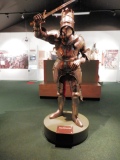
We arrived around lunch time and therefore our first stop was the Tithe Barn Restaurant, where we had the pleasure having our sandwiches under the watchful eye of Richard in full armour.

Refreshed we went to have a look at the exhibition.  Though I might have liked some more in depth information, I would say that to visitors without too much previous knowledge it gave quite a good and relatively unbiased overview of the lead-up to the battle.   Some of the events were told by a variety of people involved with the battle, like a mercenaries wife or Lord Stanley (a very shady character!).  My personal favourite was the innkeeper’s daughter from Leicester.  We also did the more touristy things like trying on medieval armour (not particularly flattering!) and minting our own commemorative penny.  The BFI Gallery offered an interesting insight into the methods used by archaeologists.

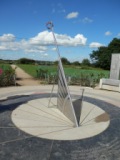
The Sundial

And then – in warm sunshine (which is worth a special mention after this British summer!) – we walked the battlefield trail.  We admired the new sundial in the form of a medieval billhook, with Richard’s crown dangling from the end.  Near the sundial and white rose bushes are rather uncomfortable looking thrones for Richard and Henry Tudor as well as posts for other people who fought in the battle, like for instance John Howard, duke of Norfolk.   We also sat for a while on the bench donated by the Richard III Society in memory of Paul Murray Kendall.

The walk is well illustrated by informative plaques and exhibits.  While the actual battle site is not part of the trail – it is private property – it is possible to look out over it.  It was difficult to imagine that in this peaceful rural setting, with sheep grazing on lush green grass, such a bloody and decisive battle was fought, where King Richard III and so many others lost their lives.

On our way back to the gift shop, we spotted a lady of Hawkwise Falconry with one of their hawks on her hand, reminding us of the role these birds played in medieval times.

Maybe it reflects my personal bias, but to judge from what was on offer at the gift shop, I got the distinct impression that the battle of the gifts was a decisive win for Richard.  Ricardian themed souvenirs outnumbered those with a Tudor connection.  Needless to say that I was in shopping heaven!

St James, Sutton Cheney

We then went for some quiet reflection to the Church of St James at Sutton Cheney.  The church building dates mainly from the 13th and 14th century, though it may replace an earlier one.  According to local tradition, Richard heard mass here before the battle.  The Richard III Society holds each year on or near 22 August a commemorative service at this church.  During this service wreaths are laid at the memorial plaque, one of which is donated by the Australasian branches.  At the time of my visit (July), last year’s wreath had wilted and had been taken away, but the card which had been attached to it, was still in place.

Richard III Memorial in St James, Sutton Cheney

(The card from the Australasian and Canadian branches is on the shelf on the right hand side)

The connection to Richard at this church is very strong:  not only the memorial plaque, but there is a great number of needlepoint kneelers, which have been stitched by Society members.  Among the designs is the white boar; another shows the entry in the York Records, when they heard of Richard’s death; there is the York rose, but his faithful henchmen are not forgotten either (the cat, the rat and Lovell our dog).

After a day full of travel and lots of new impressions, the church was a quiet and comforting spot.  I hope that it felt the same for Richard, when he came here amid the bustle of the last minute preparations for his final battle.

Further Information:

Phil Stone, ‘Shine out fair sun – and tell us the time at Bosworth’, Ricardian Bulletin (September 2011), pp.10-11

Pewfinder, ‘Sutton Cheney Church – St James’, Leicestershire & Rutland Churches (19 October 2011).  URL:  http://www.leicestershirechurches.co.uk/sutton-cheney-church/  Date accessed:  7 Aug. 2012

All photographs are by the present author.

Tags: , ,

4
Aug

Royal Devotion and Gold – a personal account

   Posted by: Dorothea Preis    in News

We started our recent trip to Europe in the UK and the first item on my agenda was visiting an exhibition at Lambeth Palace Library:  ‘Royal Devotion: Monarchy and the Book of Common Prayer’.   Not being Anglican, rather than the Book of Common Prayer the drawcard for me was a book which predates the Reformation (and hence the Book of Common Prayer) – Richard III’s Book of Hours.

I had pre-booked my ticket for the first slot in the morning after the day of our arrival.  After a pleasant walk along the river, I arrived early and had enough time for a quick look at the beautiful front garden and the shop of the Garden Museum in the old St Mary’s church next door.

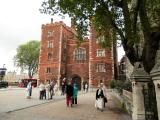
Lambeth Palace Gatehouse (© Dorothea Preis)

Then I joined a growing number of hopefuls waiting outside the main entrance of a brick gatehouse – which I found out later was built by John Morton.  However, it turned out these were members of an arts’ fund and waiting for a tour of the Palace, whereas the entrance to the exhibition was at the side of the complex.  Here a much smaller group of maybe 8 or 9 people was waiting and punctually at 11 the small door opened and we were admitted.

We were each handed a beautifully illustrated exhibition brochure and then our group was lead into the library (I was able to take some photos outside, but photography was not permitted in the exhibition itself) with some explanations on the building and its history.  Though the building itself is neo-Gothic, it creates the right atmosphere for viewing medieval books.

Lambeth Palace Library (© Dorothea Preis)

We were left to view the exhibits at our own pace and it was nice to be able to do so without being crowded.  The exhibition is displayed in 10 cases, the first of which was the most interesting to me, covering “Public & Private Devotion before the Reformation”.

The first book exhibited is the Chichele Breviary (MS 69), which belonged to Archbishop Henry Chichele (c.1362–1443).  It is one of only two books of his which are known to have survived to this day.

The second was the book I really wanted to see:  Richard III’s Book of Hours (MS 474).  A book of hours “was the private book of devotions of the layman in the later Middle Ages and the Renaissance”.  [Sutton and Visser-Fuchs, p.2]

It was open on the calendar page and I could read the entry for 2 October (or rather what the explanation card next to it said, as the original entry was somewhat cut when the book was rebound in the 16th century):

hac die natus erat Ricardus Rex Anglie III apud ffoderingay anno domini Mcc [cc lij]
on this day was born Richard III King of England AD 1452 near Fotheringhay (own translation)

This was added by Richard himself, obviously after 6 July 1483, as he refers to himself as king.  His handwriting is large, though tidy and even.

The manuscript was not made for Richard, but was produced c.1420 for an unknown owner.  As Sutton and Visser-Fuchs state it is “a very useful, solid, unflamboyant and English manuscript for his daily use”. [Sutton and Visser-Fuchs, p.2]

It is believed that he had the book with him at Bosworth and that it was found there after the battle.  In his speech at the opening of the exhibition, the Archbishop of Canterbury remarked:

There’s a personal book of ours belonging to Richard III in this library which does not seem to have brought him a great deal of good fortune, though he carried it at the Battle of Bosworth.

Henry Tudor gave the manuscript to his mother Margaret Beaufort, who seems to have made some half-hearted attempt to scratch out his name at various places, though fortunately not this one.

Standing next to a book, which Richard held in his hands, and seeing his handwriting was certainly a special and moving moment for me.  It was probably the closest I would ever get to the king I have been studying for some time.

The rest of the of the exhibition contained various other beautiful and interesting books, most having some royal connection, from the centuries up to an order of service from the wedding of Prince William and Catherine Middleton in Case 8.  Coming from the Cologne area, I was pleased to meet Hermann von Wied, Archbishop of Cologne from 1515 to 1547, in Case 2.

However, before leaving the library I returned to Case 1 for a last glimpse of King Richard III, represented by his book.

Afterwards I made my way to the Goldsmiths’ Hall to visit another exhibition:  ‘Gold:  Power and Allure’, featuring more than 400 gold items from 2500 BC to the present day.  One of the exhibits was the Middleham Jewel, which is normally on display in York.

The gold lozenge-shaped jewel was found in September 1985 near Middleham Castle. It is beautifully engraved and a large sapphire is mounted on the front.  It is estimated that it was made between 1450 and 1475, certainly for a wealthy person.  Whether there is any connection to Richard III is not known, though it has been speculated that it might have belonged to Richard’s mother, Cecily Nevill.  It was beautifully displayed with both the front and back being visible.

Due to time pressure, I didn’t pay the exhibition the attention it deserved, though I spotted an Angel from the time of Richard’s reign.

I would like to take this opportunity to thank the Facebook page of the Richard III Society for alerting me to both these fascinating exhibitions.

Bibliography:

Duffy, Eamon, Marking the Hours: English People and Their Prayers, 1240-1570.  Yale University Press (2006).  ISBN 9780300117141, p.33

Sutton, Anne F. & Visser Fuchs, Livia, The Hours of Richard III.  Alan Sutton Publishing Ltd (1996).  ISBN 0750911840

‘HRH Prince Charles opens exhibition at Lambeth Palace Library’, The Archbishop of Canterbury (1 May 2012).  URL:  http://www.archbishopofcanterbury.org/articles.php/2469/hrh-prince-charles-opens-exhibition-at-lambeth-palace-library Date accessed:  14 June 2012

‘The Middleham Jewel ‘, The Richard III Society.  URL:  http://www.richardiii.net/2001_archive.htm Date accessed:  3 Nov. 2010

Karl, Werner, ‘Ananizapta and the Middleham Jewel’, Sammelblatt des Historischen Vereins Ingolstadt, 110. Jahrgang (2001), S.57 ff.  Available at URL:  http://www.ingolstadt.de/stadtmuseum/scheuerer/ing/ananiz05.htm Date accessed:  20 March 2010

Tags: , ,

3
Aug

Come along to Scrabble at our new home!

   Posted by: Julia Redlich    in Meetings, News, NSW Branch News

The next meeting will be on Saturday,  11 August 2012, featuring this year’s “Scrabble Speakers”.  Judy, Moya and Cynthia have something to say about medieval matters starting with the letters M, V and L.  What are the medieval topics they will have found to illustrate their letters? All will be revealed at the meeting!

As many of you know, we have been searching for a new venue for our general meetings for quite some time.

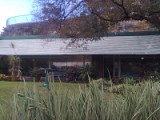
However, thanks to Carol who suggested we look at a hall in The Rocks area, we have found a new venue. It is not the hall suggested, but the smaller place adjoining called The Harry Jensen Centre,  17 Argyle Street, Millers Point.

Those of us who have been there think it will suit us admirably. It is the right size for our meetings – and there will be no other groups meeting there, so plenty of room for afternoon tea and no excessive noise from neighbouring gatherings!

Other bonus points:
a)    Buses stop outside the door.
b)    The entry is via a ramp, a big help for those with mobility problems.
c)    The garden outside is a delightful addition (see attached).
d)    Toilets (disabled ones too) are easy to access.
e)    We can return to our second Saturday in the selected months for all our general meetings.

We hope you will enjoy our general meetings as much as ever – and the committee would ask you to help the usual suspects in clearing up afterwards. We must show we are welcome tenants who care for the area.

Tags: