
Archive for November, 2012

29
Nov

The Princes in the Tower?

   Posted by: Judy Howard    in News

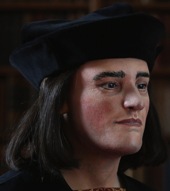
While perusing the website of St. George’s Chapel at Windsor, UK, I found on their Archives Blog, an article which is yet another angle on the fate of the Princes in the Tower. I found this particularly intriguing at a time when another skeleton is under scrutiny by a team of archaeologists at the University of Leicester which may prove to be the remains of Richard III.

Apparently in 1789 when the paving was being repaired in the North Quire Aisle of St. George’s Chapel, the entrance to the burial vault of Edward IV was identified.  When they entered the vault they found a lead coffin with the remains of a wooden coffin on top – which were the coffins of Edward IV and his consort, Elizabeth Woodville.  Two further coffins were also found and they were believed to have contained the bodies of George, 3rd son of Edward IV who died in 1479 aged 2 years, and his sister Mary, 5th daughter of Edward IV who died in 1482 aged 14 years.  Both George and Mary were known to have been buried at Windsor.  The vault was not investigated any further and the vault was closed with new a slab.

Then in 1810, two more coffins were found in what is now the Albert Memorial Chapel and the inscription on one of these suggests it is the coffin of George and not the one in the vault near Edward IV.  It is known that when George was buried at Windsor on 22 March 1479, the Quire at St George’s Chapel was still under construction and therefore he could not have been interred in Edward IV’s vault. The written account of Mary’s funeral states that she was buried near her brother George.

In 1813 both of these coffins were moved to the vault near Edward IV.

The question remains however – who did the two coffins found in Edward IV’s vault in 1789 belong to??  They were important because they were buried in a place of honour near Edward IV. There is no evidence to suggest who these two coffins belonged to.

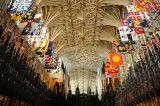
The choir of St George’s Chapel, Windsor (photograph by Josep Renalias, obtained through Wikimedia Commons)

The Assistant Archivist at the College of St George has asked the question whether these two coffins could contain the remains of Edward’s other sons, Edward V and Richard, Duke of York, the “Princes in the Tower”?

In light of the momentous discovery of skeletal remains which could possibly be those of Richard III, how marvellous it would be to take this investigation further and attempt to obtain genetic material to determine:

1.    The identification of the bones in the urn at Westminster Abbey, purportedly those of the two “Princes in the Tower”; and
2.    Identification of the bodies in the two coffins discovered in Edward IV’s vault in 1789.

After more than 500 years surely this is not too much to ask, given the sophisticated technology currently at our disposal.

A mystery would be solved, if only.

Tags: , , ,

20
Nov

Greyfriars Dig: “the evidence is looking really good”

   Posted by: Dorothea Preis    in Greyfriars Dig, News

ArchaeologyThis is what Prof Lynn Foxhall of the University of Leicester said about the ongoing tests which are carried out on the male skeleton found in the former Greyfriars church in Leicester.

However encouraging the statement may look, it would be too early to jump to conclusions.  The various tests are still ongoing and results are only expected in January.

So far we heard most about the DNA testing trying to match the mtDNA of the remains to that of a descendant of Richard’s eldest sister Anne, but this is only one of the aspects investigated.  This descendant’s connection is also being verified and researchers are hoping to establish a second line of descent.

Other tests include the analysis of soil samples from the grave surrounding the skeleton, from which we may not only find out more about the burial practice, but also about the health and diet of the person who was buried there.  This would be in conjunction with evidence gathered from samples of mineralised dental plaque, providing information on the person’s diet, health and living conditions.

Scientists are examining the skeleton in detail trying to get some idea about the person’s age and figure and the scoliosis.  Experts are also trying to establish how exactly the individual died and what kind of weapon would have caused the horrific injuries to the skull.

The remains are also radiocarbon dated in two separate examinations, which will give us an idea of when the person died, to within 80 years.

However, if these remains are indeed those of Richard, the most interesting process would be the CT scan from which a 3-D image of the person can be built.  This would also be the basis for facial reconstruction so that one day we may be able to see what Richard really looked like – remember, none of the existent portrays is contemporary.

All these tests together will provide a detailed image of the person’s lifestyle, his health and even where he grew up, and will thus provide “more assurance about the identity of the individual”.

The process reminds me of the wide variety of information which has been established about Ötzi, the “iceman” found by hikers in the Ötztaler Alps in September 1991.  I have been fascinated by him since he was first discovered and the story of the find was one of the last I wrote about as assistant for a scientific research organization.  Compared to Ötzi’s age of 5300 years, this man’s 500 years seems to be a very short time frame indeed.

More information:

‘‘It’s not like CSI’: the Science of the Search for Richard III’, University of Leicester (15 Nov 2012).

Richard III dig: Results expected in January’, BBC News Leicester (19 Nov 2012).

Tags: , , ,

14
Nov

History as Fiction

   Posted by: Julia Redlich    in Bookworm

Many of us have become wary of enjoying this genre, knowing that many of the plots are based loosely on fact and owe heaps to the inventiveness of the writer. Others are well researched and a tribute to the authors’ imagination as to what might have been. Of course it must be welcomed if it inspires interest in a period or person. Just think what The Daughter of Time has done for Richard!

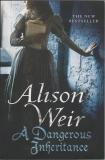
A Dangerous Inheritance, by Alison Weir, Hutchinson, 2012, rrp AU$32.95, ISBN978009 1926236

Knowing this writer’s tendency to downplay Richard of Gloucester’s good qualities and find plenty of reasons to position him as an arch villain, I opened this with a little trepidation, and closed it with an appreciation of the skilful linking of two periods of time, two intriguing heroines and a connection to history’s most baffling mystery.

The two women are Katherine Grey, younger sister of the ill-fated Lady Jane, and Kate Plantagenet, bastard daughter of Richard III. During Katherine’s early arranged marriage to Henry, heir to Lord Pembroke, she comes into possession of a n old box of letters from the attics of Raglan Castle This was the last home of Kateand these letters reveal her love for her caring father. It is only later that his darker side becomes apparent – and maybe with good reason.

The women have much in common: both love men who are forbidden to them; both face danger. As a potential rival for the throne, Katherine suffers the anger and distrust of her cousin Queen Elizabeth, and for much of her life is confined to the Tower, separated from her second husband and elder son. After Richard’s  unexpected succession, Kate becomes aware of rumours and threats to the family, and tries to seek the truth about what happened her two cousins, the sons of Edward IV.

It’s an intriguing story of two women usually relegated to the background. Enjoy the easy movement between the years, the mystery not just of the princes, but also Kate’s mother, and why and when Kate died and her unexpected lover. Above all, learn about the turbulence of the life when you are far too close to the throne for comfort.

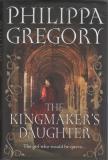
The Kingmaker’s Daughter, by Philippa Gregory, Simon & Schuster, 2012, rrp AU$36. ISBN97 80857207463.

The fourth book in the Cousins’ War series, this is a portrait of Anne Neville, younger daughter of Richard Neville, Earl of Warwick.  Her childhood is warm with the friendship with the powerful Yorkists, including the youngest son, Richard of Gloucester, but this changes rapidly as the  families become enemies. She faces exile in France, and becomes a pawn in her father’s ambition to regain his lost power, forced into marriage to the only son of  Henry VI’s ruthless Queen Margaret. All too soon she is fatherless, widowed, with her mother confined in sanctuary and her elder sister Isabel married to the fickle Duke of Clarence. Danger is never far away even when Gloucester rescues her from Clarence’s hold, marries her and she eventually becomes his Queen for the rest of her life of two short years and the tragedy it brings.

There is always room for more about Queen Anne, and I appreciated the volatile relationship between the two sisters that rang so true to life. But it seems a lot is missing. I wanted more. I hate to think that it was written too swiftly – maybe a publisher’s behest to meet a good sales deadline. What will the next book in the series tell us? Apparently it is about the possible fate of the two princes, part of the story about their sister, Princess Elizabeth of York – Richard III’s secret lover.

Oh dear.

Tags: , , , ,

11
Nov

A Meal Fit for a King

   Posted by: Dorothea Preis    in Medieval Menu, Medieval Miscellany

On this website, Julia has brought us a variety of recipes with a medieval flavor, so when a friend recently posted a link to a YouTube clip of ‘Clarissa and the King’s Cookbook’, I immediately thought of her and all our readers interested in cooking.

In this programme, well-known TV chef Clarissa Dickson Wright investigates The Forme of Cury, a cook book from the court of Richard II, and also tries out some of the recipes.

While with the “cury” of the title, we may think of our favourite Indian or Thai restaurant, here it is simply the Middle English word for “cookery”.  It is one of the oldest cook books in English, compiled by the master-cooks at the court of Richard II (1367-1400).  It is a manuscript scroll made of vellum.  Altogether it contains 196 recipes, from everyday dishes to impressive dishes for banquets, including the spectacular subtleties.

Some of the things on offer sound a bit strange to modern ears, such as whales, cranes, curlews, herons, seals and porpoises. Let’s hope that 600 odd years ago they were more plentiful than today.

On the other hand the spices like caraway, nutmeg, cardamom, ginger and pepper were rare and exotic then, whereas today you find them on any supermarket shelf.  I found the mention of olive oil quite intriguing, as not that long ago most northern Europeans would have regarded olive oil with some suspicion as foreign.

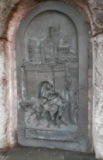
The photograph shows one of a series of reliefs depicting the life of St Martin (1983) at the Bonn Minster by renowned artist Ernemann Sander  (photo by Dorothea Preis)

One of the recipes, Clarissa tries out on the show, is goose with a stuffing of herbs and fruit.  It sounds quite delicious and I could imagine it serving to my family.  Where I come from, goose is the typical meal for the feast of St Martin (11 November – which is why I posted this today) and Christmas.  Not that this was the only treat on this saint’s  feast day.  At primary school we would make lanterns to walk in the St Martin’s procession in the late afternoon, complete with someone dressed up as the saint riding at the front and reenacting the episode of cutting a cloak in half.  Afterwards we would each get a “Weckmann”, a pastry in the shape of a man.

Weckmann (photo by Flammingo, obtained through Wikimedia Commons)

The recipes have been used in a book, To the King’s Taste: Richard II’s Book of Feasts and Recipes Adapted for Modern Cooking.

Tags:

8
Nov

Richard III, the ‚Bösewicht‘

   Posted by: Dorothea Preis    in Greyfriars Dig, News, Richard III in the Media

The interest in the findings in Leicester is not limited to the English-speaking world.  One of the two main German TV station, the ZDF (Zweites Deutsches Fernsehen), also reported on it as part of their news and interviewed John Ashdown-Hill for the short feature (approx. 2 minutes).  The dig in Leicester was based on John’s research, outlined in his book The Last Days of Richard III.

So far I had known John only through his books and from photographs, so this was the first time I met him ‘live’.  This was the highlight of the programme, as I was rather disappointed with the reporting around it.

The moderator introduces Richard III as the “probably most hated king in British history”, who also features as the “main character of a Shakespeare drama”.  This gives you a good idea on the line they are going to follow:  history as told by that great “historian”, William Shakespeare.

We learn that Richard had numerous people killed, two brothers and nephews, but also “at least one wife”.  Now, please, even Shakespeare doesn’t give him more than one wife!  It was only his great-nephew Henry VIII, who had the bad track record with multiple wives.

As there is no mention that any view of Richard but Shakespeare’s even exists, it comes as a bit of a surprise when the reporter finishes with “Richard, the villain.  Maybe this part of history now needs to be rewritten.”  Unfortunately finding Richard’s bones will not be not sufficient to change the popular opinion of this king.

And while I am on my rant, there is also a minor point.  In the beginning we see the sundial at the Bosworth Battlefield Centre and the voice over informs us that this is the spot where Richard was killed.  Well, not exactly, the actual battlefield was a bit away.

In my family, ZDF had been the broadcaster of choice, for its accuracy in its news coverage as well as for entertainment.  A pity, but even John Ashdown-Hill cannot make me overlook the shortcomings in this short programme.  I would have expected better!

Watch the programme at http://www.zdf.de/ZDFmediathek#/beitrag/video/1768286/Grab-von-K%C3%B6nig-Richard-III-entdeckt

Tags: , , , , ,

3
Nov

The Children of the King

   Posted by: Julia Redlich    in Bookworm

Book Review:  The Children of the King

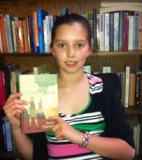
One of the rewards of speaking to groups about King Richard III and the Society is the appreciation received afterwards. When Dorothea and Julia spoke to U3A Harbourside North at Mosman recently, not only did we enlist two new members, but also received a welcome book token. Our choice was to buy The Children of the King, by Sonia Hartnett, an Australian author who has won multiple awards for her books including the prestigious Astrid Lingrin Memorial Award in 2008.  Because Hartnett’s books are specially for young people, we asked an 10-year-old to read it for us and share her thoughts.

The Children of the King, by Sonia Hartnett, Viking, rrp $24.95. ISBN 978 0 670 07613.

The Children of the KingThis story is about two girls and a boy during World War 2. Cecily and her brother Jeremy move with their mother to their Uncle Peregrine’s house in the north of England to escape the bombing in London. They also decide to look after another girl called May who is there on her own. Jeremy, who is older, is worried about his father who has to stay in London, and wants to be with him.

The girls find two strangely clothed boys hiding in old crumbling Snow Castle nearby. They learn they were brought there and can’t leave. Uncle Peregrine tells them about an old kingdom when Snow Castle was not a ruin. Over time he tells more of what happened then, of a Duke who became king and did his best, but was killed. May believes that the two boys in the castle who reappear at times were two who disappeared mysteriously long ago. Together the girls find out whether the past can live with the present.

My favourite part of the story is definitely when Uncle Peregrine tells the story of Snow Castle and its mysteries. No-one ever found out about it. The story is really engaging, the history is told slowly. It made me want to find out more about the times – and especially about the two boys, who they were and what happened to them. I give this book Three Stars out of Three!!!

Annaliese

Note: The Children of the King is a great gift idea for young people in your life. Annaliese’s Aunt Lucy and her grandmother couldn’t put it down, which accounts for the all ages queue waiting to read it!

Tags: , ,

The following Press Release was published by the Executive of the Richard III Society in the UK on 30 October 2012.

DISABILITY IS NOT A DEFORMITY

• Greyfriars dig raises questions over Richard III’s ‘hunchback’ appearance
• Richard III Society calls for reassessment of ‘lazy hunchback myth’
• What is the difference between scoliocis and kyphosis?

It is time to end the lazy acquiescence with the Tudor and Shakespearean myths about Richard III. If the body found at the Greyfriars dig is Richard III, it proves he was no hunchback and if he suffered from scoliosis that is no reason to denigrate him. In this Paralympic year, we celebrate the achievements of all who overcome disabilities, let’s do the same for Richard III…

On 12 September at a press conference in Leicester’s Guildhall, Richard Taylor of the University of Leicester outlined the evidence that points to the skeleton discovered on the site of the Greyfriars being that of King Richard III. He also confirmed that it had a curvature of the spine known as scoliosis.

Scoliosis is a fixed and abnormal sideways curvature of the thoracic and lumbar regions of the spine. It can result in one shoulder being slightly higher than the other, in the case of the Greyfriars skeleton, the right shoulder.

The press conference also made absolutely clear that the skeleton did not have kyphosis, which can result in a hunchback.
So if this is Richard III, he was not a hunchback, contrary to the myths about his physical appearance.

Nowadays severe scoliosis can be corrected by surgery, although those with the condition still face challenges in their lives.

The Scoliosis Society notes that some are inspired by older siblings to overcome such challenges; Richard may well have been similarly inspired by his charismatic elder brother Edward IV. As duke of Gloucester and king Richard led an active life as an effective administrative and military commander, if he had a disability he clearly overcame it.

However there is no contemporary evidence that Richard III suffered from any visible physical problems. The only surviving description of the king is provided by a Silesian visitor, Nicholas van Poppelau, who spent time at Richard’s court in 1484. He described the king as lean, with delicate arms and legs and that he was ‘three fingers taller’ than Poppelau himself.

The legend of Richard’s hunchback began in the early days of the new Tudor dynasty when it was expedient to denigrate the reputation of the dead king; to contemporaries, a deformed body was easily associated with an evil mind. This reached its climax with Sir Thomas More, who described Richard as being ‘little of stature, ill-featured of limbs, crook backed …’.

Tudor chroniclers repeated the legend and provided the basis for Shakespeare’s portrayal of a king who is ‘determined to prove a villain’. It was all character assassination and historical ‘spin’.

-ends-

About the Richard III Society

With a worldwide membership and local branches the Society is actively engaged in original research through its own initiatives and through collaboration with other institutions bodies and scholars. Through the Richard III and Yorkist History Trust, a charitable body established by the Society, we publish important academic works and make research grants. The Society publishes an annual journal, The Ricardian, with original articles on fifteenth century history and a quarterly members’ magazine the Ricardian Bulletin.

Members of the Richard III Society are available for media interview on any topic concerning the life and times of Richard III, the Leicester dig or any related matter.

Richard III Society Press Office
NEW CONTACT DETAILS
Press Officer
Peter Secchi

+44 7780 866225
peter@crunchcommunications.co.uk
www.richardiii.net

Or contact the NSW Branch on:  webmaster@richardiii-nsw.org.au

Tags: , ,