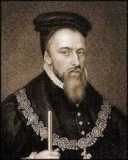
We are pleased to publish on our web site the excellent article on the life and times of Thomas, Lord Stanley.
Researched and written by Michael Ilieffe. This article is well worth a read by anyone interested in history at the time of Richard III.
Please click on the link below (Thomas) to read the article.
Thomas Lord Stanley
Felicity Pulman’s The Once and Future Camelot
‘They would do anything to be reunited with those they love, even if it means travelling beyond the boundaries of the world as we know it.’ Two women, descended from Morgan le Fay, but living almost 1000 years apart, share catastrophic visions of the future. When their lives collide in a garden in Glastonbury, they realise that only magic can save them. Felicity Pulman’s The Once and Future Camelot, sequel to I, Morgana, is published by Momentum/Pan Macmillan Australia, and is available through all e-book retailers.
9 April 2016 Richard III Society – NSW Branch General Meeting
The branch met on Saturday, 9 April 2016, at the Sydney Mechanics Institute on Pitt Street, with a good turnout of regular members. Following some brief welcoming remarks from our Chairperson, our featured speaker, member Judy Howard, presented her talk about the Crusades from the Byzantine perspective.
Following the presentation, Judith requested that members come up with any suggestions for guest speakers for next year’s programs or for members to volunteer to give a presentation themselves. Also, the Executive Committee is in need of assistance as it is running on a skeleton crew. If you can offer some of your time please contact her to discuss. The position of Affinity Editor will also be available at the next AGM in October so please consider contributing some time to helping out the Branch in the coming year.
Scrabble letters were then drawn by those members willing to give a talk in October on a topic starting with the letter they drew. After that the raffle prizes were drawn and we had a lavish afternoon tea provided by Joan. The next meeting will be 11 June 2016, when our guest speaker will be Tony Cunneen on the topic, “How Shakespeare’s Machiavellian View of Richard III has shaped history.”
13 February 2016 Richard III Society – NSW Branch General Meeting
The first branch meeting of the New Year was held on Saturday, 13 February 2016, at the Sydney Mechanics Institute on Pitt Street, with a good turnout of members. Welcoming remarks were offered by our Chairperson, then we stood for a minute of silence in remembrance of the recent passing of our long-time member Robin who was always such a warm and welcoming presence at meetings.
A steering committee of three keen members is beginning to organize a ‘mini-conference’ for 1 – 3 November 2016 to be held in Albury at a medieval themed hotel. They are hoping that members of the Victorian Branch will be able to attend, as well as New South Wales members. If people are interested in getting involved, helping out, or being on the mailing list for further information please contact Kevin directly. Details of the mini-conference will be provided via the branch website and newsletter as they become available.
Our guest speaker was Mr Gerard Windsor, a well-known Sydney author and literary critic. He has published books of poetry, fiction, documentaries, essays and literary criticism. One of his particular interests is Pilgrimage, and he has taken a number of his own pilgrimages to various important medieval sites. Gerard’s topic was “The Middle Ages in Our Australian Consciousness.”
After the presentation, the raffle was drawn and we adjourned for a lovely afternoon tea provided by Joan. It was a good start to the new year.
Leslie McCawley
Anne O’Brien, The Virgin Widow. Mira Books, Australia 2010. ISBN 9781741 1685767 (477 pages)
As a Ricardian of nearly a decade, I am familiar with the outline of Anne Neville’s short life, and the way her father “Warwick, the Kingmaker” used her as a pawn in his power dealing after losing the role of advisor to Kind Edward IV, and her eventual marriage to Richard, Duke of Gloucester, whom she had known since childhood.
This is a fictional account by Anne O’Brien, told in first person from Anne Neville’s point of view. It covers the few known facts but adds interpretations of the author’s own, most of which did not sit well with me. For instance, I have no reason to believe Margaret of Anjou or her son were utter monsters with an implied incestuous relationship. However, I realise that fiction allows the author to do as she pleases,
and if one wants facts one leans towards nonfiction. What pleases this author is to write in the genres of historical fiction and romance, according to popular book website Goodreads If I had realised any dialog from the romance genre would appear, I would have passed on reading it. In fact, wincing while reading through
these embarrassing scenes was a new experience for me as my usual reading matter never requires wincing.
As it happened, my husband and I read this one aloud together, discussing our impressions as we went. Neither one of us enjoyed this telling, but ploughed through it dutifully, as we felt we owed it to poor Anne Neville whose story is not often the main attraction. And we kept hoping the payoff would make it worth our while.
I believe it is generally an accepted historical fact that Anne escaped from her brother-in-law and legal guardian George, Duke of Clarence, and briefly lived in hiding as a serving woman in a tavern owned by Lancastrian supporters until tracked down and rescued by Richard. That episode is retold in this book by having Clarence himself banishing her to his own kitchens where she is only found and saved, by clever thinking on her part, from being sent to a cloistered convent for life so that he can claim all of her lands. The real story is much more compelling and I did not see why the author would alter it.
I am fascinated by what is known about Anne Neville, in that she was used by her scheming father to forge precarious alliances and that she had no say whatsoever about marrying Eduard, the Prince of Wales, the Lancaster heir. Then just a few years later she married the man who probably killed him. Her mind and heart must have been scrambled in those days; not knowing whom to trust or believe. Your closest loved ones willing to use you, however they could, to their own advantage. It is so monstrous that I can barely imagine what her emotional life would have been like. Dying so young almost seems like a reprieve!
Many Goodreads readers give this volume high marks, so it may be enjoyable to some people. To me it was too slow, too bland, too embarrassingly ‘bodice—ripper cliché’ in some parts, and just far too long. I was yearning for it to be over long before it was, and that is rare in my reading life. My husband soldiered on reading
aloud, however, and it finally came to an end, seemingly arbitrarily, before her second husband was even made King.
We would not recommend this book to anyone except the most diehard Ricardian with no other book at hand. There are so many wonderful Ricardian books available that I would really have to say ‘don’t bother!’ That said, there was little revelling in graphic violence, vile language or detailed sex scenes, and I appreciated that.
Leslie McCawley
Welcome
Welcome to the NSW branch of the Richard III society web site.
Richard III (2 October 1452 – 22 August 1485) was King of England from 1483 until his death in 1485, at the age of 32, in the Battle of Bosworth Field. He was the last king of the House of York and the last of the Plantagenet dynasty. His defeat at Bosworth Field, the last decisive battle of the Wars of the Roses, marked the end of the Middle Ages in England. Following the discoveries of Richard’s remains in 2012 it was decided that they should be reburied at Leicester Cathedral despite feelings in some quarters that he should have been reburied in Yorkshire. His remains were carried in procession to the cathedral on 22 March 2015, and reburied on 26 March 2015.
New members are welcome please contact us for details.
Friday, 23rd October saw a grand number of Ricardians arrive at the Angus Inn in Lower Hutt for our biennial convention. The evening found us in the Inn’s Tatler Room, having the pleasure of greeting old friends and making new ones. New Zealand’s chair, Deirdre Drysdale, and Secretary/Australasian Vice President Rob Smith welcomed us with a rundown of proceedings and read a message from Dr Phil Stone wishing us a successful and rewarding gathering. A highlight of the evening was, of course, the traditional candle ceremony when representatives of each Branch lit a candle representing our members and for Richard. Then delicious nibbles (a feast in themselves) and wines and great conversations were enjoyed.
Saturday morning, we arrived promptly at 9am in the Woburn Room for two days of splendid programming organised by Annette Parry, covering a wealth of topics to keep everyone considering and sometimes rethinking for a long time to come.
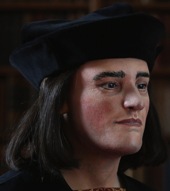
Tony Dodgson (from Yorkshire) took us on The Road to Middleham, an imaginative interpretation of what might have been Richard’s life. This was followed by Margaret Manning’s account of Richard’s head – and her recent meeting in Scotland with Dr Caroline Wilkinson whose incredible skills had created the new image of King Richard that now seems so familiar to us all. Comments afterwards revealed our pleasure in his assured and untroubled appearance – and the fact that he wasn’t a blond!
Memories of Leicester came from several of those fortunate enough to be in the city for the re-interment. The overwhelming feeling was the warmth of Leicester, its people, the hospitality, the volunteers and the genuine interest in Richard III from the thousands of visitors, not just the Society members. Denise Rawling particularly remembered the Bishop of Leicester, fully robed, walking among the lengthy queues early each morning, happy to talk to everyone.
White roses were of course everywhere, but Denise also mentioned that there had been some ardent Tudor supporters placing red roses where they weren’t wanted and how they had been quickly hidden. Victoria’s Michael Iliffe spoke about meeting our Patron, HRH the Duke of Gloucester, whose interest in Richard III and Australian Branches led to an interest in Australian cricket and the Ashes …
Following this, Julia Redlich said “Let Us Tell Stories”, with a look at medieval prose and poetry ranging from Chaucer and the Pastons, to Julian of Norwich and Mallory. This included some delightful input from other Branches’ members as well as our own Maureen Gray, whose lovely reading of “I Sing of a Maiden” was one of the poems by the ubiquitous Anon. The finale was the rousing ballad “Bring Us Good Ale” in which all delegates joined in the chorus. And of course, an excellent buffet lunch followed!
Before the afternoon events there was a chance to buy raffle tickets for the covetable array of prize options, as well as swoop on the display of Maureen’s delightful White Rose jewellery that she had brought. New South Wales members will not be surprised to know how rapidly they were all sold. A white rose necklace was presented to Deirdre on behalf of the NSW Branch.
First talk after lunch was from Kaye Bachelor who intrigued us about her experiences of taking part in an archaeological dig, although not the one in the car park. She told of the slow process of removing top soil, bad weather, detailing and identifying the finds and the poignancy of uncovering human remains, always treated with respect. The gradual connection of items, so painstaking until the final picture, be it of a pottery jar or a king’s skull is revealed. The worth of sound research seemed familiar.
A complete change of subject followed with the Victoria Branch’s “An Interview with Henry VII”, another of Michael Iliffe’s clever interpretations of history, following his “Battle of Towton” and “An Interview with Richard III” at previous conventions. We were royally entertained by seeing Henry’s sneaky ways of avoiding the truth and the manipulative skills of his followers. Then we were taken on a trip of places with history with great illustrations: Emma Holmes told us of the Isle of Man and its connection with the Stanley family, and Pam Killalea spoke of the stories behind Belvoir Castle and Haddon Hall.
Time to go back to the future when Jane Orwin-Higgs, whose Ricardian short stories are familiar to many of us, chose to talk about Richard III Online. How different the world has become since the founding of The Society of the White Rose that later became The Richard III Society. Richard is now a man of the 21st century where he is talked about worldwide – and not just the man in Shakespeare’s play, although there are still plenty of objections from the traditionalists. But we contact each other by email, via Facebook, Twitter and through our websites – and books about Richard III and his life and times are available at the click of a mouse. There are pros and cons with all the new formats we use, but with this virtual world King Richard, as it has been said, is boldly going where no king has gone before.
Last item on Saturday’s programme was from NSW’s Helen Portus and Denise Rawling with a presentation titled Controversy. A wealth of illustrations showed how the world, since the discovery in the Leicester car park, has taken a fresh look at the last Plantagenet king. We saw how the media regarded him – the good and bad reports, the absurd ads that featured him and golden oldies that made us smile. There were messages from Philippa Langley and John Ashdown-Hill, comments from Phil Stone and Michael Ibsen, plus a rundown on the impact the discovery of Richard’s skeleton had made on Leicester, the attention, involvement AND the income. And, of course, the awards and recognition for Philippa and John, and Leicester University. Then came a dvd of journey from the university via Bosworth to Leicester and the crowds who were there to acknowledge King Richard passing by and finally the reinterment. Could any of us see it too many times?
With the promise of a continuation of this presentation on Sunday, the business end of the day ended. By 7 o’clock though we were all gathered together again in the Tatler Room, most in sumptuous medieval costumes and enjoying some bubbly before heading back to the Woburn Room that had been transformed for the banquet. Toasts were proposed and drunk to Her Majesty the Queen of Australia and Queen of New Zealand, to King Richard III and to the Richard III Society. A splendid feast for us followed, and conversation flowed throughout the evening when all delegates realised the reward of friendship with our fellow Ricardians.
Sunday morning saw us eager for the final day’s programme. Annette Parry took us on a tour of Wakefield, with many illustrations from her recent visit there. We viewed the battlefield, the positions taken by Richard of York and Margaret of Anjou’s armies, the tower where Richard of York’s papercrowned head was hung. Later we were taken to Fotheringay to visit the church and the remains of the castle to which his youngest son Richard, now Duke of Gloucester, escorted the bodies of his father and brother, Edmund of Rutland for dignified burial.
Hazel Hadju from Victoria took the stand next, her subject was Bosworth: The Birth of Tudors. She particularly wanted to recommend this book by Yorkshire MP Christopher Skidmore, which takes a fresh look at Bosworth and further exploration of the role of Catherine de Valois, Henry V’s widow, and Somerset, the man who may have been the father of Edmund Tudor. An excellent bibliography was included, and Hazel is looking forward to the publication by Wiedenfeld and Nicolson of Skidmore’s next book The Lives of Richard III.
Consideration of Margaret Beaufort followed and Victoria’s Gillian Laughton picked up on the implication of the Tudors’ parentage. Margaret’s marriages were many, wed so very young to Edmund Tudor to whom she bore her only child, Henry. After Edmund’s early death, she was married to Henry Stafford, the second son of the Duke of Buckingham. Another Lancastrian you might imagine, but in fact, he fought for the Yorkists, although recognising her ambition for her son. Their marriage ended with his death, and her final marriage was to the then Yorkist supporter, Thomas Stanley.
Denise and Helen took up the tale of the reinterment and some inconvenient truths, such as the lack of mentioning the contribution of Philippa, John and the Society on university websites (thankfully adjusted). It was as John Ashdown-Hill commented like “the Wars of the Roses Part Two”. There were countless abusive and hurtful comments about the Society online and the unfortunate clash with the newly minted Plantagenet Alliance that wanted its way regarding the site for reinterment, and then the lengthy, expensive inquiry and final judgement that the first decision was the right one. Even the undertakers, the Leicester firm of E. C. Gilbert responsible for the basic reinterment arrangements, had been refused the loan of a special carriage by the Royal Household and the Military, hence the simple and effective carriage with its growing tributes of white roses that were more effective than all the regal trappings that might have been.
Then we had the privilege of meeting many of the unsung heroes introduced by Helen and Denise. They included Fraser and Jenny Gilbert, Richard Buckley and the chaplain from the University of Leicester, the pallbearers from the army, the horse handlers, the volunteers and the little Brownie who laid the crown, designed and donated by John, on the coffin. At Bosworth Field, we met Becky, the falconer presenting a display there; in Leicester those staffing the tea-carts to refresh those in the massive queues. And, maybe the most moving, we were taken to Swaledale in Richard’s Yorkshire to see the selection the stone for his tomb.
This was the final presentation of the convention in a year that has meant so much to all Ricardians, one in which the world is coming to realise that we are not myth-makers but have a genuine cause to research the life and times of Richard III.
And our work in this will not stop. The necessary business end of the convention was conducted by Rob Smith, unanimously re-elected as the Australasian Vice President. He spoke of the important meeting that he, Dorothea from NSW, and representatives from the USA and Canada had with the Executive earlier in the year. The subject of proxy votes would be seriously considered for the USA, Canada and the Australasian branches, and the momentum of the Society’s work meant the acceptance of online communication, the use of social media such as Facebook, Twitter and the ever-developing number of programs created for instant information and connection. It is vital for all individual branches and groups to accept this. It is the way the world lives now, totally embraced by the new generation who will carry on the work of the Society for us in years to come.
The Australasian Branches will meet again in 2017, the convention being in the safe hands of the Western Australia Branch. The convention ended with the raffle draw and results of the two quizzes – the revised History by the Stars from Julia and a challenging one based on the Dukes of York in history from Lorraine McArthur. And so to lunch and laughter before rather reluctant farewells and thanks to the New Zealand Branch for a truly memorable time. Loyaulte me lie
Chairperson’s Report October 2015
The Richardian Year 2014-2015 has proved a very exciting one for all members of the New South Wales branch of the Richard III Society Publicity concerning the discovery and the reburial has resulted not only in a boost to our membership but also greatly increased interest from many people outside the Society.
Several of our members were able to travel to Leiceister to participate in the celebrations to mark Richard III’s reburial in and around the city. Our Treasurer, Judy Howard, was fortunate enough to be selected to the Compline Service in the Cathedral when Richard’s remains were brought from Bosworth to lie in state. As close to this time as possible on 21st March many of our Sydney Richardians were able to commemorate Richard’s life and his achievements in a beautiful moving service at the Anglican Church of St James at King Street where in August we remember those who died with Richard at the Battle of Bosworth.
Upon their return from the United Kingdom, Dorothea Preis, Judy Howard and David Johnson presented a fascinating review of their time in Leiceister. During the discussion which followed, other members added their contributions which proved very enjoyable.
Particular thanks must go to our members who show such positive support to our hard-working committee but friendship to each other which ensures the smooth and enjoyable running of the Society. Our venue so centrally located at the Sydney Mechanics School of Arts with its proximity to public transport has proved very convenient to most people to access some even coming from as far as Brisbane and Armidale.
Throughout the year, members have been encouraged to learn more about Richard III and the world in which he lived. This has been capably encouraged not only by the very excellent Website presided over by Dorothea Preis but also with an array of wonderful guest speakers all of whom are experts in their particular fields. They have entertained us, inspired us to follow up their talks with research of our own and enriched our knowledge of Richard and his world. All talks have been presented in a well researched and scholarly manner, each subject being lavishly illustrated.
Wendy Schmit the President of the New South Wales Embroiderers Guild brought many beautiful examples of embroidery styles some of which have been practised since Medieval Times.
Almis Simans who has written a number of books about his extensive walks in the English countryside was able to illustrate his talk using contour maps and photos of physical features of the countryside where Richard would have ridden explaining the myths and legends associated with the land.
Maggie Patton, a well known curator from the State Library of New South Wales drew on the wonderful collection of delicately coloured maps held in the library to illustrate the “MappaMundi” how people in the fifteenth century would have perceived the wider world.
Another of our members the former parliamentarian, Chris Puplick, a self-styled medievalist, presented a lecture on the Garter Knights of Richard III
Margaret Rogerson an Associate Professor from Sydney University presented a wonderfully illustrated talk on the Medieval PlayCycle of York even supplying us with notes and references to study further.
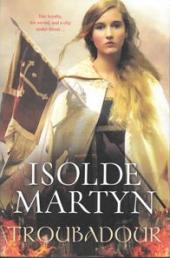
We are very proud of the enjoyment our very own authors, Isolde Martyn with her medieval romances and Felicity Pulman who specialises in adult fiction have brought to us and the book reading public.
Some of our members, particularly Kevin Herbert and Julia Redlich contribute to the general community by giving talks about Richardian subjects to groups such as National Seniors, University of the Third Age and various Probus Clubs. Maureen Gray continues to make her delightful white rose jewellery which members enjoy wearing . Sadly, our former committee member Johanna Visser passed away during the year. Several members were able to attend her funneral in the Southern Highlands where Kevin Herbert and Janice Ratter presented eulogies. Our bouquet of splendid white roses was much appreciated by her daughter.
Our hard working committee has earned our sincere gratitude. Rachel Allerton continues as Secretary while Christine Field has taken over as Treasurer from Judy Howard who is now more fully engaged in tertiary studies.
Dorothea Preis has handed over her role as Webmaster to Timothy and Lawrence Osborn. Unfortunately Dorothea’s excellent magazine Chronicles of the White Rose will probably not continue for the time being. We thank Dorothea most sincerely for the very hard work which she has undertaken for the Society for several years and wish her well for her committee work for the Society in England.
Thanks to Lesley McCawley ably assisted by her husband Doug for editing our newsletter Affinity.
Lynne Foley has kindly offered to continue as membership and sales officer.
Jacqueline Turner hands over her chairpersonship to Joan Hansen who also presides over afternoon tea.
We are most grateful to these people who keep our Society running so smoothly contributing their time and effort in such a selfless way and look forward to another worthwhile year.
Judith Hughes,
Chairperson and
programs organiser,
10 October 2015
The 10 October 2015 Annual General Meeting
of the NSW Branch of the Richard III Society
The Annual General Meeting of the NSW Branch of the Richard III Society was held on Saturday, 10 October 2015, at the Sydney Mechanics’ Institute. Chair Judith welcomed all members and visitors. Concern was expressed for members who have been facing illness and injury recently, with the sincere hope for their successful treatment, full recovery, and swift return to our meetings. Kevin was back after a year’s absence, and it was wonderful to see him looking well.
Judith gave a summary of our busy Ricardian year with the excitement of the reinterment ceremonies for Richard III in Leicester, the lineup of excellent speakers we were privileged to hear, the annual service, at St James Anglican Church to commemorate the Battle of Bosworth and remember Richard’s life and reign. Thanks were expressed on behalf of the branch members, for the hard work by the committee members throughout the year; the committee members then officially stepped down. Special thanks and a round of applause went to Dorothea for her 8 years’ service as a very active and dedicated webmaster and publications officer who attracted many international readers to our website.
Carole then facilitated the annual elections for the 2015-2016 committee positions. A number of officers returned unopposed to their roles, including Judith as Chair, Rachel as Secretary, Lynne as Sales Officer, Leslie as Affinity Newsletter Editor, and Joan as the afternoon tea lady. Newly elected committee members included Tim and Lawrence as webmasters, and Christine as Treasurer, with Joan expanding her duties to include Deputy Chair.
Our featured speaker was Mr Christopher Puplick AM, a long-time member of the NSW branch and a keen medievalist. His topic was “The Garter Knights of Richard III”, these being the various men that Richard selected for the honour of being made knights of the garter, that ancient order of chivalry. Hopefully a transcript of this interesting presentation will be posted on the website soon.
After the raffle was drawn, members enjoyed a lovely afternoon tea provided by Joan. The next meeting will be on Saturday, 12 December 2015. Our guest speaker will be Judith Mee, speaking on the topic of “Spoken and written English in Richard III’s time”. There will also be a Bring & Buy table, with proceeds going to the branch. It will be a good opportunity to recycle books and other items of interest. Please be prepared to take home anything that does not sell, however, as there is no provision for storage on site.
Tags: NSW Branch, Order of the Garter, Richard III