30
Sep

Thoughts on “Katherine the Queen”

   Posted by: Lynne Foley   in Bookworm

Lynne recently read Katherine the Queen and shares her thoughts as they concern Richard  about this book with us here.

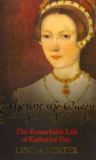
Linda Porter, Katherine the Queen: The Remarkable Life of Katherine Parr. Macmillan, London/GB, 2010  ISBN 978-0-230-74955-9 (hardback).

The connection  through service to Edward IV and Richard as Duke of Gloucester king, and the ancestors of Henry VIII’s sixth wife are well documented in this book.

In discussing Richard as a builder or renovator, Porter states on pp. 316-17 about Sudeley Castle:  “much of its current appearance and appointments in the mid-sixteenth century, it owed to improvements made by Richard when he became king.  He added the banqueting hall and the state rooms and might have spent much more time there if he had reigned longer.”

Disappointingly, she thinks that Richard was out to gain the throne for himself and that was why his ‘lieutenant’ in the north, Sir William Parr, left court and returned to Kendal Castle when Richard became King; however his wife Elizabeth was close to Anne Neville and made a lady-in-waiting.  William’s younger brother Thomas died fighting with Richard at Barnet and is one of the six gentlemen mentioned by Richard when arranging for prayers to be said for their souls and for “all lovers of the House of York.”  So often we encounter his – Richard’s concern for the ordinary person.

Tags: ,

29
Sep

Michaelmas

   Posted by: Dorothea Preis   in Events in History

Today is Michaelmas, or the day of St Michael and All Angels.  This is one of the feast days which are often mentioned in medieval sources as it used to be one of the quarter-days in England.  By Michaelmas the harvest had to be completed, so it became the day when rents had to be paid, magistrates and councils were elected and on manors the peasants elected a reeve.  It was also a Holy Day of Obligation, meaning the faithful were obliged to attend mass.

The date of Michaelmas, 29 September, is about the time of the (northern hemisphere) autumn equinox, when the nights were getting longer and Michael came to be seen as the protector against the forces of the dark.  Many monasteries and churches, often near the sea, were dedicated to him.

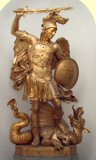
Michael is one of the archangels and his name means “Who is like God?”.  St Michael is said to be the captain of the heavenly armies and is therefore generally pictured in full armour, carrying a lance and with his foot on the neck of a dragon (based on Revelation 12, 7).  You can distinguish him from St George, who is often shown in a similar pose, by his wings.

The traditional meal for Michaelmas would be roast goose.  The geese had fed on the stubble of the fields after the grain had been harvested.  In some places there was also a tradition of special large loaves of bread just for this day.  Carrots were a traditional accompaniment to the goose.

Michaelmas Term is still the name of the first term of the academic year at many British universities and some schools.

As an illustration for this day I simply couldn’t resist the photo of a statue by Wilhelm Rottermondt (1701 – 1755) of the Archangel Michael at my alma mater,  Bonn University, and therefore is of personal significance.

Bibliography:

Michael and All Angels”, The Mission of St. Clare, accessed 21 Sept.2010
Michaelmas”, Alice’s Medieval Feasts & Facts, accessed 21 Sept. 2010
Michaelmas Day”, The Old Foodie, accessed 21 Sept. 2010
September, 29th”, Hillman’s Hyperlinked and Searchable Chamber’s Book of Days, accessed 21 Sept. 2010

Photograph of St Michael at Bonn University taken by Michael Jaletzke; obtained through Wikimedia Commons.

Tags: , , ,

28
Sep

Reminder: Subscriptions are due!

   Posted by: Lynne Foley   in NSW Branch News

Just a short note to all our members:  The subscription renewals are due by the end of this week, on 2 October!  If you have not yet done so, could you please make sure to send your renewal form with payment of the subscription fee to Lynne asap.

If you are not yet a member, but have been thinking about it – now is the ideal time to do so.  Just contact our Branch Secretary for a form (info@richardiii-nsw.org.au).

In case you are wondering why 2 October is the important date?  That was King Richard III’s birthday and the Richard III Society therefore chose it as the beginning of their financial year.

Tags:

27
Sep

Book Review: The Red Queen

   Posted by: Dorothea Preis   in Bookworm

Julia has just finished reading Philippa Gregory’s new novel, The Red Queen.

She says that she found this review hard work.  We must also keep in mind that it is fiction, which means that some of the ideas are imagined and/or unproven.  However, it should inspire interest in the period.

You can find Julia’s review here.

Tags: ,

17
Sep

Richard’s Birthday Party

   Posted by: Kevin Herbert   in Meetings

This year we are thinking of trying something entirely different for the celebration of Richard III’s birthday.  We are going out of town to Sutton Forest Inn in the Southern Highlands.

We heard that the Bistro is very pleasant and that the food is excellent and varied in a range of prices, for example roast lamb, two varieties of fish dishes with salad and chips, sausages, steak sandwiches, chicken vindaloo and much more.

There are usually four or five desserts, all home-made there, varying with the season.  Coffee and tea are of course also available.  Drinks are available from the bar.

So keep Sunday, 3 October, at 12 noon free!

Please confirm whether you are attending with Kevin by Saturday, 25 September.  Kevin can also help with travel advice.  You can contact him at:  social@richardiii-nsw.org.au.

Tags:

16
Sep

The Pleasures and Problems of Writing Historical Fiction

   Posted by: Felicity Pulman   in Medieval Miscellany

Historical novelist Felicity Pulman gave this delightful talk at the one day convention of the NSW Branch of the Richard III Society in Sydney on 15 May 2010.  You can find out more about Felicity here.

Richard III was the last of the Plantagenet line, whereas my sphere of interest and expertise lies with the progenitors of the line: the Empress Matilda, daughter of Henry I, and her second husband, Geoffrey of Anjou, he who wore the planta genet, the sprig of broom in his hat that served to name a dynasty.

Let me start with a brief history.   Matilda was born in 1102. Henry’s son, William, heir to the throne of England, was born in 1103.  But he drowned in the White Ship disaster in 1120, leaving Matilda as Henry’s only legitimate heir. Read the rest of this entry »

Tags: ,

12
Sep

Read all about it!

   Posted by: Dorothea Preis   in NSW Branch News

Volume 3 of The Chronicles of the White Rose has been posted to those members and friends of the New South Wales and Queensland  Branch who were unable to attend the August general meeting.  You should receive your copy shortly.

We have also received the Mbag with both the June and September Ricardian Bulletin for our branch members, which will be posted to all members  in the coming week.  Lots of interesting articles, as always.  Unfortunately the situation about the 2010 Ricardian has not yet been sorted, but we’ll keep you posted.

Tags:

9
Sep

St David’s, Pembrokeshire

   Posted by: Isolde Martyn   in Ricardian Places

The following article  was originally published in The Plantagent Chronicle, newsletter of the Plantagenet Society of Australia, Vol.12, No.4, August 2010.  You can find out more about Isolde Martyn here.

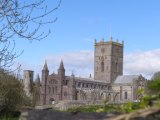
St David’s Cathedral (© Isolde Martyn)

Some of you may have recently seen the Terry Jones TV documentary series on a seventeenth century road map which showed a route through Wales to Holywell via the village of St David’s. We had the opportunity to visit St David’s in the English spring this year and discovered it to be a very picturesque area, steeped in history and as pretty as Cornwall but without the hordes of tourists. But for me, there were three surprises, which I’ll share with you shortly. Read the rest of this entry »

Tags: , , ,

8
Sep

Let’s Drink to That!

   Posted by: Dorothea Preis   in News

Thanks to Karen Clark I read recently a note about “King Henry VI English Spring Water”.  To be honest at first I thought that it might be a belated April Fools’ joke, but it seems to be for real.

After the loss of the Battle of Hexham on 15 August 1464 the Lancastrian king Henry VI stayed in hiding for several months with Sir Ralph Pudsey, a Lancastrian supporter, at Bolton Hall.  This is in Bolton-by-Bowland in Lancashire, not far from Skipton, the home of another Lancastrian family, the Clifford (see here).  There is a memorial to Sir Ralph Pudsey in the local church, which also includes his three wives and twenty five children. Read the rest of this entry »

Tags: ,

7
Sep

I can see clearly now…

   Posted by: Dorothea Preis   in Medieval Miscellany

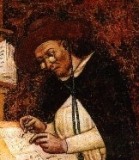
Tommaso da Modena, Hugh of Provence (1352)

Recently Susan Higginbotham of the American Branch of the Richard III Society made a remark that Robert Dudley, Earl of Leicester, purchased a number of pairs of “spactakells” for himself during the years 1584 to 1586.[1]  Reading this, squinting at my computer screen because I had forgotten my own reading glasses somewhere else, made me wonder whether Richard III approx. 100 years before Dudley would have had access to glasses.  He might very well have needed them, had he been allowed to grow old.  Presbyopia, where the ability to focus on near objects is diminished, is one of the symptoms caused by the natural course of aging.[2] Read the rest of this entry »

Tags: ,