Archive for the ‘Bookworm’ Category

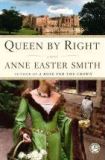
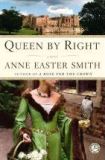
Queen by Right

Book Review:  Queen by Right

Anne Easter Smith, Queen by Right.  Touchstone, New York, 2011.  ISBN 9781416550471 (paperback)

The queen of the title of Anne Easter Smith’s latest novel is Cecily Neville, the mother of Edward IV and Richard III.  Many readers of historical fiction will shared the experiences of  her sons in novels, but this has been much less the case for Cecily.  And after meeting Anne Easter Smith’s Cecily I can only wonder why.

Queen by Right covers Cecily’s life from 1423, when she is eight years old, until her son Edward’s coronation in June 1461.  And while the events of the remaining 34 years of Cecily’s life would easily provide enough material for at least one other novel, I welcome her decision to limit this one to the earlier – and at least for me – less well-known period. Read the rest of this entry »

A few items discovered in my never-ending task of trying to relieve my bookcases of excess material (96% of those selected to be discarded always return home).

In a copy of No Turn Unstoned * by Diana Rigg (a wonderful actor mainly remembered for her leather-clad Emma Peel in television’s “The Avengers”) she compiled a collection of awful theatrical reviews and among them:

Ian Holm in The Wars of the Roses.  Shakespeare’s Richard III, Stratford- on -Avon, July 1963.   Reviewed by The Times.

Mr Holm still presents Gloucester as a likeable juvenile, open-faced and friendly in spite of his hump and surgical boot. Mr Holm’s reading  …fails totally to develop in Satantic magnitude.  Instead of the boar, the bottled spider or the bunchbacked toad, Mr Holm remains a high-spirited minor;  he exhausts his lung power in the later scenes, but finishes up on Bosworth Field loaded down with an armour of medieval weapons crooning to himself like a baby inside his visor. Read the rest of this entry »

19
May

Guest post by Anne Easter Smith

   Posted by: Dorothea Preis Tags: , ,

We are thrilled to welcome a guest post by well-known Ricardian novelist Anne Easter Smith, author of A Rose for the Crown, Daughter of York and The King’s Grace.  I loved all her previous novels and am now impatiently awaiting delivery of her recently published Queen by Right about Cecily Neville, duchess of York.  In her guest post Anne examines the rumour that Edward IV was not the son of Richard, duke of York.  Thank you so much, Anne, for sharing this with us.


Cecily’s so-called affair

I was drawn to writing about Cecily Neville as soon as I began researching my first – and what I thought would be my only – book A Rose for the Crown.  I could not write Richard III’s story without knowing a lot about his parents and his siblings.  Oddly, Cecily did not appear at all in that book, but in a few scenes her absence hung over the brothers Edward and Richard and you feel she is an indomitable presence in their lives.  Indeed, I think one of the reasons Edward chose not to reveal his secret marriage to Elizabeth Woodville for so long was because he feared a slap upside the head from Proud Cis.  And boy, did she give him one when the marriage was finally outed, and, according to the Italian visitor Dominic Mancini who was in London in 1484 – twenty years after the fact – and was the first to write about the rumor, Cecily “fell into a frenzy.”  It was partly because of the scorn she had for this upstart nobody Woodville woman who must now be called queen that she began to style herself, “Cecily, the king’s mother, and late wife unto Richard, by right king of England and of France and lord of Ireland.”  Or as my title infers, “Queen by Right.” Read the rest of this entry »

9
May

The Queen of Last Hopes

   Posted by: Dorothea Preis Tags: , ,

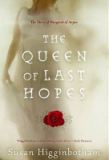
The Queen of Last Hopes

Book Review:  The Queen of Last Hopes

Susan Higginbotham, The Queen of Last Hopes.  Sourcebooks Inc., Naperville, 2011.  ISBN 9781402242816 (pbk)

As the red rose on the cover indicates The Queen of Last Hopes is a Lancastrian queen:  Margaret of Anjou, the queen of Henry VI.  Susan Higginbotham narrates Margaret’s life against the backdrop of the earlier part of the Wars of the Roses through the eyes of a variety of Lancastrian witnesses, often Margaret herself, but for scenes where she was not present she uses others, for instance William de la Pole or Henry Beaufort as well as Margaret’s husband and son.

Clearly, Susan sits on the opposite side of the fence when it comes to the conflict between the House of York and the House of Lancaster.  While it initially came as a bit of a shock to see our Yorkist heroes described in a fairly negative light, this is a positive and necessary experience as it forces us to re-evaluate our preconceived ideas.  We need to remember that all too often our views of medieval persons are based on prejudice, so in order to come to a more balanced understanding it is necessary to be jolted out of our complacency every now and then.

Susan’s The Queen of Last Hopes offers us the opportunity to meet Margaret of Anjou as a real person we can sympathise with.  She is not a one-dimensional saint, nor is she the one-dimensional villain we encounter so often in Ricardian fiction.  Her actions are well-motivated by her feelings for her husband, her son and their rights.

The book is based on impeccable historical research, which is also reflected by the Author’s Note at the end.  While I was disappointed by the only appearance of Richard of Gloucester, in which he is committing one of the killings he gets traditionally blamed for, she does explain in the Notes that there is no proof for this.

I still prefer my roses white, but can only recommend this book.  It is an enjoyable read and will prevent tunnel-vision.

5
May

Who said Ricardians had a one track mind?

   Posted by: Llieda Wild

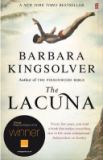
Barbara Kingsolver, The Lacuna.  Faber and Faber Ltd, London, 2010.  ISBN 9780571252671 (pbk)

Barbara Kingsolver has written another great book.  She is an author with an amazing ability to whisk the reader away to another time and place, and once the reader is there they become totally engrossed.

Her previous novel The Poisonwood Bible was the story of an American missionary who drags his wife and daughters to the African Congo, amid the turmoil and bloodshed of the 60s, where he tries to enforce his religious beliefs upon the native population, who have their own gods and idols, and resent his sermons and interference.

Her new novel is set in Mexico in the late 30s and 40s and is the story of a young boy, Harrison, and his flighty mother who uproots him from his home in Washington DC to follow her current paramour to his hacienda on a small island off the Mexican coast.  The boy is encouraged by his mother to keep a journal of his travels and so he begins a series of notebooks and diaries.

After several of his mother’s affairs end in disappointment they travel to Mexico City, where the boy Harrison finds himself working as a plaster mixer and later as cook and typist to the household of artists (and communists) Diego Rivera and his wife Frida Kahlo, who become his second family.

When his friend and mentor Leon Trotsky, who was seeking political asylum in Mexico and staying with his friends the Riveras, is brutally assassinated in their home, Harrison flees back to the US, only to find himself, due to his friendship with Trotsky and the Riveras, embroiled in the McCarthy era ‘Reds under the Beds’ witch hunt.

By this time he has become a popular author, drawing on his affection for and knowledge of Mexico, creating stories of the ancient Mayan civilisations, but the continuing harassment and threats of treason and possible imprisonment force him to flee once again, back to Mexico.

The unfolding story is told through his stenographer and friend, Violet Brown, and through Harrison’s notes and diaries that he kept as a boy and continued as a young man.  But that’s another story in itself!

For some time I have read much fiction and non-fiction, most but not all of it historical, dealing with the Wars of the Roses and English royals, so when a friend lent me this book it was a nice change.

I found this book a very enjoyable read and hard to put down and recommend it highly.
2
May

Walk Wakefield 1460

   Posted by: Dorothea Preis Tags: , , ,

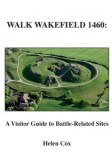
Walk Wakefield 1460

Book Review:  Walk Wakefield 1460  – today

Helen Cox, Walk Wakefield 1460:  A Visitor Guide to Battle-Related Sites.  Herstory Writing & Interpretation/York Publishing Services, 2011.  ISBN 978 0 9565768 1 1 (available from YPD Books)

I finally received my copy of Walk Wakefield 1460 by Helen Cox.  The subtitle, ‘A Visitor Guide to Battle-Related Sites’, gives a clear indication as to the purpose of the book.  If you have read Helen’s excellent The Battle of Wakefield Revisited and now want to explore where the action took place, this little book is a must.

Helen gives short overviews of the individual battles (Worksop and Wakefield), but the aim is to identify the sites that a visitor today can see.  This is of particular interest for Sandal Castle and Pontefract Castle, where only ruins remain.  She explains clearly which part of the castle the wall fragments come from and what the purpose of the various features was.

She also provides valuable information on opening hours as well as addresses for further information.  Also included are directions on how to get to the places by car or foot.  The book is well illustrated with pictures of the sites as well as maps showing them in today’s landscape (in the case of Wakefield this can be compared to a map showing the outlay in the 15th century).

If you are planning to visit Yorkshire, I can only recommend Walk Wakefield 1460.  I can hardly wait to get a chance to visit the sites to which Helen takes us.

18
Apr

The Golden Longing

   Posted by: Lynne Foley Tags: , ,

Francis Leary, The Golden Longing, published by James Murray, 1960 (no ISBN)

This book consists of potted biographies of Joan of Arc, René and Margaret of Anjou and Richard III.  Leary’s sympathy for his subjects is obvious.

The most striking feature of the book is the mix of facts with fiction for dramatic purposes.  A reader unfamiliar with the dramatis personae could have a difficult time distinguishing between the two although from time to time, Leary provides footnotes for some of his statements.

He had no liking for the medieval period, and there is rather too much emphasis on blood and death – the least attractive feature of the book. Read the rest of this entry »

16
Apr

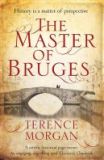
The Master of Bruges

   Posted by: Dorothea Preis Tags: , ,

The Master of Bruges

Book Review:  The Master of Bruges (and of London, too!)

Terence Morgan, The Master of Bruges.  Pan Books, London, 2011.  ISBN 978-0-230-74413-4 (paperback)

First I would like to thank Heather, who told me about The Master of Bruges and awakened my interest in it.

This novel purports to be the memoirs of The Master of Bruges, the painter Hans Memling, who lived and worked in Burgundy though he was born in Germany.  From December 1460 to his death in 1494 we share Memling’s loves and adventures and through him we meet many of the people who are of significance to anyone interested in the late medieval period.  Obviously the Burgundian court of the time features strongly:  Charles the Bold, his wife Margaret of York, his daughter Marie and later her husband Maximilian. Read the rest of this entry »

10
Apr

Vermeer’s Hat

   Posted by: Judith Hughes Tags: ,

Timothy Brook, Vermeer’s Hat: The Seventeenth Century and the Dawn of the Global World.  Profile Books Ltd, London, 2009.  ISBN 9781846681202 (pbk)

The famous Canadian  historian Timothy Brook has written an enjoyable account of the beginnings of globalisationin the seventeenth Century.  Brook has authored many books about China and Japan especially of the Ming period.  In his 2008 book “Vermeer’s Hat” he sets out to show the development of trade routes and explores the often fraught relationships in which Europeans found themselves struggling to gain and maintain spheres of influence and trading posts in Asia and the Americas.

Charmingly, Brook evokes the concept of “Indra’s Web” which affirms that everything is connected. He examines five paintings by the seventeenth century artist, Johannes Vermeer and one each by two of his contempories Hendrik Van Der Burch and Leonaert Bramer.

He draws attention to goods which appear in the paintings and discusses how each artefact might have come to Vermeer’s home in Delft and shows how these actually opened doors into the rapidly expanding world and traces the growth of trading companies  like the VOC and East India Company which gave rise to wide spread colonisation by the Europeans.

The painting “The Beaver Hat” which lends its name to the book, explores the history of the soldier’s hat fashioned from beaver pelts bought from North Americans. Money raised from this trade financed voyages in search of new trade routes to China, Japan and the Indies.

The book has informative maps and the paintings are exquisitely reproduced The paintings portray such goods as Murano glass, Turkish carpets and  blue and white china from the kiln town of Jinderzhen in China all of which are traced back to their origins and paid for by silver from Peru.

The book is divided into sections one of the most interesting being the history of how tobacco smoking spread from South America to Europe and thence to the Far East preparing the way there for wide spread opium smoking in China.

Vermeer’s Hat published by Profile Books of London is a rivetting and informative read.  It has an extensive reference section a very informative bibliography and is well referenced.

11
Mar

Richard III and East Anglia

   Posted by: Dorothea Preis Tags: , , ,

Richard III and East Anglia

A Visit to East Anglia – Book Review:  Richard III and East Anglia

Livia Visser-Fuchs (ed.), Richard III and East Anglia:  Magnates, Gilds and Learned Men, Richard III Society, 2010, ISBN 978 0904 893 19 9

I read about Richard III and East Anglia in a recent Ricardian Bulletin and ordered it.  It contains five of the talks given at the 8th Triennial Conference of the Richard III Society, which took place at Queens’ College, Cambridge, in April 2005.  Queens’ College was an apt venue, as this college was greatly supported by Richard both as Duke of Gloucester and as king.

The contributions cover ‘Richard of Gloucester’s Lands in East Anglia’, the relationship between his family and the Howard and the de Vere family, Richard’s relationship with the University of Cambridge, the relationship between the Earl of Suffolk and Henry VII, but also an interesting article on the ‘Socio-religious Gilds of the Middle Ages’.

In preparation for the Australasian Convention of The Richard III Society in Melbourne in August of this year,  I have been looking at Richard’s attitude to learning and education, the article on his relationship with the University of Cambridge, though the last in the volume, was the first I turned to and was not disappointed.

The book is illustrated with delightful tailpieces, which were inspired by the badges by various of the persons mentioned in the talks, of course Richard’s boar features prominently, as well as manuscripts from his time and secular badges.

This is a book which would be of great interest to any Ricardian and can only be recommended.

You can order it from the Richard III Society in the UK (go to Society Shop on the menu on the left hand side).