Archive for the ‘NSW Branch News’ Category

The NSW Branch of the Richard III Society met on 13 April 2013 at the Harry Jensen Centre in The Rocks, Sydney. Our Branch Chairperson Judith welcomed all the regulars, members from overseas, and a number of visitors, whose interest had been aroused by the recent discovery of the remains of Richard III in the Leicester carpark.

The Committee has been busy since the last meeting with Judith and Dorothea speaking to the Military Historical Society at Victoria Barracks, and Judith and Julia to students at Chifley College who were studying Richard III for their HSC. Julia was a member of a panel discussing the Genesian Theatre’s approach to Richard III in their current production. In addition, of course, the Committee has been finalizing the extensive arrangements for the July conference, with some last minute changes.

Julia presented the Secretary’s report and reminded us that although it is past the official deadline that it is not too late to get our registrations in for the upcoming conference in Sydney on the weekend of 12-14 July 2013. It is going to be a great weekend of learning and social activities with Ricardians, and not to be missed.

Julia also explained that because of full programs for the rest of the year no Scrabble Speakers will be needed. That means that all of our eager public speakers will just have to wait their opportunity next year!

The Minutes from the February 2013 meeting were taken as read. There was no Treasurer’s report as the Treasurer was away. Dorothea presented the Webmaster report. This branch website continues to receive many visitors. Dorothea has also extended the Branch online presence to Facebook, so everyone who has access to the internet should visit and “like” it! It can be found at http://www.facebook.com/pages/NSW-Branch-of-the-Richard-III-Society/269971479692592

Lynne announced the arrival of the new pewter boar pins for those who had pre-ordered them. More may be obtained in the future if there is a demand from members.

An extra feature today was Dorothea reporting on her recent trip to the University of Leicester conference entitled “The Greyfriars dig: a new Richard III”. Dorothea had previously posted elements of her presentation on the branch website for online visitors to read.

The Guest Speakers were Yvette Debergue and Rachel Allerton from the University of Sydney Centre for Continuing Education and the WEA, where they teach medieval courses. Yvette recently completed her PhD at the University of Sydney on the area of Gender and Medieval Heresy. She has taught at the University of Sydney’s Centre for Medieval Studies as well as the Departments of History and Religion; her area of expertise being Heresy in the Middle Ages. For more information on upcoming her courses visit http://cce.sydney.edu.au/course/HAWI Their interesting presentation was on the different interpretations of Richard’s physical presence and character in several film versions of Shakespeare’s Richard III. They referred particularly to those featuring Lawrence Olivier, Ron Cook and Ian McKellen. Sadly the technology was not completely cooperative, so I have attached some of the YouTube clips from their presentation:

Olivier’s version of the soliloquy.

The BBC’s version with Ron Cook as Richard.

Horrible Histories Richard III Song.

The next meeting will be on Saturday, 8 June 2013, and the speaker will be Ben Cross on Medieval Thought and Philosophy.

25
Feb

RESPONSES TO THE SUNDAY TELEGRAPH

   Posted by: Julia Redlich Tags: ,

The (Australian) Sunday Telegraph of 10 February 2013 featured an article by Claire Harvey ‘Time to Tell the Truth’, which favoured – to put it politely – a rather traditionalist view of Richard III.  Several of our members as well as friends felt called upon to point out Ms Harvey’s misconceptions.   Two of the letters were printed, though in an abridged format.  We are pleased to make all letters available to you in full.

The first two were published in subsequent editions of the Sunday Telegraph.

While members of the Richard III Society worldwide appreciate that everyone has a right to their own opinion, the New South Wales Branch was disturbed by Claire Harvey’s comments that presented no reference to reliable sources to back up her arguments. The Society originated in 1924 for the following reason: “In the belief that many features of the traditional accounts of the character and career of Richard III are neither supported by sufficient evidence nor reasonably tenable, the Society aims to promote in every possible way research into the life and times of Richard III and to secure a reassessment of the material relating to this period and the role in English history of this monarch.”

The recent archaeological dig in Leicester has helped us in this task by revealing truths (such as he had scoliosis not a hunched back) about Richard that cancel much of the work of Henry Tudor and his spin doctors did to destroy Richard’s character and achievements. The Society’s work will still go on because its members are certainly zealous but not the nerds as described by Ms Harvey.

What happened to the two young princes will probably always be a mystery. There are several options for their disappearance, and they may indeed have been murdered, but there are other prime suspects including the Tudor family. Accessing the Society’s websites and others will provide further information and  suggest reliable sources.

Julia Redlich, Secretary, Richard III Society, NSW Branch

I was interested to read the provocative item by Claire Harvey regarding the recent confirmation of King Richard III’s remains by the University of Leicester. Ms Harvey’s stance is the stock version we all learned at school, and she would have done well to have read some of the more current, measured examinations of the historical facts.

Briefly: after the death of King Edward IV, a retired bishop came forth to admit that he had secretly betrothed Edward to another lady before his marriage to Elizabeth Woodville, therefore, under the laws of that day, rendering that marriage null and void and their children illegitimate. The lady had spent her life closeted away in a convent, and the bishop had remained silent, and in fear of his life, until the King’s death. But as the throne could only be held by one in the legitimate line those children were now a moot point, as they could not by law succeed their father. In other words, the princes were not Richard’s rivals, having been disqualified from the line of succession.
Many scholars believe that the person who would most benefit by the murder of the sons was the Lancaster line, in the person of Henry Tudor. There is no proof that the boys were not still living in the Tower at the time their uncle was overthrown on Bosworth Field, and it would clearly have been in Henry’s interests to get rid of them forthwith.

The further details of the story are far too complex to retell here, but what is true is that it is unfair to judge a man by the writings of his enemy. Richard would never have had a fair hearing during the Tudor dynasty, under whose patronage Shakespeare was writing.

Not all Ricardians are ‘zealots’ or ‘in love with their man’; some of us just want a fair hearing for a man who otherwise had lived an exemplary life and ruled well for his few years. During which time, by the way, the princes’ mother was on good terms with Richard; would that have been the case had she suspected him of murder?

What is needed here is temperance, objectivity and humility before we leap to easy judgement of others, even if they lived 500 years ago. We would request from the editor the publishing of a more nuanced and dispassionate treatment rather than the perpetuation of the default Tudor condemnation of Richard.

That said, we gladly support Ms Harvey’s request that the Tower remains be analysed as carefully as were Richard’s, as the outcome is of utmost historical interest. However, if it is revealed that they were indeed the princes, it would still not reveal who ordered the deed done. And finally, in the English legal system, both Richard III and Henry VII are innocent of the princes’ demise until proven guilty.

Leslie McCawley

Three not used, from Helen Portus, Kevin Herbert (both active members of the NSW Branch) and David Green, a long-standing friend of the Richard III Society.

Dear Editor

Wow!

After all the well-balanced and well-researched articles this week about Richard III in all our major papers, both in Australia and worldwide, out of left field comes an article such as published by Claire Harvey!

Such ignorance! How fascinating!  Whilst Ms Harvey is obviously entitled to her opinions, does the Telegraph not usually prefer their writers to speak the truth?

Statements like:  “Richard III was a killer … a villain”.  Any evidence Ms Harvey??

Helen Portus

I read with unfettered astonishment the article: “Time To Dig Up The Truth” by Clare Harvey.

She is obviously unaware of the various contemporary sources available, none of which, as far as I recollect, actually state unequivocally that:

i ) the princes were murdered;

ii ) that their uncle was definitely responsible, if they were murdered;

iii ) that the bones discovered in 1674 were actually the bones of two lads of the correct age – (apart from the botched examination carried out earlier last century).

Some bones were actually found to be those of Barbary Apes from the Royal Menagerie, established by Henry III;

iv) that even should the bones in question be proven to be that of the unfortunate princes, and it be proven that they were murdered , no D.N.A. testing will indicate who was responsible for their deaths.

I can never understand why it is assumed by some that Richard needed the death of the princes.

They were no threat to him, nor their sisters, since they had all been declared illegitimate by decree of parliament – as specified in the Titulus Regius – a document which Henry VII attempted to destroy completely unread. Unfortunately for him and his supporters not all copies were destroyed.

Henry it was who needed the boys out of the way, since he re-legitimised the children of Edward IV so that his wife’s legitimacy might prop up his own rather dubious claim to the throne.

If his wife were legitimate, so too were all her siblings, including her two surviving brothers if living  whose claims at that time were superior to hers.

Through his mother , Margaret Beaufort, he was illegitimately descended from John of Gaunt (3rd surviving son of Edward III) and his mistress, Katherine Swynford; through his father, Edmund Tudor, he was probably illegitimately descended from the liasion (no proof of marriage has ever been found) between Katherine de Valois (the widow of Henry V and mother of Henry VI ) and Owen Tudor, her Welsh clerk of the wardrobe.

Perhaps the bones which should be re-examined by a similar DNA process are that of the so called Perkin Warbeck and the lad, who raised his standard in Dublin in 1486 and possibly fell at Stoke on Trent (all the dead would need to be examined) to be replaced by Lambert Simnel after the Battle of Stoke on Trent in June 1487 – for I strongly believe that the main two so called Pretenders were who they claimed they were – and not who Henry VII  and his minions claimed they claimed to be.

If Henry wanted to disprove the claims of both Pretenders why didn’t he ever allow his wife and sisters-in-law to examine Perkin Warbeck?  Surely a simple foolproof way of establishing his being an imposter. But he was never called an imposter, as far as I can recall. He was always styled a pretender.

A pretender is one who raises a valid claim to the throne – thus Bonnie Prince Charlie, James Edward, the Old Pretender etc.

I think Clare Harvey would be well advised to check her sources.

Kevin Herbert

I find Claire Harvey’s article on Richard III interesting. Not only for its obfuscation and inaccuracies but also that, despite the many books written on his life and times since the 17th century, such a piece could still be written.

15th century society was separated by class, each section knowing where it stood with its own aims and customs.   Without firm control the magnates across the country tended to rule their own counties or territories not always for the good of the inhabitants.  Family ties were of great importance and sometimes transcended oaths of loyalty to the Crown.  The so-called Wars of the Roses was a result of divisions that had its roots in the reign of Edward III (1312-1377).  A hundred years later Edward IV, a strong king, ruled England with his younger brother Richard governing the North. Edward was a woman-chaser who was troth-plighted (equivalent in customary law to marriage without consummation) to a lady named Eleanor Butler at the time of his secret marriage to Elizabeth Woodville.     His two sons were therefore illegitimate and the account of Edward’s affairs were made known after his death.  All this was published in an Act of Parliament, subsequently suppressed by Henry VII, but an original copy turned up in the Tower records much later.    The Tower of London was a royal palace as well as fortress and the obvious place to house the Princes at the time.

So much for motive.

The fate of the boys has been much debated, whether the bones  which are sealed will ever be examined remains to be seen. Josephine Tey quoted the old proverb, “Truth is the daughter of time”.  Richard’s silence in the face of rumours has perplexed historians, it has been a matter of probabilities discussed in many books and considered in the Trial Of Richard III (1984) which was properly constituted with judge Lord Elwyn Jones and Queen’s Counsel for both Defence and Prosecution appearing. The verdict was ‘Not Guilty’, one factor being the reconciliation between the boys’ mother and the King and another the lack of interest in the matter by his successor Henry VII.

The deaths of certain noblemen, condemned by Richard III were the result of betrayals by the breaking of oaths of loyalty, or direct revolt, which were a  capital offence, a matter not understood today.  He was a good, which means successful, soldier and his parliament enacted several statutes to the benefit of his subjects in property rights and the annulment of the custom of ‘benevolences’ which was another name for fines as a means of extracting money for the royal coffers.

Some of this information could have been aired in your columnist’s article, leaving out mention of Julian Assange who will not be pleased at being written  of in association with Richard III.   If Miss Harvey knows nothing of these matters then I suggest that she visits the library, Paul Murray Kendall’s Richard The Third (Unwins 1955) would be a good start.

David Green
The first branch meeting of the year was held on Saturday, 9 February 2013, at our usual venue in the Rocks just days after the wonderful announcement about Richard III, which excited members had been eagerly awaiting. As a result of the wide media coverage, there was extraordinary interest in our website and our branch, with hundreds of emails having been received, and a number of new faces at our meeting. We hope to see Amanda, Natasha and Peter again.

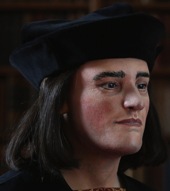
Welcoming remarks were offered by our Chairperson, Judith, but departing from our usual routine, the minutes from the previous meeting were not discussed nor were there any of the usual reports presented by the Treasurer, Webmaster, or Librarian. This change was due to this meeting’s emphasis on the final results of the Greyfriars’ dig in Leicester. The results of the osteoarcheological and DNA examinations of the bones, the subsequent facial reconstruction, and the media conference with the research panel from Leicester University, were comprehensively reviewed and summarized by Dorothea for those present. Her excellent coverage can be found on the branch website, as well as the many links she has provided to the various media clips and written reports available on YouTube, BBC, University of Leicester and other websites. Dorothea will also be attending a one-day summing up conference at the University of Leicester in March and will report back to us at the next meeting. Her efforts in keeping all of us to date over the past weeks has been deeply appreciated.

Julia discussed the upcoming conference to be held in July, and encouraged members and guests to register for the exciting speakers and planned social events over that weekend. Also, Sydney’s Genesian Theatre is opening their 2013 season with a production of Shakespeare’s Richard III. After the 10 March 2013 matinee performance, a panel will be convened to discuss the nature of the ‘real Richard’ in light of recent discoveries, for which Julia has been invited to represent the Ricardian point of view. Tickets are available online at http://www.genesiantheatre.com.au

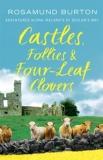
Our guest speaker was the charming Rosamund Burton, author of Castles, Follies and Four Leaf Clovers, a memoir of her journey along the ancient Irish pilgrimage route known as Saint Declan’s Way. She had been been raised in a castle in Lismore, Ireland (her father was employed by the Duke of Devonshire), and presented fascinating slides of the many sacred wells, castles, and the lovely Irish countryside.

The 13 April 2013 meeting will feature “Richard III in the Movies” with our guest Yvette Debergue.

1
Feb

LAUNCH OF ‘MISTRESS TO THE CROWN’

   Posted by: Dorothea Preis

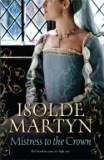
Last night I was able to attend a Ricardian event of a special nature:  the launch of Isolde Martyn’s latest historical novel Mistress to the Crown, about Elizabeth Lambert, aka Jane Shore, one of Edward IV’s mistresses.

We arrived early, but Shearer’s Book Shop in Leichhardt was already packed.   The New South Wales branch was extremely well represented to see the new book of its former chairperson launched, but even they were far outnumbered by Isolde’s other fans.

After buying my copy of the book, I queued to have it signed by Isolde before the official launch started.  It was nice to see that someone thoughtfully had presented her with a bouquet of white roses.  Though the area among the shops shelves was a bit cramped (not to mention the heat), we were very well looked after with drinks and finger food.

The official part began by a man playing the flute, then the publisher said a few words.  The book itself was introduced by Carole Cusack, Professor at the University of Sydney, who is very well known to us as she has given talks to our branch.  Carole stressed Isolde’s immaculate historical research and that virtually all the characters of the book are historical characters.  A short look through the Dramatis Personae confirms this, the only fictional characters are servants, whose names are rarely recorded, as well as some friends of Elizabeth’s, though their surnames are very familiar.

Then Isolde thanked her friends and family for their support while she was writing this book.  And of course she also mentioned that for us members of the Richard III Society this was an especially exciting time as on Monday we would learn whether Richard’s remains have indeed been found.

The event was very festive and we hope that the amount of interest in the launch will reflect the interest the book will receive among all readers.

The only complaint I have in connection with the event is about the attitude of the lady at the cafe at the back of the shop, who seemed intent of making everyone feel as unwelcome as possible.  As soon as the official part and the speeches began, she started cleaning up, which made it for those of us standing towards the back very hard to actually hear what was being said.  Hardly the way to treat potential customers.  May I advise her to read some of the excellent posts on sites such as Preisless Consulting?

And now for the most exciting part – reading Mistress to Crown!

The Leicester press conference and documentary screening will take place during the week before our meeting on 9 February 2013, so I am sure many of you will want to come along to this to enjoy the discussion and what it means for the Richard III Society. Dorothea, our branch’s valued member of the Bulletin editorial committee, has promised to give us an update at the meeting.

Our guest speaker for the February meeting will be Rosamund Burton. Rosamund is the author of the book Castles, Follies and Four-Leaf Clovers. Adventures along St Declan’s Way (published by Allen & Unwin) and she will be speaking about walking the ancient highway, St Declan’s Way, which she did in 2008. She describes Norman castles, Celtic churches and colourful characters, miraculous wells and talking statues, stories of goddesses, ghosts and fairies, as well as staying in a convent and a day at a horse fair.

Dotted with deserted monasteries, ruined castles, holy wells and plenty of pubs, St Declan’s Way stretches 100km from the iconic Rock of Cashel over the beautiful Knockmealdown Mountains to the fishing village of Ardmore. This ancient highway and age-old pilgrim route follows quiet country roads, farm tracks, riverbanks and mountain paths through a part of Ireland that is steeped in history. It passes through the heritage town of Lismore with its magnificent castle, in the east wing of which Rosamund’s family used to live. Rosamund promises illustrations of this fascinating journey, so “wear the green” and enjoy this special visit to Ireland.

Although born in Ireland, Rosamund Burton grew up in England, until her father got a job with the Duke of Devonshire, and the family moved to Ireland, where their home was in the east wing of Lismore Castle. Rosamund went on to become an actress, performing at Dublin’s Gate and Gaiety Theatres, and in the film, Educating Rita with Julie Walters and Michael Caine. She then worked in London before coming out to Australia 17 years ago. Rosamund now writes for a range of newspapers and magazines. She is married to an Australian and lives in Sydney.

There is more info about Rosamund’s previous talks around Australia and the publications that have accepted her work listed on her website www.rosamundburton.com

25
Jan

Ricardian Bulletin Update

   Posted by: Dorothea Preis Tags: , ,

Just a short note to our members: The March Bulletin will be delayed by about one month to allow full coverage of the findings, which are due to be announced in Leicester on 4 Feb.

However, there will be a Bulletin Extra as soon as possible after 4 Feb to bring us all the very latest, as well as a registration form for the conference on 2 March. This Bulletin Extra will be emailed to members, who have supplied us with an email address, and posted by snail mail to the others.

14
Jan

MISTRESS TO THE CROWN

   Posted by: Dorothea Preis Tags: , ,

Thursday, 31 January 2013, sees the official launch of Isolde Martyn’s much anticipated new novel Mistress to the Crown, about Edward IV’s mistress “Jane Shore”.

‘What joy to find a novel that blends sound research with a love story that, on its own would attract a wealth of romance readers. Isolde Martyn links her skill as an award-winning novelist with her depth of historical knowledge to reveal the life and loves of Elizabeth Lambard (Mistress Shore), and presents her as one of the strongest, most accomplished, lovely and lovable women of the 15th century. It’s fact and fiction at its best, a must-have for your bookshelves.’

Julia Redlich, Former Fiction Editor of Woman’s Day; Secretary of the New South Wales Branch of the Richard III Society

We all remember Isolde’s previous novels The Lady and the Unicorn (1996) and The Silver Bride (2002), both of which also play during the Wars of the Roses.  Isolde is a member and former chairperson of our branch.  Incidentally it was The Silver Bride, which brought me to the NSW branch of the Richard III Society.

If you can make it to Sydney, all members of the Richard III Society are very welcome to attend the launch, but please let Isolde know if you are attending.

Booklaunch for Mistress to the Crown

When: Thursday, 31 January 2013; 18h00 for 18h30 start
Where: Shearer’s Bookshop (beneath Palace Cinema), Norton Street, Leichhardt
RSVP: isolde@isoldemartyn.com (by 21 January 2013)

Looking forward to seeing you there!  And of course making the acquaintance of the Mistress to the Crown.

23
Dec

RICARDIAN CHRISTMAS SPIRIT

   Posted by: Isolde Martyn Tags: ,

At the December general meeting of the NSW branch Isolde and Julia entertained us with a variety of sketches with Ricardian themes.  And then it was our turn to get into the swing of things and sing our branch-own Christmas songs.  Here is one of them:

Oh, little town of Middleham,
How still we see thee lie.
But lying more than half a score,
King Richard to decry.
Mancini, Rous and Morton
And Hall and Holinshed
And Henry Tudor added to
The tales to help them spread.

Then Henry’s Polydore Vergil
Had Richard painted blacker,
But Sainted Thomas was a still
More modacious* attacker.
Then up rose Willy Shakespeare,
He too the truth foreswore,
Now we persevere until we hear
Their rotten lies no more.

*Never heard of the word? Neither had we but, being good Ricardians, we realised research was needed and came to the conclusion it is an adjective from the word MODALITY –the capacity to express the speaker’s confidence in the statement he or she is making.
So this might be the
mot juste for Sir Thomas’s history if you believe that he believed it.

(Words: Isolde Martyn and Eileen Larbalastier, a former member.  Photo:  Dorothea Preis)

The last meeting of the year was held on Saturday, 8 December 2012, with old members and new, and various friends visiting from other branches. Judith, our branch chairperson, welcomed a full house and was followed by Judy with a brief treasurer’s report. She confirmed that all the renewal fees had been received and were now en route to the UK.

Our branch secretary Julia then discussed the ongoing news from Leicester about the parking lot dig where the suspected remains of Richard III have been unearthed. It is a very exciting time to be a Ricardian and the timing is excellent to pique the interest of the general public for the upcoming convention. The convention deadline is fast approaching so please get your registrations in soon. There is a lot of work involved in putting on an event so all offers of volunteer assistance are welcome, please contact any of the committee members if you can help. Julia also made a plea for a replacement for her role as branch secretary, as she will be leaving soon and needs time to hand over a lot of business to her successor.

The webmaster’s report was then given by Dorothea, who reminded us that it is a lot of work to keep it active and interesting, and she would like to think that all members with an internet connection are reading it regularly. There are still increasing numbers of international visitors to the website, and that is high praise. The website also features book reviews and links to an every growing array of fascinating late medieval oriented websites.

One of Dorothea’s most recent posts was a link to a Canadian TV news report on the progress of the identification of the remains found in Leicester, which was very interesting and well worth watching. Author John Ashdown-Hill was interviewed, along with the forensics experts who reported the skeleton as having scoliosis of the spine, a significant head wound and the presence of an arrowhead near the spine. Also featured was a 17th generation Canadian descendant of Richard’s mother, Cecily Neville, whose maternal DNA will hopefully help to confirm the skeleton as Richard’s.

Dorothea then distributed the always well-written branch journal, The Chronicles of the White Rose, one of the best perks of membership.

Lynne then gave her report regarding the stores of memorabilia, and presented a sample of the appealing pewter boar lapel pins now available on order.

Our program for the day was a very interesting talk by our treasurer Judy about her April attendance at the 11th Triennial Conference at the University of Loughborough, Leicestershire, UK entitled “Bosworth and Warfare: New Finds, New Ideas.” Many experts on late medieval warfare spoke about all aspects of war in the era of interest.  Judy’s detailed presentation is posted on our branch website, and well worth reading, as it was fascinating!

Following Richard’s body from Bosworth to Leicester, Dorothea gave a short update on the dig and the find of male remains as well as the variety of tests being performed on the remains.

A highlight of this holiday meeting was a performance of vignettes written and performed by Isolde and Julia. This included cleverly reworked Christmas carols with Ricardian commentary for group singing (e.g. ‘Away in Some Danger’ and ‘O Little Town of Middleham’); a play about Elizabeth Wydville’s dim prospects as a single mum; and a list of personages never to be invited to a Ricardian Christmas, including Thomas More, Lord Stanley, and Henry Tudor.

The first meeting of the new year will be on 9 February 2013, with invited guest speaker Rosamund Burton who will be talking about the ancient pilgrim path in Waterford, Ireland known as Saint Declan’s Way.

2
Dec

Christmas cheer at the NSW branch

   Posted by: Dorothea Preis Tags: , , , ,

Our December general meeting will be taking place at our regular venue, the Harry Jensen Centre (17 Argyle Street, Millers Point), on Saturday, 8 December 2012 at 14h00.

We have a whole range of attractions for you to enjoy.  Judy will give an illustrated talk about the triennial conference of the Richard III Society, which she attended at Loughborough earlier this year.   This will be a unique opportunity to see pictures of the real site of the battle of Bosworth, which was visited as part of the conference.  This is on private land and normally not open to the public.

While we are all are waiting for the results of all the scientific tests being carried out on the male remains found in Leicester, there will also be a look back on how these remains were found at all.

And our regulars know that any item presented by Isolde and Julia promises to be great fun.  They told us that this year they will be acknowledging some characters familiar to all Ricardians, but who won’t be receiving Christmas cards from us.  Sounds intriguing.

It will also be an opportunity to pick up your copy of this year’s Chronicles of the White Rose, our branch journal.  In it you can find a variety of presentations from past meetings and some articles which appeared on our website, as not all our members have access to the internet.  And of course the volume also includes an entertaining and challenging quiz.  (The Chronicles will be mailed afterwards to members unable to attend.)

It would be appreciated if members could help to make our Christmas afternoon tea special by bringing a plate, but please do not be over-generous with the plate size!

Looking forward to seeing all our regular friendly faces and perhaps some new ones as well.  As always any guests, curious to find out more about us, are more than welcome.