
The Plantagent Society has planned and exciting talk for their January 2020 meeting. They have kindly invited members and friends of our branch to share this event:

Henry VII (portrait at National Portrait Gallery, London)
On 18 January 1486, Henry VII (Tudor) married Elizabeth of York, eldest daughter of Edward IV and Elizabeth Woodville. It seems Henry needed to be urged by Parliament to make good his promise to marry Elizabeth, before actually doing so. Plans for Elizabeth’s coronation were only made in September 1487 and she was finally crowned on 25 November 1487, more than a year after giving birth to their first son, Arthur.
Elizabeth died on 11 February 1503 at Richmond Palace. Henry died six years later, on 21 April 1509, also at Richmond Palace. They are buried next to each other in Westminster Abbey.
Reference: Rosemary Horrox, ‘Elizabeth (1466–1503)’, Oxford Dictionary of National Biography, Oxford University Press, 2004. (online accessed: 27 January 2011)
Tags: Edward IV, Elizabeth of York, Elizabeth Woodville, Henry Tudor
The Plantagent Society has planned and exciting talk for their January 2020 meeting. They have kindly invited members and friends of our branch to share this event:

Ingredients
2 small fillets of white fish per person, skin removed
2 cups vegetable stock
Lemon slices
Parsley to garnish
Vegetable stock*
*Use the bought variety if necessary, but if making it yourself, use young carrots, spring onions, a bay leaf, a little sage and chopped parsley. The liquid should be half water and half white wine.
Method
Roll each fillet firmly and secure with a toothpick. Place the fish in a pan and cover with the vegetable stock until fish is tender. Remove the fish rolls and set aside. Simmer the stock further until it is well reduced. Chill to form a jellied sauce.
Place the fish rolls on a serving platter and pour the sauce over them. Garnish with lemon slices and parsley.
Note
If the aroma of cooking fish is not appreciated, cook in a “medieval” microwave according to the maker’s instructions.
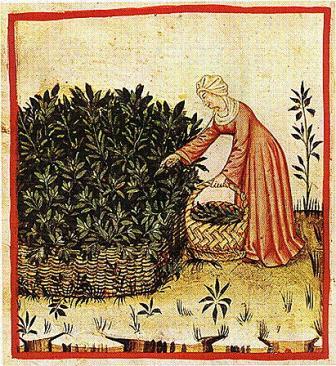
The perfect accompaniment to the Fish Rolls is a Herb Salad
Gather a collection of herbs: parsley, sage, fennel, borage, mint, rosemary. And spring onions or a leek if in season.
Wash all the items well and then break them up into small pieces.
Place in a bowl and mix well with olive oil, adding a sprinkling of cider vinegar and a little salt before serving.
Dianne Herbert, a long standing member of the Richard III Society, introduced us to the Alba Semi-Plena, the rose we know of as the White Rose of York. It is not like the mass produced roses we know today, being much simpler but more perfumed. Roses are thought to have originated in Persia (Iran) about 35 million years old and were brought to the west by the Crusaders. The Middle East was a major producer of rosewater, rose attar (rose essence or rose oil) and rose petals, for use in medicine, as food and in cosmetics. The Alba doesn’t interbreed successfully with other roses.
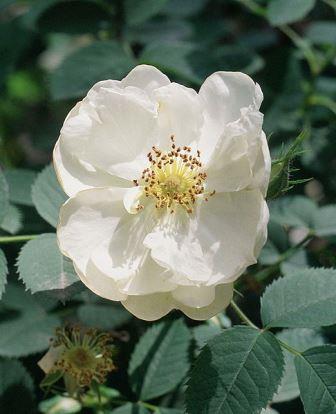
Rosa ‘Semi-plena’ (Photo by A. Barra via Wikimedia Commons)
There are a number of stories associated with roses. Apparently, roses only started to produce thorns when evil appeared in the world. At the Feast of Heliogabalus (204 – 222), guests died after being smothered in rose petals. The oldest rose bush alive today was established by King Louis the Pious (King of the Franks) in 815, and is at Hildesheim Cathedral in Germany. In the Middle Ages, a rose suspended from the ceiling meant that those present were sworn to secrecy.

Thousand-year-old rose, Hildesheim (Photo by Bischöfliche Pressestelle Hildesheim via Wikimedia Commons)
Edmund Langley, 1st Duke of York was the first nobleman to use the White Rose of York. Edmund Crouchback, 1st Earl of Lancaster used the red rose (Rosa gallica). Margaret of Anjou was known as the Red Rose of Anjou. Edward IV’s wife, Elizabeth Woodville used a white rose. Edward IV’s mistress, Jane Shore was known as the Rose of London. And it was not until 1829 that the term “Wars of the Roses” was used, when Sir Walter Scott included the term in his novel Anne of Geierstein.

White Rose of York
There is a “Jacobite” or “Bonny Prince Charlie’s” rose, as well as a rose called “York and Lancaster”. Roses have been cultivated in China since the 11th century, and a Rose Museum has recently been opened in Beijing. Unfortunately, there are no native roses in the Southern Hemisphere.
It was interesting to learn about the history of roses and the white rose in particular. We could hear Dianne’s love of roses in her talk. Amongst other roses, she grows “Mr Lincoln”, “Duchess of Provence”, and the “Peace Rose”. I’m sure her garden is spectacular.
Tags: Hildesheim, Rosa Alba Semi-Plena, Rose of York, Roses, Wars of the Roses
The NSW Branch held its 1st Book Club at the Members’ Meeting on 8 June 2019 and it was a very lively and stimulating discussion. It was so successful the Committee decided that the Book Club will become an annual event.
The books reviewed at our Book Club this year were: –

Winter King: The Dawn of Tudor England
The “Winter King” was acknowledged as not an easy read due to the writing style and terminology used by Penn. The book was a more scholarly read and the narrative was not necessarily chronological, however Members persevered, and a very interesting picture of Henry VII arose, one that we may not have previously understood. Henry VII emerged as a paranoid, secretive, devious and duplicitous individual who would stop at nothing to hold on to his crown and fill his treasury – he was unsentimental towards those who had served him well and subsequently, had fallen from favour. Henry was avaricious and Penn’s narrative about how this was enacted was revealing. Although it was hard going, the majority of the book club members finished the book, and all acknowledged they found it interesting and learnt from the experience.

The Devil in Ermine
“The Devil in Ermine” was acknowledged as excellent, as we have all come to expect from Isolde. Isolde’s story on the Duke of Buckingham and his revolt was well researched and very informative about this troubling and treasonous event during the reign of Richard III. Isolde made this complex event into an easy to read and understand narrative that brought to light a treacherous, inexperienced, reactive and emotional character in Buckingham that seriously threatened Richard III and his reign.
We look forward to the next Book Club, to be held on Saturday 4 April 2020. The Books we will be reading are:
Please join us!
Tags: Book Club, Books, Isolde Martyn, The Devil in Ermine, Thomas Penn, Winter King: The Dawn of Tudor England
Our last general meeting of the year will be on the 14th of December 2019 at 2pm at the Sydney Mechanics Institute, as usual.
The featured speaker will be our long-time member Dianne Herbert on the topic of “A Closer Look at the Roses used as symbols for the Wars of the Roses.”
Looking forward to seeing you there!

Ingredients
500g pork mince
1 large egg
A little milk
2 tblsp honey
A little pepper
Method
Preheat oven to 150° C and lightly grease a baking tray.
Mix the mince and lightly beaten egg with a little milk until the mixture is firm.
Add the honey and pepper and stir well.
Form the mixture into small balls and place them on the baking tray. Bake for about 25-30 minutes.
Serve hot or cold with a dipping sauce such as tomato and basil, or garlic and crushed cucumber.
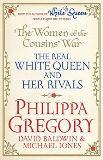
I am excited to tell you about the two books that the committee has approved for the Book Discussion at our branch meeting 4 April 2020, in order to give everyone plenty of time to obtain and read them. The intention is to look more closely at the fascinating women of the Lancasters and Yorks. Both titles are nonfiction and come highly recommended.

If you prefer, you can, of course, choose any Ricardian or English History book, fiction or nonfiction, to read instead and share your opinion with us at the meeting. In our first discussion meeting this past June several members introduced the group to wonderful new titles to add to their ever-lengthening reading lists!
Book Depository.com has the best prices I have seen along with free shipping, but of course if you can find them second-hand or at the library that would be even better. The SMSA library has The Women of the Cousins’ War by Philippa Gregory, David Baldwin & Michael Jones, and the City of Sydney library system has a copy of Blood Sisters by Sarah Gristwood.
Happy Reading!
The highly popular Biennial Conference is on again! After consultation with other branches, the date has been set for Friday, 11 September 2020. So pack your bags to join us at the Albury Manor Hotel for a day of fun and interesting talks – not to forget Ricardian fellowship!

The Biennial Conference started out as a one-day event of the NSW Branch to give also its members from further afield the chance to meet up. However, over time it has grown and is now equally popular with members from all the other branches of the Richard III Society in Australia and New Zealand. (It is not to be confused with the Australasian Conventions, which also take place every second year, but is a 2-day event. The next one will be in Adelaide, SA, 21-22 Aug. 2021.)
The Biennial Conference will be organised by Helen and Denise, who did outstanding work on the two previous Albury Conferences in 2016 and 2018. The Albury Manor Hotel offers not only comfortable rooms, but also has a medieval inspired ambience.
We would be happy if you can join us for a Welcome on Thursday, 10 September. Friday will be a full day of talks with dinner in the evening. Departure will be on 12 September, but of course you are welcome to take part in a tour with other attendees.
At present this is just to keep you informed so that you can keep the dates free in your diary for 2020. We will share further details as they become available.
Ingredients:
175g butter
½ cup plain flour
2 cups chicken stock
¾ cup ground almonds
1 tablespoon sugar
½ tsp saffron (or cumin)
2 tsp ground ginger
1 tsp ground cinnamon
½ tsp ground cloves
6 cooked breast fillets (or rabbit, well boned), cubed
Salt and pepper to taste
Vol-au-vent cases
Method
Melt butter in a pan, and add flour. Stir well for about a minute to blend. Add stock, almonds, sugar and spices, and cook until thickened.
Add the meat and salt and pepper to taste. Simmer over a low heat for about 5 minutes.
Spoon mixture into the vol-au-vent cases and serve with a green salad.