17 AUGUST 1473
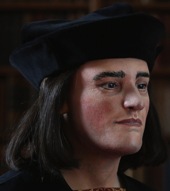
Birth of Richard of Shrewsbury, second son and sixth child of Edward IV and Elizabeth Woodville, at Shrewsbury.
Tags: Edward IV, Elizabeth Woodville, Family
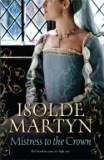
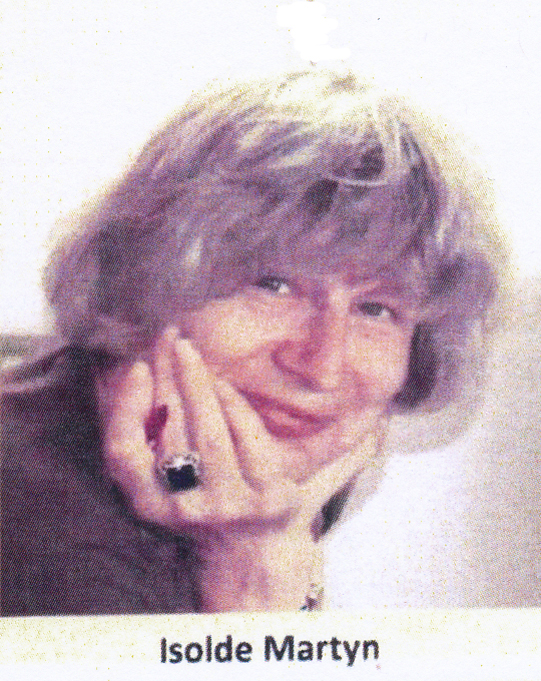
VIRTUAL BOOK CLUB 2021We have chosen historical fiction novel “Mistress to the Crown” by Isolde Martyn, one of our most treasured and long-standing members of the society and are thrilled to welcome Isolde to be part of our Book Club discussion as well as answering questions on this intriguing novel.
“Mistress to the Crown” introduces readers to Elizabeth Lambard who is best known to history as Jane Shore, mistress of English King Edward IV. The novel follows Elizabeth’s life from the time of her marriage to merchant William Shore as teenager, to the start of her second marriage shortly after the death of King Edward. Told from Elizabeth’s perspective, the novel paints a vivid and authentic portrait of a woman about whom very little is known.
If you would like to participate in this wonderful LIVE Zoom event, please RSVP to Marnie Lo at: affinity@richardiii-nsw.org.au so we can send you an exclusive Zoom invitation.
To purchase this book for advance reading, it is currently widely available from Booktopia, Amazon.com.au, Abbey’s Bookstore, The Book Depository & Dymocks for $19.99 or for $8.99 on Kindle. A signed copy for $10 can also be purchased from Isolde directly by emailing: isolde@isoldemartyn.com or by calling Isolde on: (02) 9449-7962
We look forward to welcoming you all to this very special event and sharing your impressions on this very unique & intriguing historical figure.
Birth of Richard of Shrewsbury, second son and sixth child of Edward IV and Elizabeth Woodville, at Shrewsbury.
Tags: Edward IV, Elizabeth Woodville, Family
We are very grateful to our long-term member Ann Chandler for sharing her thoughts about Kevin Herbert’s funeral with us.
The 5th of March, the day of Kevin’s funeral was a drear day with rain bucketing down in cold sheets……and the skies were grey, perhaps in reflection of our feelings. Inside the church, however, it was a different story. The light was soft and the leadlights glowed. Kevin’s casket was adorned with natives and our white roses were nearby, while Richard looked down from a close screen.
The service was just as Kevin wished and the music was sublime. So many lovely, traditional hymns sung by Jeremy Curtin, Giselle Grape, Gina Marshall and The Fathers Choir. Gerard Herbert, Maria Kelly and I presented the three eulogies. I made sure I was dressed in Richard’s colours, complete with Ricardian badges and a white rose. I also read out Julia’s letter on behalf of our society and Rob Smith’s (New Zealand Branch) letter to Kevin which he received before he passed.
After the beautiful mass, our dear friend was interred with his beloved mother. We all returned to the Belrose Hotel where we mingled and shared our stories and memories of Kevin. The food was fabulous, and Kevin’s family did Him proud! While we ate, drank and remembered, we were treated to a wonderful slideshow, compiled by our fellow Ricardian, Helen Porteus. It was great to see Kevin in his various costumes and familiar gestures. Helen’s husband, Allan, also generously gave a portrait of Kevin, which he had painted, to Kevin’s grateful family. It was a sad day and the end of an era but our dear Kevin was farewelled very well indeed… a true celebration of a life well lived.

I will now include my portion of his eulogy:
I first met Kevin through the Richard The Third Society, almost thirty years ago. We immediately became great friends, bonded by our common interests and he became a most wonderful friend to my family—as he was to all of you. Kevin was always his own man, but he shared his life with extraordinary generosity. He was a tireless worker for our society and was the Social Secretary for many, many years and what a Social Secretary he was! We enjoyed so many great events, organised by Kevin and I know I speak for our society when I say that whenever Kevin was due to give a talk or deliver a speech, we were all excited because he had such a wealth of information and interesting anecdotes, all delivered with Kevin’s customary verve and enthusiasm. He was one of the most learned men I have ever met.
When I first met Kevin, I rather loftily stated, “I walk with the King!” Now other people may have looked over their shoulders with some alarm to check if Elvis was in the building………. but not Kevin. Quick as a flash, he replied, “And so do I!” And now our dear friend truly does walk with the King. He has taken his rightful place, by his side ….. his loyal and liege man. Yours was, indeed, a life well lived, so walk tall dear, dear Kevin.
Ann Chandler
All members of the New South Wales Branch of the Richard III Society will be saddened by news of Kevin Herbert’s death after such a long illness.
Kevin was a true Ricardian, always seeking more information about the man and his life and times. He devoured books, consulted maps, museums and libraries. He shared his knowledge and love, and our meetings were a joy for him, as were the conventions and conferences with other Australasian branches where he had so many friends (nearly as many as the costumes he wore to the banquets!).
To meet our travel needs Kevin’s information about train and bus time-tables, routes, and costs was encyclopaedic as was his knowledge of the period’s family trees. There was always something new to learn at the “C and Cs” (coffee and conversation) enjoyed with friends. These meetings with our fondly named “Special K” soon saw us discarding plans for world improvement and indulge in everything Ricardian. As you do.
A great thinker, a great Ricardian, a much-loved friend. That was Special K. How we’ll miss him.
Thank you, Kevin, for all you gave to us. God bless you.
A funeral service will be held on Thursday, 5 March 2020, at 10.30 am at Immaculate Catholic Church, Raglan Street, Manly.
Tags: NSW Branch
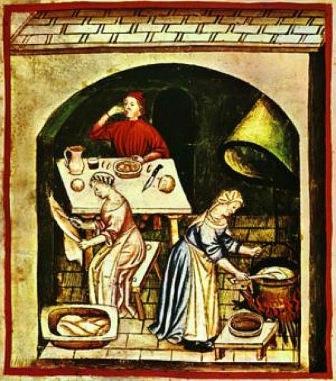
Ingredients
600ml thick cream
1 cup cottage cheese
¼ cup caster sugar
4 tbs honey
Pinch of saffron (optional)
2tbs softened butter
4 egg yolks, lightly beaten
Crystallised violets
Method
Heat the cream to boiling, then set aside.
Place the cottage cheese in a saucepan and beat well. Add sugar, honey, saffron and cream . Blend well.
Beat in the softened butter and egg yolks. Cook over a low heat, stirring until the mixture thickens, but do not allow the mixture to boil.
When ready, pour into a serving dish and chill. Before serving decorate with crystallised violets
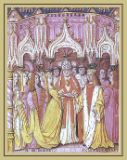
On 18 January 1486, Henry VII (Tudor) married Elizabeth of York, eldest daughter of Edward IV and Elizabeth Woodville. It seems Henry needed to be urged by Parliament to make good his promise to marry Elizabeth, before actually doing so. Plans for Elizabeth’s coronation were only made in September 1487 and she was finally crowned on 25 November 1487, more than a year after giving birth to their first son, Arthur.
Elizabeth died on 11 February 1503 at Richmond Palace. Henry died six years later, on 21 April 1509, also at Richmond Palace. They are buried next to each other in Westminster Abbey.
Reference: Rosemary Horrox, ‘Elizabeth (1466–1503)’, Oxford Dictionary of National Biography, Oxford University Press, 2004. (online accessed: 27 January 2011)
Tags: Edward IV, Elizabeth of York, Elizabeth Woodville, Henry Tudor
The Plantagent Society has planned and exciting talk for their January 2020 meeting. They have kindly invited members and friends of our branch to share this event:
Ingredients
2 small fillets of white fish per person, skin removed
2 cups vegetable stock
Lemon slices
Parsley to garnish
Vegetable stock*
*Use the bought variety if necessary, but if making it yourself, use young carrots, spring onions, a bay leaf, a little sage and chopped parsley. The liquid should be half water and half white wine.
Method
Roll each fillet firmly and secure with a toothpick. Place the fish in a pan and cover with the vegetable stock until fish is tender. Remove the fish rolls and set aside. Simmer the stock further until it is well reduced. Chill to form a jellied sauce.
Place the fish rolls on a serving platter and pour the sauce over them. Garnish with lemon slices and parsley.
Note
If the aroma of cooking fish is not appreciated, cook in a “medieval” microwave according to the maker’s instructions.
The perfect accompaniment to the Fish Rolls is a Herb Salad
Gather a collection of herbs: parsley, sage, fennel, borage, mint, rosemary. And spring onions or a leek if in season.
Wash all the items well and then break them up into small pieces.
Place in a bowl and mix well with olive oil, adding a sprinkling of cider vinegar and a little salt before serving.
Dianne Herbert, a long standing member of the Richard III Society, introduced us to the Alba Semi-Plena, the rose we know of as the White Rose of York. It is not like the mass produced roses we know today, being much simpler but more perfumed. Roses are thought to have originated in Persia (Iran) about 35 million years old and were brought to the west by the Crusaders. The Middle East was a major producer of rosewater, rose attar (rose essence or rose oil) and rose petals, for use in medicine, as food and in cosmetics. The Alba doesn’t interbreed successfully with other roses.

Rosa ‘Semi-plena’ (Photo by A. Barra via Wikimedia Commons)
There are a number of stories associated with roses. Apparently, roses only started to produce thorns when evil appeared in the world. At the Feast of Heliogabalus (204 – 222), guests died after being smothered in rose petals. The oldest rose bush alive today was established by King Louis the Pious (King of the Franks) in 815, and is at Hildesheim Cathedral in Germany. In the Middle Ages, a rose suspended from the ceiling meant that those present were sworn to secrecy.

Thousand-year-old rose, Hildesheim (Photo by Bischöfliche Pressestelle Hildesheim via Wikimedia Commons)
Edmund Langley, 1st Duke of York was the first nobleman to use the White Rose of York. Edmund Crouchback, 1st Earl of Lancaster used the red rose (Rosa gallica). Margaret of Anjou was known as the Red Rose of Anjou. Edward IV’s wife, Elizabeth Woodville used a white rose. Edward IV’s mistress, Jane Shore was known as the Rose of London. And it was not until 1829 that the term “Wars of the Roses” was used, when Sir Walter Scott included the term in his novel Anne of Geierstein.
There is a “Jacobite” or “Bonny Prince Charlie’s” rose, as well as a rose called “York and Lancaster”. Roses have been cultivated in China since the 11th century, and a Rose Museum has recently been opened in Beijing. Unfortunately, there are no native roses in the Southern Hemisphere.
It was interesting to learn about the history of roses and the white rose in particular. We could hear Dianne’s love of roses in her talk. Amongst other roses, she grows “Mr Lincoln”, “Duchess of Provence”, and the “Peace Rose”. I’m sure her garden is spectacular.
Tags: Hildesheim, Rosa Alba Semi-Plena, Rose of York, Roses, Wars of the Roses
The NSW Branch held its 1st Book Club at the Members’ Meeting on 8 June 2019 and it was a very lively and stimulating discussion. It was so successful the Committee decided that the Book Club will become an annual event.
The books reviewed at our Book Club this year were: –
The “Winter King” was acknowledged as not an easy read due to the writing style and terminology used by Penn. The book was a more scholarly read and the narrative was not necessarily chronological, however Members persevered, and a very interesting picture of Henry VII arose, one that we may not have previously understood. Henry VII emerged as a paranoid, secretive, devious and duplicitous individual who would stop at nothing to hold on to his crown and fill his treasury – he was unsentimental towards those who had served him well and subsequently, had fallen from favour. Henry was avaricious and Penn’s narrative about how this was enacted was revealing. Although it was hard going, the majority of the book club members finished the book, and all acknowledged they found it interesting and learnt from the experience.
“The Devil in Ermine” was acknowledged as excellent, as we have all come to expect from Isolde. Isolde’s story on the Duke of Buckingham and his revolt was well researched and very informative about this troubling and treasonous event during the reign of Richard III. Isolde made this complex event into an easy to read and understand narrative that brought to light a treacherous, inexperienced, reactive and emotional character in Buckingham that seriously threatened Richard III and his reign.
We look forward to the next Book Club, to be held on Saturday 4 April 2020. The Books we will be reading are:
Please join us!
Tags: Book Club, Books, Isolde Martyn, The Devil in Ermine, Thomas Penn, Winter King: The Dawn of Tudor England