23
Sep

Preparing for the new Ricardian year

   Posted by: Julia Redlich   in Meetings

Many thanks to those of you who have sent their subscription renewals to our Treasurer Judy.  If you haven’t already done so, remember they must be with us either by mail to Judy, a direct deposit to the Branch Bank account as instructed on the renewal form, or paid in person at our Annual General Meeting on 8 October 2011.  Whichever method you choose, our subscriptions have to be forwarded to the UK Executive by 14 October 2011 and after that date we have to ask you for an extra $20 to cover the cost of subsequent banking charges.  Of course, if you are renewing as a Friend, this charge is not applicable as you don’t receive the UK publications. We’d still like your payment though!

Let’s hope many of you can attend the AGM to hear what we have achieved in the last year, and what the future holds in store for the Branch.  The committee for the upcoming year will have to be elected and, while some current officers have already indicated willingness to stand again, there has been a notable reluctance elsewhere.  Please consider if you can commit yourself to helping in some capacity.  We have a good deal of work to do with the conference in Mittagong in May next year and the Australasian Branches of the Richard III Society Convention in 2013.  It would be good to see a few more hands on deck – and some ideas as to what you can contribute.  We do appreciate that the demands of family and work can limit the time you can afford to give, but any assistance, even a promise of making items for sales tables, will earn you a gold star!

And the meeting of course will feature a great presentation by Judith on ‘Hildegard of Bingen’.  This incredible woman has been the subject of several lectures around Sydney recently and you won’t want to miss hearing what Judith has to say.

Tags:

21
Sep

Middleham Church Appeal

   Posted by: Dorothea Preis   in News

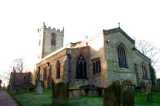
The Church of St Mary and St Alkelda in Middleham, North Yorkshire, was elevated by Richard, when still Duke of Gloucester, to the status of a college in 1477 and it retained its collegiate constitution for about 350 years.

The church has a memorial window to Richard III and his family, which was given by the Richard III Society in 1934. The window has St Richard of Chichester, with his emblem of an ox, in the left hand upper light and in the right hand appears St Anne teaching the Virgin to read.  Beneath, in small panels of blue, are figures of King Richard kneeling at a prie-dieu with his son Edward behind him. Facing them is Queen Anne Neville.

A recent inspection of the church fabric revealed the need for extensive repair work, estimated to cost in the region of £160,000

As the church is a Grade I listed building, it is hoped that English Heritage will pick up a large part of the bill, but this will leave the church to raise over £30,000, of which they have about half but need help to raise the rest.

The Ricardian Churches Restoration Fund has made a contribution, but more help is needed.  For us as Ricardians it is important to show our support for this historic church, with its links to Richard III and the Richard III Society.

You can make a donation by cheque (for the details look on the website of the Richard III Society and click on “What’s New?”) or via the Society’s PayPal account. To do this log on to your PayPal account and select the Send Money option. Then select ‘Payment for Services’ option and enter the Society’s e-mail address: ricardianfunds@yahoo.co.uk. Enter the amount to be paid and specify GBP sterling. Please complete the ‘Message to Recipient’ box and enter ‘Middleham Appeal’ This is very important since it is the only way the Society can recognise the transaction and ensure your payment is credited to the Appeal Fund.

Photo:  The Collegiate Church of St Mary and St Alkelda, Middleham (© Copyright Bill Henderson and licensed for reuse under this Creative Commons Licence)

Tags: , ,

21
Sep

Australian Politics

   Posted by: Julia Redlich   in News from Other Organizations

The Australian Heraldry Society has yet another intriguing lecture planned.  Those of us who enjoyed hearing Professor Stephanie Trigg from Melbourne University speak a couple of years ago about ‘The Ladies of the Garter’, won’t want to miss ‘The Traditional, the Quaint and the Medieval in Australian Parliamentary Practice’.

Appropriately this will take place in the Parliamentary Theatrette, NSW Parliament House, Macquarie Street, Sydney on Thursday, 13 October 2011.  Entry is by gold coin donation; doors open at 17h45, lecture begins at 18h30.  Refreshments will be served beforehand and, naturally, there will be one of Heraldry Australia’s interesting raffles.

The illustrated talk “explores the medieval component of parliamentary rituals, objects and traditions”… and “the relationship between the medievalism of such objects and practices and the idea of tradition in modern Australian parliamentary practice.”

The Heraldry Society events are always worthwhile, so if you would like to attend  the evening please contact their secretary Stephen Szabo by email:  secretaryATeraldryaustralia.org (replace the word  “AT” with ‘@”).  Please let Julia know if you will be going, too.

20
Sep

Birthday Barbecue

   Posted by: Julia Redlich   in Meetings

Don’t forget to let Social Secretary, Jane, know if you are going to attend the lunch to remember Richard III’s birthday.  Helen Portus is hosting the occasion at her home in Bundanoon, on Sunday, 2 October from 12h00.  Jane has all the information about train times from Sydney and back, but will need to know if you need to be collected from Bowral Station and driven to Bundanoon.  She must know by 23 September so she can give the numbers to Helen.

Tags: ,

10
Sep

Richard Armitage / Richard III

   Posted by: Dorothea Preis   in News

We all know Richard Armitage as an actor from programmes such as “North and South”, “Robin Hood” and “Spooks”.  Some of us also have heard before of his great interest in Richard III and making a film about him.

Now you can do your bit to make this come true.  Go to the King Richard Armitage website and sign the petition to encourage potential financiers and production investors to support the “Richard III” project.

There is also an interview with our branch member and former chairperson, acclaimed novelist Isolde Martyn on the site.

Tags:

6
Sep

The Questionable Legend of Henry Wyatt (c.1460 – 1537)

   Posted by: Annette Carson   in Medieval People

An abridged version of this article appeared in the September 2011 Ricardian Bulletin.  We are grateful to Annette Carson for making the full version available to us.

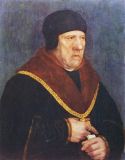
From time to time the exploits of Sir Henry Wyatt crop up in books, both fiction and non-fiction, for he was a fascinating character whose career encompassed espionage as well as military action and high office. Most writers, however, concern themselves mainly with grisly tales of imprisonment and torture in the cause of Henry VII, which grew to become Wyatt family legend. In recent years a flurry of interest was created by Hilary Mantel’s characterization of Wyatt in her novel Wolf Hall, and a biography by Nicola Schulman of his son, the poet Sir Thomas Wyatt, has again rehearsed the same old legends. The true facts of Henry Wyatt’s capture and incarceration may never be known, having been buried under an accretion of myths over the years, but this article addresses some versions of the story that we can certainly clarify, and some we can probably debunk.* Valuable background for all this can be found in Agnes Conway’s Henry VII’s Relations with Scotland and Ireland, 1485–1498.1

The different versions of Henry’s story are too numerous to catalogue in all their glorious variety, but the most popular tales may be summarized thus: Read the rest of this entry »

Tags: ,

3
Sep

Rebecca’s Tale

   Posted by: Julia Redlich   in Quotes

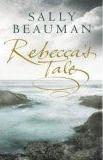
Sally Beauman, Rebecca’s Tale. Little, Brown, 2001.  ISBN 0 316 858137

We all enjoy looking for references to Richard III in whatever we are reading.  I found another one in Sally Beauman’s novel Rebecca’s Tale, which is the second sequel to Daphne du Maurier’s Rebecca telling us about what happened to the de Winters after Manderley goes up in flames.

The first sequel Mrs de Winter was fairly straightforward, but this one is written by four different characters, one of them Rebecca herself.  There’s a lot of delving into her very hidden past to discover what made her who she was.  In case you haven’t read it and would like to I won’t go into it all, but when she was a child she was involved, like her mother, with a B-grade theatre company and played roles like Puck, Macduff’s son and Edward V.  When she sees Manderley for the first time, still quite young, she writes in one of her notebooks:

I knew I’d come home.  This place was mine?  Could I wrest if from the de Winters’ hands?  That would be true revenge for all the injustice dealt out to Maman … I considered my erstwhile successes and stratagems … Clever deformed Richard III had been my favourite character and mentor.  At that moment, a very Crookback mood came upon me.  I thought to myself:  Can I do this and cannot get a crown? Tut! Were it further off, I’d pluck it down.

Shakespeare’s Richard again, but Sally Beauman must have recognised something in the Bard’s character to link him to Rebecca’s ambition.

A bit of trivia:  ages ago when we used to spend our summer holidays in the Snowy Mountains while the hoi polloi made use of “Our” Beach at Balmoral, we used to rent a house on a property above Lake Eucumbene (5 km and 6 cattle grids off a minor road).  On the way we used to pass a really run-down cottage with its name proudly displayed by the roadside “Manderley”.  Anything further from the de Winters’ stately home couldn’t be imagined and we always enjoyed a good laugh as we drove by.

Tags: ,

2
Sep

Different perceptions of Richard III

   Posted by: Dorothea Preis   in News

Liverpool stages an annual Shakespeare Festival.  This year (25 August to 10 September) the Lodestar Theatre Company is presenting Romeo and Juliet at St. George’s Hall, Liverpool.  This play was chosen to show the “tragic consequences of a city’s troubles and divisions” and is set in 19th century Liverpool.  Considering the recent events in various UK cities, including Liverpool, Shakespeare’s play is even more apt than the organisers could have imagined when they decided on its production.

On the last night of the festival, 11 September, there will be a special performance:  25 theatre companies from around the country will each prepare a randomly selected scene from Richard III in the style of their choice.  These scenes are then brought together in one performance.  According to the official announcement there will be “100 terrified performers.  3 evil judges.  Not a single rehearsal.” No wonder that the organisers call it “Shakespeare with no holds Bard.”

Each of the participating companies will be bringing a different style and technique to the play with the aim to “celebrate the diversity of approach both here and nationally.”

The variety of different perceptions of Shakespeare’s play Richard III is appropriate also when we regard the variety of perceptions of the historical man, from saint to absolute villain and anything in between.

Sources:

Official page of the Liverpool Shakespeare Festival 2011:   http://www.liverpoolshakespearefestival.com/#!richard-iii Date accessed:  2 September 2011

Tina Miles, ‘Merseyside theatregoers set to raise money for ECHO charity Liverpool Unites’, Liverpool Echo (31 August 2011).  URL:  http://www.liverpoolecho.co.uk/liverpool-news/local-news/2011/08/31/merseyside-theatregoers-set-to-raise-money-for-echo-charity-liverpool-unites-100252-29332122/ Date accessed:  1 September 2011

‘Liverpool Shakespeare Festival’, My Echo – Liverpool Unites.  URL:  http://myecho.liverpoolecho.co.uk/liverpool-shakespeare-festival/ Date accessed:  2 September 2011

Tags: ,

29
Aug

Remembering Bosworth Field

   Posted by: Julia Redlich   in Meetings

Last Sunday saw a select band of members and friends of the New South Wales Branch attend morning service at beautiful Mary’s Anglican Church in Waverley, to remember King Richard III and all who fell with him at the battle on August 22, 1485.

We were warmly welcomed at the beginning of the service and, just before the end, wishes were expressed that we had found the service rewarding, as indeed we did. And at morning tea with the Parish afterwards we made more friends – and handed out brochures about why the Society exists and some explanations about why we feel it is so important to champion a maligned king. Read the rest of this entry »

Tags: , , ,

25
Aug

Tewkesbury Abbey

   Posted by: Judy Howard   in Meetings

I’ve been allocated the letter “T” for my Scrabble talk at the Auhust General Meeting, so I would like to talk about Tewkesbury Abbey which I had the pleasure of visiting in 2007.  I will talk a little about the Battlefield as well, because it is so integral to the Abbey.

The Abbey is located on the edge of the Cotswolds, about 10 kms from Cheltenham and is near the junction of the Severn and Avon Rivers.  Tewkesbury the town is very old, most buildings date back to mediaeval period, with two stories and what we know as the “Tudor” style.

It’s quaint and pleasant.  To the right of the main square coming into the town you come across this enormous church, which dominates and almost overwhelms the small town. Read the rest of this entry »

Tags: , ,