Posted by: Win Tonkin in Quotes
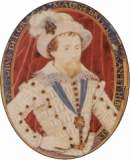
We continue our series of the opinions of James VI of Scotland /James I of England.
If only his view had prevailed 400 years ago, when the use of tobacco in Europe was still quite new. In Britain, Sir Walter Raleigh (c. 1552 – 1618) is credited with making tobacco popular.
A custom loathsome to the eye, hateful to the nose, harmful to the brain, dangerous to the lungs, and in the black stinking fume thereof nearest resembling the horrible “Stygian smoke of the pit that is bottomless”. (A Counterblast to Tobacco, 1604)
Tags: Scotland
Posted by: Dorothea Preis in News
 With thanks to Karen, who brought this to my attention.
The 2010 Winners of Leicestershire’s favourite museum objects have just been announced. These objects were chosen by public vote from the top 100 items on the ‘Leicestershire Revealed’ website which showcases the county’s finest museum objects.
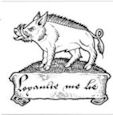
There were two joint winners: the silver boar badge which one of Richard III’s supporters lost at Bosworth over 500 years ago and the British toy Action Man, which was designed and produced in Coalville. The boar can be seen at Leicestershire County Council’s Bosworth Battlefield Visitor Centre and the Action Man at Snibston Discovery Museum.
For the Ricardian, the boar badge is obviously the more interesting winner. I can easily identify with the reason given by a woman who voted for the Bosworth Boar: “It conveys as strong a message now as it must have done when its owner wore it into battle.”
However, the reason given by a man for voting for the Action man, “Action Man is still popular – he has his own army of collectors!”, can easily be made to suit Richard as well: “Richard III is still popular – he has his own Society of fans!”
David Sprason, Leicestershire County Council’s Cabinet Member for Adults and Communities, sums it up:
Both of these items reflect Leicestershire’s true history and identity and show just how wide and vast the county’s history is. On the one hand we have a truly remarkable badge which tells us so much about the battle that was pivotal in shaping the future of England and on the other; we have one of last century’s most iconic toys that was enjoyed by people all over the world.
It is great to see that finally after more than 500 years Richard’s badge is victorious and enjoys the support it deserves!
You can read the full article here, there are also pictures of winners.
Tags: Bosworth, Richard III
Another talk which was presented at the NSW Mini-Convention in May 2010.
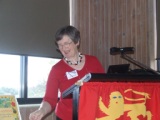 One of my volunteer jobs is to sort and price donated books for Lifeline Northern Beaches Bookfairs. I love the serendipity of it and was delighted one day to come across a modern rendering of William Caxton’s The Description of Britain which was originally published in 1480. I thought “Wow – this came out and was for sale during the lifetime of our Richard when he was Duke of Gloucester. It contains a general view of the Britain with which Richard would have been familiar. Read the rest of this entry »
Tags: Books
 We received a Christmas message from John Ashdown-Hill, who used to be responsible for Group and Branch Liaison in the Richard III Society. We were so pleased to get it – especially as he says he’s writing a new book! What is the subject next time I wonder? And good to know The Last Days of Richard III is soon coming out as an e-book.
John and the useful flow of information that he used to send is sorely missed. All of us in NSW wish him a very happy Christmas, too.
Tags: Ricardian Authors, Richard III Society
During Richard III’s short reign there were only three vacancies for bishops, and it is remarkable that two of these went to Thomas Langton. Langton ticked all the right boxes with Richard: Richard preferred Cambridge men to those from Oxford – Langton had studied at Pembroke Hall in Cambridge, though he also was provost of Queen’s College in Oxford; Langton had studied further in Italy, in Padua and Bologna, and shared Richard’s interest in learning and humanistic scholarship.
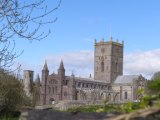
St David’s Cathedral (© Isolde Martyn)
In May 1483 the Bishop of St David’s, Richard Martin, died and Richard as protector suggested Thomas Langton for the vacancy. He must have proved a very able man and, when in February 1485 the see of Salisbury fell vacant, it was again Thomas Langton who was promoted [1]. Read the rest of this entry »
Tags: Cambridge, Church, Contemporaries, Richard III
Posted by: Dorothea Preis in News

Today marks the first Sunday of Advent and we would like to take the opportunity and wish all our readers a very happy advent period.
Tags: Holiday
 This is just to remind you about our last meeting for 2010 on Saturday, 11 December; at the usual time of 14h00 at the Sydney Mechanics School of Arts, 280 Pitt Street, Sydney.
Dorothea Preis will be talking about Medieval Pottery, Judith Hughes has something very interesting to test your skills, and there will be something light-hearted from myself. And, of course, we shall enjoy our usual Christmas celebration tea. Judith has suggested that those of you bringing a plate of something delicious to enjoy might like to keep plates to a modest size rather than present a plethora of platters!
Another Christmas item will be a Bring and Buy Stall with our usual suggestion of “bring two and buy two” – which of course doesn’t prevent you bringing more and buying more! This is a great opportunity to find small, useful gifts for guests – invited and unexpected – who visit you at Christmas time.
The next Affinity Newsletter will be sent out in the New Year when we will have more information for our activities in 2011.
The committee hopes to see many of you on 11 December.
Tags: NSW Branch
 A new contribution for the bookworms among our readers:
David Santiuste, Edward IV and the Wars of the Roses. Pen & Sword Books Ltd, 2010. ISBN 9781844159307 (Hardback)
As the title indicates the aim of this book is not to offer a comprehensive biography of Edward IV, but as the author says “to illuminate Edward’s personal role during the Wars of the Roses”. So the focus is on Edward’s military career. I have to admit military matters do not normally interest me much, but I found this book very rewarding and interesting. Read the rest of this entry »
Tags: Books, Contemporaries, Edward IV
Posted by: Win Tonkin in Quotes
At our last general meeting we had the pleasure of listening to Win’s fascinating talk on aspects of Scottish history. She used pictures from the 2003 Historic Scotland Calendar to illustrate her talk. The calendar also contains for each month a quote from James VI of Scotland / James I of England, which we all found very interesting.
James was born on 19 June 1566 at Edinburgh Castle. After his mother Mary Queen of Scots was forced to abdicate in his favour when he was thirteen months old, on 24 July 1567, he became King James VI of Scots. He gained full control of the government in 1581.
In 1603 he succeeded Elizabeth I, who died without issue, as King James I of England. Both countries remained legally separate, but were ruled by the same monarch. Read the rest of this entry »
Tags: Scotland
Posted by: Dorothea Preis in News
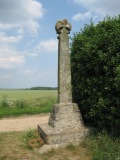
Towton Cross
Sensational find at the Towton Battlefield
The Battle of Towton was fought on Palm Sunday 29 March 1461 between Edward IV’s Yorkists and the Lancastrians fighting for Henry VI. The weather was atrocious, very cold with wind and snow. The Yorkists won a decisive victory, securing the throne for Edward IV, however at huge cost of lives. It is estimated that up to 28,000 soldiers were killed on a single day, approx. one per cent of the English population at the time, which makes it one of the bloodiest battles to ever take place on English soil. Read the rest of this entry »
Tags: Battles, Edward IV, Henry VI, Towton