
22
Nov

John Rous on Richard III as Builder

   Posted by: Dorothea Preis   in Quotes

Richard and his family (from The Rous Roll)

We have recently looked at a few of the collegiate churches founded by Richard while Duke of Gloucester or later as Richard III and will continue with a few others.

One chronicler who tells us about this is John Rous (1411-1491). Rous spent most of his life under the patronage of the Beauchamps and – after the marriage of Anne Beauchamp to Richard Neville (the “Kingmaker”) – the Nevilles.   During Richard’s reign Rous wrote The Rous Roll, a history of the Earls of Warwick, which is full of praise of Richard, the son-in-law of Richard Neville.

Once Henry Tudor was king he changed his tune completely and went on all out attack in his Historia Regum Anglie (History of the Kings of England).  This is origin of the legend that Richard’s mother was pregnant with him for two years and when he was born he had teeth and shoulder-length hair.  He also accuses him of personally killing Henry VI and poisoning his wife.

Unfortunately for Rous, copies of both texts have survived, which brought him “the distinction of being the most despised of the chroniclers”.  However, even among all the accusations of his later work, he sometimes can’t help himself and praises Richard, like in this passage where he talks about Richard’s building programmes:

This King Richard was praiseworthy for his building, as at Westminster, Nottingham, Warwick, York, and Middleham, and many other places, which can be viewed. He founded a noble chantry for a hundred priests in the cathedral of York, and another college at Middleham. He founded another in the church of St. Mary of Barking, by the Tower of London, and endowed the Queens’ College at Cambridge with 500 marks annual rent. The money which was offered him by the peoples of London, Gloucester, and Worcester he declined with thanks, affirming that he would rather have their love than their treasure.

I would not have thought that a Richard who would rather have his subjects’  “love than their treasure” fitted in well with the Tudor world view.  This is hardly a sentiment that Henry VII, with whom Rous wanted to ingratiate himself at that time, would have shared.

Bibliography:

Antonia Gransden, Historical writing in England, Volume 2. Routledge, 1982.  ISBN 978-0-415-15125-2, pp.309-316

Jeremy Potter, Good King Richard?  An Account of Richard III and his Reputation.  Constable, London, 1994 (pbk).  ISBN 0 09 468840 0, p.88 (incl. quote from History of the Kings of England)

Tags: , , ,

20
Nov

John Morton by Cresacre More

   Posted by: Dorothea Preis   in Quotes

While researching something else I recently came across Cresacre More’s biography of his great-grandfather Thomas More.  His Life of Sir Thomas More was probably first published in 1631.  This is what he has to say about his ancestor’s mentor, John Morton, who was Bishop of Ely during the reign of Richard III:

… the most worthy prelate that then lived in England, both for wisdom, learning and virtue, whose like the world scarce had, Cardinal Morton, archbishop of Canterbury, and lord high chancellor of England, whose grave countenance and carriage was such that he easily allured all men to honour and love him: a man, as Sir Thomas More describes him in his Utopia, of incomparable judgment, a memory more than credible, eloquent in speech, and, which is more to be wished in clergymen, of singular wisdom and virtue; so that the king and the commonwealth relied chiefly on this man’s counsel, as he by whose policy king Henry the seventh both got the crown of England from Richard the usurper, and also most happily procured the two houses of Lancaster and York to be united by marriage.

This glowing report is a masterpiece in what is being left out.  When we are told that John Morton’s “grave countenance and carriage … easily allured all men to honour and love him”, I can think of several people, who have taken me in by their air of seriousness and reason which hid a very calculating mind.  It can be a very useful tool in getting other people to do what you want.  Interesting that Richard of Gloucester did not fall for the “allure” and did not trust Morton.

Morton was certainly “eloquent in speech”, as he is usually credited with talking Henry Stafford, Duke of Buckingham, into taking part in the 1483 rebellion.

No doubt “the king and the commonwealth relied chiefly on this man’s counsel”, when it came to devising ways of increasing tax revenue.  And we never doubted that he was had something to do with getting the crown for the usurper Henry Tudor.

Notes:

Cresacre More, The Life of Sir Thomas More with a Biographical Preface, Notes and other Illustrations by the Rev. Joseph Hunter.   William Pickering, London, 1828

At Google Books:  http://books.google.com.au/books?id=I6YEAAAAYAAJ&printsec=frontcover&dq=The+Life+of+Sir+Thomas+More&hl=en&ei=PtvlTMG-FoLSuwOG2KjCCA&sa=X&oi=book_result&ct=result&resnum=2&ved=0CC4Q6AEwAQ#v=onepage&q&f=false

Information on Cresacre More:  Andrei Volgin, Dictionary of National Biography: Volume 38. Milman – More.  Adamant Media Corporation, 2001. ISBN-13: 978-1402170652, p.448

Tags:

19
Nov

The 2011 Convention

   Posted by: Dorothea Preis   in News from Other Branches

The next Australasian Convention will be hosted by the Victoria Branch and will take place from 5 to 7 August 2011 at the Victoria Hotel, 215 Little Collins Street, Melbourne.  You can find all the  information and the registration form on their branch website.  It promises to be an interesting and entertaining weekend and as always it will be a great opportunity to catch up with old friends and to make many new friends.

The Australasian Conventions (for more info on past conventions click here) are held every second year.  Since the first one in 1997 our they have become the favourite feature in the calendar of Australasian Ricardians and their friends.  All that you need to bring along is interest in the period, no specialised knowledge is required.  Do come along for a fascinating weekend!

Tags:

14
Nov

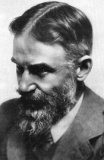
George Bernard Shaw on Shakespeare’s Richard III

   Posted by: Julia Redlich   in Quotes

During a cleanup the other day I was debating whether to throw out theatre programmes and found this.  It is from the Bell Shakespeare production of Richard III in 2002.

The world being yet little better than a mischievous schoolboy, I am afraid it cannot be denied that Punch and Judy holds the field in the most popular of dramatic entertainments.  And of all its versions, except those which are quite above the head of the man in the street, Shakespeare’s “Richard III” is the best.  It has abundant devilry, humour and character, presented with luxuriant energy of diction in the simplest form of blank verse.  Shakespeare revels in it with just the sort of artistic unconscionableness that fits the theme.  Richard is the prince of Punches, he delights Man by provoking God, and dies unrepentant and game to the last.  His incongruous conventional appendages, such as the Punch hump, the conscience, the fear of ghosts, all impart a spice of outrageousness which leaves nothing lacking in the fun of the entertainment, except the solemnity of those spectators who feel bound to take the affair as a profound and subtle historic study.

George Bernard Shaw in December 1896, after a performance at London’s Lyceum Theatre of Shakespeare’s play.

Tags:

12
Nov

Hatfield, Hertfordshire

   Posted by: Dorothea Preis   in Ricardian Places

Hatfield, Hertfordshire

Hatfield, Hertfordshire – History in Reverse

This continues my quest to discover a Ricardian or Yorkist connection to places in Hertfordshire.  Hatfield was fairly high on my agenda as I spent a year as a foreign language assistant teaching German at two schools, one of which was in Hatfield, in 1980/81.

After arriving on a Saturday evening in late August 1980, our first visit the next day was to Hatfield House.  As the first thing you see is the latest building on the site, this story will be going chronologically backwards. Read the rest of this entry »

Tags: , , ,

4
Nov

Like a Boar in a China Shop

   Posted by: Dorothea Preis   in News

Preisless* Ceramics introduces its Richard III range of hand-painted ceramics.  This one features Richard’s emblem, the White Boar, and his motto Loyaulte me lie under the White Rose of the House of York.  The blue background and murrey (dark red) rim also reflect the colours of the House of York.

It was fun painting something which for me as a Ricardian has so much relevance.  The idea to do it had been in my head for a long time before it became reality.

* pronounced priceless

Tags: ,

3
Nov

Medieval Warwick Study Day

   Posted by: Dorothea Preis   in News, Ricardian Places

Warwick Castle is of special relevance for Ricardians, as it is the birthplace of Richard III’s queen Anne Neville (on 11 June 1456).

Warwick Castle was begun by William I in 1068 in the motte-and-bailey type, using the cliff and river Avon on the one side as a natural defence, the other walls are protected by a dry moat.  The castle’s most formidable defences are at the north-east end, where in the 14th century a central gatehouse tower and two other towers, Caesar’s and Guy’s Towers, were built.

The castle was part of the Beaumont and then the Beauchamp inheritance.  Through Anne Beauchamp, the title Earl of Warwick and the Warwick estates had come to Richard Neville, who became the 16th Earl of Warwick and would later be known as the “Kingmaker”.  They had two daughters, Isabel and Anne, but no sons.   After Richard Earl of Warwick fell at the Battle of Barnet, the estates were divided between Anne Beauchamp’s two sons-in-law, Edward IV’s younger brothers George Duke of Clarence and Richard Duke of Gloucester.  The earldom went to George as the husband of the older daughter.  After the deaths of both Isabel (in 1476) and George (in 1478) their then three-year–old son Edward inherited the estates.  Due to his minority it was in the custody of the crown [1]. Read the rest of this entry »

Tags: , ,

28
Oct

Interview with Anne Easter Smith

   Posted by: Dorothea Preis   in Bookworm

We know historical novelist Anne Easter Smith through her books A Rose for the Crown, Daughter of York and The King’s Grace, all of which are favourites with a lot of Ricardians.

She was recently interview by the Examiner Pittsburgh, where she talks about her previous novels as well as the upcoming Queen by Right, which is about Cecily Neville, the wife of Richard Duke of York and mother of Richard III.  You can read this interesting interview here.

Tags: , , ,

25
Oct

More on the Stone of Destiny

   Posted by: Dorothea Preis   in News

To fit in with our Scottish theme of Win’s fascinating talks, Showtime Premiere is showing on Wednesday, 24 November 2010, at 18h35 the movie “The Stone of Destiny”.

It tells the story of the attempt by four young members of the Scottish Nationalist Party to regain the Stone of Destiny, that icon of Scottish Independence.  The film is based on the book by one of the four, Ian Hamilton.

This could not have been timed better.  Find out more here.

Tags:

23
Oct

Rebels with a Cause

   Posted by: Dorothea Preis   in News

My daily Google alert recently included an item about a theatre scandal in 1885.

In that year at least 59 students of the Ohio Wesleyan University in the US were suspended for skipping mandatory chapel and attending a performance of Shakespeare’s “Richard III” at the Delaware Opera House instead.

At that time church leaders regarded the theatre as being “detrimental … to the morals” and students of the University were not allowed to attend any performances.  However, the pull of the celebrated Shakespearean actor Fredrick Warde was stronger than the ban on theatre visits and the students went to see him perform in “Richard III”.  When the University administration found out, 59 students were suspended.  They were allowed to continue their studies only if they re-signed their matriculation cards as well as a confession of their wrong doing and promised not to break the rules again.

This attitude changed though not long after and Shakespeare has a strong tradition in the University’s drama department and one of his plays was performed in nearly every year in the 20th century.  This year this event will be dramatized and included in their 2010 Heritage Day under the title “Stand and Be Counted: Risking It All for the Stage.”

It seems Richard III has for a long time inspired an independent way of thinking.  I just hope that they also approached the historical Richard with the same challenging spirit to accepted orthodoxy.

You can read the news release from Ohio Wesleyan University here.

Tags: ,