
Posts Tagged ‘Books’

12
Oct

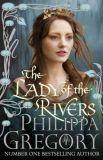
The Lady of the Rivers

   Posted by: Julia Redlich    in Bookworm

The Lady of the Rivers

Book Review:  The Lady of the Rivers

Philippa Gregory, The Lady of the Rivers, Simon & Schuster.  ISBN HB 978-1-84737-59-2.

This is the third novel in The Cousins’ War series, examining the woman who became the mother of Elizabeth Woodville.  Her importance became evident to the author as she wrote The White Queen, and as we have seen in her previous books, Gregory can focus on the women in history who are frequently placed several places in the rear while men take centre stage, but whose impact on history in enormous.

The story of the young Princess Jacquetta of Luxembourg opens with her recognition of the skills inherited by some of the women in her family thanks to their descent from the water goddess, Melusine.  A few years later she marries John, the great Duke of Bedford, who admits her to his secret world of alchemy and learning and, in England, she soon realises the difficulties she will have to face: not just a new language to learn, but to meet a young, easily led king, his ambitious relatives and confront the jealousy of Eleanor, Duchess of Gloucester.  And it is the witchcraft trial, hideous deaths of accomplices and incarceration of Eleanor that is a warning of what Jacquetta herself might have to face if she cannot hide her own gifts. Read the rest of this entry »

Tags: , ,

6
Oct

Welcome, Barbara!

   Posted by: Barbara Gaskell Denvil    in News, NSW Branch News

We are delighted to welcome a new member to our branch, Barbara Gaskell Denvil.

As I’ve just joined the Richard III Society, NSW Branch, I thought I should introduce myself.

I actually live in Victoria, but having received a strong recommendation from a friend to seek out the inestimable Dorothea Preis, I decided to do just that.

I’m an author, and I’ve recently published my first novel FAIR WEATHER (by BARBARA GASKELL DENVIL $2.99 Amazon Kindle and soon on smashwords.com for all other e.book devices) which is a fantasy set in medieval England around the early 1200s. There’s a fair chunk of historical content, but the basic plot is pure fantasy. It seems quite popular so far and has received some good reviews.

However, my main passion is later medieval history and the life and times of Richard III in particular, which I’ve been researching for years.  My next book which is due out within the month, starts on 22nd August 1485, and covers the first months of Henry VII’s reign. This is called SATIN CINNABAR and several members of the RIIISoc in the UK have been kind enough to give it a firm thumbs up.

I was born in England (near Gloucester, which seems apt) and I hold joint citizenship but have been living here in semi rural isolation for the past 15 years.  I spent the middle years of my life living on a yacht and sailing the Mediterranean, so probably it’s high time I settled down – though itchy feet still keep me restless and dreaming.

Now retired, I’m delighted to take up the love of my youth and once again start writing. When much younger I worked for Books and Bookmen as a critic and reviewer, and published numerous short stories and articles but all that seems centuries ago.  Now the flocks of parrots and the odd wallaby in the garden seems to add piquancy to the medieval intrigues which so inspire me.

I’m delighted to have finally joined the Society, and look forward to many further years of learning – and writing – about Good King Richard.

With the best of luck to all of you.

Cheers, Barbara

Please feel free to visit Barbara’s blog!

Tags: , ,

29
Sep

Novel Approach

   Posted by: Julia Redlich    in Bookworm

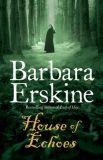
Although, as a general rule, novels aren’t the ideal source for historical research, it is always heartening to find our particular branch of the Plantagenet family appearing in imaginative pages.  Happily, in this case, House of Echoes is by Barbara Erskine, who has a degree in medieval history, and her many novels have a commendable ring of authenticity.

In some of her books people of today are linked with characters and events in history and in this story (published by HarperCollins) the connection is with Edward IV (and Richard gets a mention).  Great reading for lazy afternoons, but the chilling mystery could make it a no-no for late-night reading.

Tags: ,

24
Sep

Historical Hoaxes

   Posted by: Julia Redlich    in Bookworm

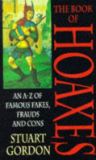
There are, of course, plenty of them, but naturally we picked up on this one from The Book of Hoaxes, by Stuart Gordon that was published by Headline some time ago.

Richard Nixon wasn’t the only Tricky Dicky in history, at least if Tudor propaganda and Shakespeare are to be believed.  In 1485 a desperate villain, surrounded by enemies, shouted `A horse! A horse! My kingdom for a horse!’  But too late.  He was slain.  His crown, found snagged on a bush was placed reverently on the head of his conqueror.  So died Crookback Dick, alias Richard III, the scheming hunchback who had murdered two innocent little children (the `Princes in the Tower’) to grab the crown.  Now the Welshman, Henry Tudor was king – King Henry VIII.  A new more glorious era was about to begin, culminating in the reign of his grand-daughter, Elizabeth.

Right had prevailed.  Evil had been vanquished.

But it wasn’t quite like that. Richard was the victim of one of the most successful posthumous smear campaigns ever mounted.

Why? Because Henry had no real right to the throne at all. The Wars of the Roses had been raging for years; all England was in turmoil, and Henry had grabbed what wasn’t his.  How to justify his act and secure what he had seized? How to persuade the English that a Welshman was their legitimate ruler?

For a start, by painting his predecessor as black as possible.

Thus Crookback Dick, hunchback and murderer!

There is no proof that Richard was either.  On the contrary he appears to have been an astute, capable ruler.  But the Tudors, later aided by Shakespeare’s dramatic skills, got away with it.  The mud they threw has stuck ever since.  Some historians and writers … have tried to rehabilitate him – but, as usual, ‘history is the lie commonly agreed upon’.   In popular imagination Richard will always be an evil, black-garbed hunchback stealing into the Tower to smother two little cherubs, before dying a coward’s death in battle, defeated by the heroic Henry …

Naturally Ricardians beg to differ and will continue to do their level best to prove the truth about the last Plantagenet king of England.

Tags: ,

3
Sep

Rebecca’s Tale

   Posted by: Julia Redlich    in Quotes

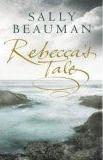
Sally Beauman, Rebecca’s Tale. Little, Brown, 2001.  ISBN 0 316 858137

We all enjoy looking for references to Richard III in whatever we are reading.  I found another one in Sally Beauman’s novel Rebecca’s Tale, which is the second sequel to Daphne du Maurier’s Rebecca telling us about what happened to the de Winters after Manderley goes up in flames.

The first sequel Mrs de Winter was fairly straightforward, but this one is written by four different characters, one of them Rebecca herself.  There’s a lot of delving into her very hidden past to discover what made her who she was.  In case you haven’t read it and would like to I won’t go into it all, but when she was a child she was involved, like her mother, with a B-grade theatre company and played roles like Puck, Macduff’s son and Edward V.  When she sees Manderley for the first time, still quite young, she writes in one of her notebooks:

I knew I’d come home.  This place was mine?  Could I wrest if from the de Winters’ hands?  That would be true revenge for all the injustice dealt out to Maman … I considered my erstwhile successes and stratagems … Clever deformed Richard III had been my favourite character and mentor.  At that moment, a very Crookback mood came upon me.  I thought to myself:  Can I do this and cannot get a crown? Tut! Were it further off, I’d pluck it down.

Shakespeare’s Richard again, but Sally Beauman must have recognised something in the Bard’s character to link him to Rebecca’s ambition.

A bit of trivia:  ages ago when we used to spend our summer holidays in the Snowy Mountains while the hoi polloi made use of “Our” Beach at Balmoral, we used to rent a house on a property above Lake Eucumbene (5 km and 6 cattle grids off a minor road).  On the way we used to pass a really run-down cottage with its name proudly displayed by the roadside “Manderley”.  Anything further from the de Winters’ stately home couldn’t be imagined and we always enjoyed a good laugh as we drove by.

Tags: ,

24
Jun

Walk Bosworth

   Posted by: Dorothea Preis    in News

While I sit here writing this, it is just past 14h30 – that is here in Sydney, where – at least when it comes to time – we are ahead of most of the rest of the world.  In about 9 hours, when it is 14h30 in the UK, a new walking trail will be officially opened at the Bosworth Battlefield Heritage Centre.

The new trail takes the recent discoveries about the actual site of the battle into consideration.  It runs in a loop around Ambion Hill with views across the relocated battlefield at two points.  Along the way there is information on the lead up to the battle, an introduction of the main protagonists for the casual sight-seer (Ricardians visit because of one of the protagonists) and an explanation of the events of 22 August 1485 including reconstructed images of what the battlefield may have looked like on the day.

This trail is the final element of developments at the battlefield funded by the Heritage Lottery Fund.   And of course we all voted for the Bosworth Battlefield Heritage Centre in the recent National Lottery Awards, though it seems that it did not make it to the finalists.

The new trail is open all year round and entry is free.

The opening of the new trail was announced on About My Area.  You can find the results of the National Lottery Awards here.

Illustration of Richard III:  © Andrew Jamieson, www.jamiesongallery.com

Tags: , ,

23
Jun

The Medieval World of Geoffrey Chaucer

   Posted by: Julia Redlich    in News

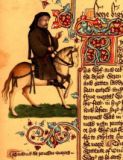
Ashfield, that active Sydney suburb, has just opened its brand-new state-of-the-art Library. To mark this spectacular addition one of the regular speakers at the “Authors at Ashfield” programme, David Millar came to give a talk on “The Medieval World of Geoffrey Chaucer”.

And after the extremely interesting articles on Chaucerian connections by Lesley Boatwright and Peter Hammond in the June 2011 Ricardian Bulletin, this was a talk that couldn’t be missed.

David is a well-loved speaker, blending his knowledge of travel, history and architecture to cover a multitude of subjects. On Wednesday, June 22, he travelled, like Chaucer’s pilgrims, to Canterbury and his photography showed us much of England’s green and pleasant land, the delightful town of Canterbury which has happily remained mainly untouched by too much development – although as he remarked when showing a picture of an old inn where Queen Elizabeth once slept (yes, another one!), she would have found it hard to understand the prominent banner-style notice about Espressos being available. Read the rest of this entry »

Tags: , ,

19
May

Guest post by Anne Easter Smith

   Posted by: Dorothea Preis    in Bookworm

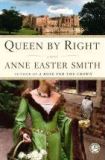
We are thrilled to welcome a guest post by well-known Ricardian novelist Anne Easter Smith, author of A Rose for the Crown, Daughter of York and The King’s Grace.  I loved all her previous novels and am now impatiently awaiting delivery of her recently published Queen by Right about Cecily Neville, duchess of York.  In her guest post Anne examines the rumour that Edward IV was not the son of Richard, duke of York.  Thank you so much, Anne, for sharing this with us.


Cecily’s so-called affair

I was drawn to writing about Cecily Neville as soon as I began researching my first – and what I thought would be my only – book A Rose for the Crown.  I could not write Richard III’s story without knowing a lot about his parents and his siblings.  Oddly, Cecily did not appear at all in that book, but in a few scenes her absence hung over the brothers Edward and Richard and you feel she is an indomitable presence in their lives.  Indeed, I think one of the reasons Edward chose not to reveal his secret marriage to Elizabeth Woodville for so long was because he feared a slap upside the head from Proud Cis.  And boy, did she give him one when the marriage was finally outed, and, according to the Italian visitor Dominic Mancini who was in London in 1484 – twenty years after the fact – and was the first to write about the rumor, Cecily “fell into a frenzy.”  It was partly because of the scorn she had for this upstart nobody Woodville woman who must now be called queen that she began to style herself, “Cecily, the king’s mother, and late wife unto Richard, by right king of England and of France and lord of Ireland.”  Or as my title infers, “Queen by Right.” Read the rest of this entry »

Tags: , ,

17
May

Can’t have that!

   Posted by: Julia Redlich    in News

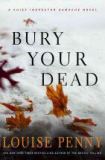
The other morning, after my son left early for work, I retreated to bed with a cup of tea and my book. And read the following.  It’s from Bury Your Dead by Louise Penny, Sphere/Little Brown, ISBN 978-1-84744-437-0:

A lot of what we know to be history isn’t,” said Gamache. “You know that, I know that.  It serves a purpose. Events are exaggerated, heroes fabricated, goals are rewritten to appear more noble than they actually were.  All to manipulate public opinion, to manufacture a common purpose or enemy.  And the cornerstone of a really great movement?  A powerful symbol. Take away or tarnish that and everything starts to crumble, everything’s questioned. Can’t have that.

Louise Penny is a Canadian writer, one of the many really first rate ones that flourish there. She has written five detective novels featuring Chief Inspector Gamache, all set in the little Canadian village of Three Pines which rivals Midsomer for body count!  In this, her sixth book, Gamache returns to headquarters in Quebec and has to solve a several centuries old mystery before he can catch a present-day killer.  Won’t tell you any more in case you want to read the earlier ones first!  This one also includes a fascinating sideline on Captain Cook.

The first part of the quote is so Morton/Tudor.  The “cornerstone of a great movement”: Richard III – what would he have accomplished if he’d lived?  No wonder Ricardians question the tarnishing of his reputation.  “Can’t have that”!

Tags:

9
May

The Queen of Last Hopes

   Posted by: Dorothea Preis    in Bookworm

The Queen of Last Hopes

Book Review:  The Queen of Last Hopes

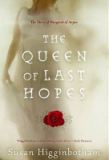
Susan Higginbotham, The Queen of Last Hopes.  Sourcebooks Inc., Naperville, 2011.  ISBN 9781402242816 (pbk)

As the red rose on the cover indicates The Queen of Last Hopes is a Lancastrian queen:  Margaret of Anjou, the queen of Henry VI.  Susan Higginbotham narrates Margaret’s life against the backdrop of the earlier part of the Wars of the Roses through the eyes of a variety of Lancastrian witnesses, often Margaret herself, but for scenes where she was not present she uses others, for instance William de la Pole or Henry Beaufort as well as Margaret’s husband and son.

Clearly, Susan sits on the opposite side of the fence when it comes to the conflict between the House of York and the House of Lancaster.  While it initially came as a bit of a shock to see our Yorkist heroes described in a fairly negative light, this is a positive and necessary experience as it forces us to re-evaluate our preconceived ideas.  We need to remember that all too often our views of medieval persons are based on prejudice, so in order to come to a more balanced understanding it is necessary to be jolted out of our complacency every now and then.

Susan’s The Queen of Last Hopes offers us the opportunity to meet Margaret of Anjou as a real person we can sympathise with.  She is not a one-dimensional saint, nor is she the one-dimensional villain we encounter so often in Ricardian fiction.  Her actions are well-motivated by her feelings for her husband, her son and their rights.

The book is based on impeccable historical research, which is also reflected by the Author’s Note at the end.  While I was disappointed by the only appearance of Richard of Gloucester, in which he is committing one of the killings he gets traditionally blamed for, she does explain in the Notes that there is no proof for this.

I still prefer my roses white, but can only recommend this book.  It is an enjoyable read and will prevent tunnel-vision.

Tags: , ,