Archive for the ‘Medieval Miscellany’ Category

An abridged version of this article appeared in the September 2011 Ricardian Bulletin.  We are grateful to Annette Carson for making the full version available to us.

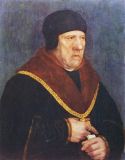
From time to time the exploits of Sir Henry Wyatt crop up in books, both fiction and non-fiction, for he was a fascinating character whose career encompassed espionage as well as military action and high office. Most writers, however, concern themselves mainly with grisly tales of imprisonment and torture in the cause of Henry VII, which grew to become Wyatt family legend. In recent years a flurry of interest was created by Hilary Mantel’s characterization of Wyatt in her novel Wolf Hall, and a biography by Nicola Schulman of his son, the poet Sir Thomas Wyatt, has again rehearsed the same old legends. The true facts of Henry Wyatt’s capture and incarceration may never be known, having been buried under an accretion of myths over the years, but this article addresses some versions of the story that we can certainly clarify, and some we can probably debunk.* Valuable background for all this can be found in Agnes Conway’s Henry VII’s Relations with Scotland and Ireland, 1485–1498.1

The different versions of Henry’s story are too numerous to catalogue in all their glorious variety, but the most popular tales may be summarized thus: Read the rest of this entry »

3
Sep

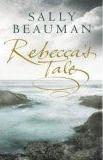
Rebecca’s Tale

   Posted by: Julia Redlich Tags: ,

Sally Beauman, Rebecca’s Tale. Little, Brown, 2001.  ISBN 0 316 858137

We all enjoy looking for references to Richard III in whatever we are reading.  I found another one in Sally Beauman’s novel Rebecca’s Tale, which is the second sequel to Daphne du Maurier’s Rebecca telling us about what happened to the de Winters after Manderley goes up in flames.

The first sequel Mrs de Winter was fairly straightforward, but this one is written by four different characters, one of them Rebecca herself.  There’s a lot of delving into her very hidden past to discover what made her who she was.  In case you haven’t read it and would like to I won’t go into it all, but when she was a child she was involved, like her mother, with a B-grade theatre company and played roles like Puck, Macduff’s son and Edward V.  When she sees Manderley for the first time, still quite young, she writes in one of her notebooks:

I knew I’d come home.  This place was mine?  Could I wrest if from the de Winters’ hands?  That would be true revenge for all the injustice dealt out to Maman … I considered my erstwhile successes and stratagems … Clever deformed Richard III had been my favourite character and mentor.  At that moment, a very Crookback mood came upon me.  I thought to myself:  Can I do this and cannot get a crown? Tut! Were it further off, I’d pluck it down.

Shakespeare’s Richard again, but Sally Beauman must have recognised something in the Bard’s character to link him to Rebecca’s ambition.

A bit of trivia:  ages ago when we used to spend our summer holidays in the Snowy Mountains while the hoi polloi made use of “Our” Beach at Balmoral, we used to rent a house on a property above Lake Eucumbene (5 km and 6 cattle grids off a minor road).  On the way we used to pass a really run-down cottage with its name proudly displayed by the roadside “Manderley”.  Anything further from the de Winters’ stately home couldn’t be imagined and we always enjoyed a good laugh as we drove by.
10
Feb

The View from Scotland on … Football

   Posted by: Dorothea Preis Tags: ,

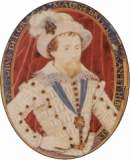
Another opinion from James I/VI – this time on football:

Certainly bodily exercises and games are very commendable, as well for banishing of idleness as for making his body able, but from this compte [list] I debarred all rumling violent exercises as the football. (Basilicon Doron, 1599)

Football in those days was certainly a much more violent affair than the game played according to rules today.  It seems the football hooligans could often be found on the field, rather than surrounding it.  James was not the only one and by no means the first who held this opinion. Read the rest of this entry »

10
Dec

The View from Scotland … on Smoking

   Posted by: Win Tonkin Tags:

We continue our series of the opinions of James VI of Scotland /James I of England.

If only his view had prevailed 400 years ago, when the use of tobacco in Europe was still quite new. In Britain, Sir Walter Raleigh (c. 1552 – 1618) is credited with making tobacco popular.

A custom loathsome to the eye, hateful to the nose, harmful to the brain, dangerous to the lungs, and in the black stinking fume thereof nearest resembling the horrible “Stygian smoke of the pit that is bottomless”. (A Counterblast to Tobacco, 1604)

8
Dec

Caxton: The Description of Britain

   Posted by: Carol Gerrard Tags:

Another talk which was presented at the NSW Mini-Convention in May 2010.

One of my volunteer jobs is to sort and price donated books for Lifeline Northern Beaches Bookfairs. I love the serendipity of it and was delighted one day to come across a modern rendering of William Caxton’s The Description of Britain which was originally published in 1480. I thought “Wow – this came out and was for sale during the lifetime of our Richard when he was Duke of Gloucester. It contains a general view of the Britain with which Richard would have been familiar. Read the rest of this entry »

During Richard III’s short reign there were only three vacancies for bishops, and it is remarkable that two of these went to Thomas Langton.  Langton ticked all the right boxes with Richard:  Richard preferred Cambridge men to those from Oxford – Langton had studied at Pembroke Hall in Cambridge, though he also was provost of Queen’s College in Oxford; Langton had studied further in Italy, in Padua and Bologna, and shared Richard’s interest in learning and humanistic scholarship.

St David’s Cathedral (© Isolde Martyn)

In May 1483 the Bishop of St David’s, Richard Martin, died and Richard as protector suggested Thomas Langton for the vacancy.  He must have proved a very able man and, when in February 1485 the see of Salisbury fell vacant, it was again Thomas Langton who was promoted [1]. Read the rest of this entry »

24
Nov

The View from Scotland

   Posted by: Win Tonkin Tags:

At our last general meeting we had the pleasure of listening to Win’s fascinating talk on aspects of Scottish history.  She used pictures from the 2003 Historic Scotland Calendar to illustrate her talk.  The calendar also contains for each month a quote from James VI of Scotland / James I of England, which we all found very interesting.

James was born on 19 June 1566 at Edinburgh Castle.  After his mother Mary Queen of Scots was forced to abdicate in his favour when he was thirteen months old, on 24 July 1567, he became King James VI of Scots.  He gained full control of the government in 1581.

In 1603 he succeeded Elizabeth I, who died without issue, as King James I of England.  Both countries remained legally separate, but were ruled by the same monarch. Read the rest of this entry »

22
Nov

John Rous on Richard III as Builder

   Posted by: Dorothea Preis Tags: , , ,

Richard and his family (from The Rous Roll)

We have recently looked at a few of the collegiate churches founded by Richard while Duke of Gloucester or later as Richard III and will continue with a few others.

One chronicler who tells us about this is John Rous (1411-1491). Rous spent most of his life under the patronage of the Beauchamps and – after the marriage of Anne Beauchamp to Richard Neville (the “Kingmaker”) – the Nevilles.   During Richard’s reign Rous wrote The Rous Roll, a history of the Earls of Warwick, which is full of praise of Richard, the son-in-law of Richard Neville.

Once Henry Tudor was king he changed his tune completely and went on all out attack in his Historia Regum Anglie (History of the Kings of England).  This is origin of the legend that Richard’s mother was pregnant with him for two years and when he was born he had teeth and shoulder-length hair.  He also accuses him of personally killing Henry VI and poisoning his wife.

Unfortunately for Rous, copies of both texts have survived, which brought him “the distinction of being the most despised of the chroniclers”.  However, even among all the accusations of his later work, he sometimes can’t help himself and praises Richard, like in this passage where he talks about Richard’s building programmes:

This King Richard was praiseworthy for his building, as at Westminster, Nottingham, Warwick, York, and Middleham, and many other places, which can be viewed. He founded a noble chantry for a hundred priests in the cathedral of York, and another college at Middleham. He founded another in the church of St. Mary of Barking, by the Tower of London, and endowed the Queens’ College at Cambridge with 500 marks annual rent. The money which was offered him by the peoples of London, Gloucester, and Worcester he declined with thanks, affirming that he would rather have their love than their treasure.

I would not have thought that a Richard who would rather have his subjects’  “love than their treasure” fitted in well with the Tudor world view.  This is hardly a sentiment that Henry VII, with whom Rous wanted to ingratiate himself at that time, would have shared.

Bibliography:

Antonia Gransden, Historical writing in England, Volume 2. Routledge, 1982.  ISBN 978-0-415-15125-2, pp.309-316

Jeremy Potter, Good King Richard?  An Account of Richard III and his Reputation.  Constable, London, 1994 (pbk).  ISBN 0 09 468840 0, p.88 (incl. quote from History of the Kings of England)

20
Nov

John Morton by Cresacre More

   Posted by: Dorothea Preis Tags:

While researching something else I recently came across Cresacre More’s biography of his great-grandfather Thomas More.  His Life of Sir Thomas More was probably first published in 1631.  This is what he has to say about his ancestor’s mentor, John Morton, who was Bishop of Ely during the reign of Richard III:

… the most worthy prelate that then lived in England, both for wisdom, learning and virtue, whose like the world scarce had, Cardinal Morton, archbishop of Canterbury, and lord high chancellor of England, whose grave countenance and carriage was such that he easily allured all men to honour and love him: a man, as Sir Thomas More describes him in his Utopia, of incomparable judgment, a memory more than credible, eloquent in speech, and, which is more to be wished in clergymen, of singular wisdom and virtue; so that the king and the commonwealth relied chiefly on this man’s counsel, as he by whose policy king Henry the seventh both got the crown of England from Richard the usurper, and also most happily procured the two houses of Lancaster and York to be united by marriage.

This glowing report is a masterpiece in what is being left out.  When we are told that John Morton’s “grave countenance and carriage … easily allured all men to honour and love him”, I can think of several people, who have taken me in by their air of seriousness and reason which hid a very calculating mind.  It can be a very useful tool in getting other people to do what you want.  Interesting that Richard of Gloucester did not fall for the “allure” and did not trust Morton.

Morton was certainly “eloquent in speech”, as he is usually credited with talking Henry Stafford, Duke of Buckingham, into taking part in the 1483 rebellion.

No doubt “the king and the commonwealth relied chiefly on this man’s counsel”, when it came to devising ways of increasing tax revenue.  And we never doubted that he was had something to do with getting the crown for the usurper Henry Tudor.

Notes:

Cresacre More, The Life of Sir Thomas More with a Biographical Preface, Notes and other Illustrations by the Rev. Joseph Hunter.   William Pickering, London, 1828

At Google Books:  http://books.google.com.au/books?id=I6YEAAAAYAAJ&printsec=frontcover&dq=The+Life+of+Sir+Thomas+More&hl=en&ei=PtvlTMG-FoLSuwOG2KjCCA&sa=X&oi=book_result&ct=result&resnum=2&ved=0CC4Q6AEwAQ#v=onepage&q&f=false

Information on Cresacre More:  Andrei Volgin, Dictionary of National Biography: Volume 38. Milman – More.  Adamant Media Corporation, 2001. ISBN-13: 978-1402170652, p.448

14
Nov

George Bernard Shaw on Shakespeare’s Richard III

   Posted by: Julia Redlich Tags:

During a cleanup the other day I was debating whether to throw out theatre programmes and found this.  It is from the Bell Shakespeare production of Richard III in 2002.

The world being yet little better than a mischievous schoolboy, I am afraid it cannot be denied that Punch and Judy holds the field in the most popular of dramatic entertainments.  And of all its versions, except those which are quite above the head of the man in the street, Shakespeare’s “Richard III” is the best.  It has abundant devilry, humour and character, presented with luxuriant energy of diction in the simplest form of blank verse.  Shakespeare revels in it with just the sort of artistic unconscionableness that fits the theme.  Richard is the prince of Punches, he delights Man by provoking God, and dies unrepentant and game to the last.  His incongruous conventional appendages, such as the Punch hump, the conscience, the fear of ghosts, all impart a spice of outrageousness which leaves nothing lacking in the fun of the entertainment, except the solemnity of those spectators who feel bound to take the affair as a profound and subtle historic study.

George Bernard Shaw in December 1896, after a performance at London’s Lyceum Theatre of Shakespeare’s play.