Archive for the ‘News’ Category

30
Sep

A NOVEL TO BRAG ABOUT!

   Posted by: Dorothea Preis Tags: ,

More congratulations are due to our branch member, Barbara Gaskell Denvil.  She has just been awarded the BRAG medallion of honour for her medieval thriller/paranormal novel Fair Weather.

BRAG medallions are awarded by indieBRAG.  The word “indie” refers to self or independently published books, while BRAG is an acronym for Book Readers Appreciation Group.

A big round of applause for Barbara!

20
Sep

THE TRUTH ABOUT RICHARD III

   Posted by: Dorothea Preis Tags: , , ,

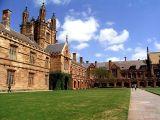
This is the title of a study day arranged by the Centre for Continuing Education at the University of Sydney on 26 October 2013.

The study day will be presented by Yvette Debergue, who is well-known to members and friends of the NSW branch from a variety of interesting talks.  Yvette is one of the centre’s leading presenters in the area of medieval history.  The day promises an in-depth look at the life of the last Plantagenet King.

Course content:

•    The King in the Car Park
•    The Wars of the Roses
•    King Richard III
•    A Twist in the Tale

Planned Learning Outcomes:

By the end of the course, students should be able to:

1.     Develop an understanding of some of the social and familial reasons for the series of dynastic wars between the houses of York and Lancaster known as the Wars of The Roses.
2.     Evaluate and analyse the various sources for Richard III and his life and times.
3.     Recognise the reasons for the different depictions of Richard III throughout the ages in literature and history.
4.    Characterise the key factors in the discovery of the gravesite of Richard III and the positive identification of the body as that of the long dead, and much maligned, last Plantagenet King.

The part on the Greyfriars Dig will be presented by Dorothea of the NSW Branch of the Richard III Society, who has given talks on this topic as well as various others to a variety of organizations in the Sydney area.

To find out more about the study day, please have a look at the attached flyer provided by the Centre for Continuing Education.  20130830 The Truth About Richard III

The day will cost $145, but members of the Richard III Society, the Plantagenet Society and the Military History Society will receive a 10% discount on quoting the code YDS1013.

11
Sep

VISITING LEICESTER?

   Posted by: Dorothea Preis Tags: , ,

A new guidebook is due to be launched today:  Richard III: The Leicester Connection by David Baldwin.  It should be a great help to anyone planning to visit Leicester.  According to the announcement it will bring “to life the city’s medieval past, King Richard III’s links to the city and the extraordinary story of how he came to be buried in the city following his death at the Battle of Bosworth in 1485.”

Appropriately the launch will take place at Leicester’s Travelodge, which is on the site of the Blue Boar Inn, where Richard stayed before heading to meet Henry Tudor’s army at Bosworth.  An information panel will tell the Blue Boar Inn.  The author, David Baldwin, will obviously be present, but the instigator of the Greyfriars Project, Philippa Langley is also expected.  The Mayor of Leicester, Peter Soulsby, will unveil a plaque at the Travelodge marking the site of the Blue Boar Inn.

If you are planning to visit the city, one of your first stops should be either at The Guildhall, New Walk Museum, Visit Leicester, Leicester Cathedral or the University of Leicester bookshop, where you can buy the book for £3.99.

For more information click here and here.

4
Sep

RICHARD’S HEALTH

   Posted by: Dorothea Preis Tags: , ,

There will be very few people – at least among our readers – who don’t know that Richard suffered from scoliosis.  However, as an article in the medical journal The Lancet reports, researchers at Leicester University have also found that he suffered from roundworm.

During the original dig in September 2012, sediment samples were taken from the sacral area of his pelvis, as well as control samples from his skull and the soil outside the grave cut.  In the samples from the sacral area multiple roundworm eggs (Ascaris lumbricoides) were found, while there were none in the samples from the skull area and only few in the soil samples from outside the grave.  The sacrum is the large, triangular bone at the base of the spine and the sacral area is where the intestines would have been, showing that Richard was infected with roundworm.

The infection is spread by faecal contamination of food by dirty hands, or use of faeces as a crop fertilizer, showing the different idea of hygiene in his time.  Except in very severe cases, people who have the infection show virtually no symptoms.

The researchers also say that a person of Richard’s social status would have eaten a variety of meats and fish on a regular basis.  However, there is no evidence of the eggs of beef, pork, or fish tapeworm, indicating that his food had been cooked thoroughly.

You can read the full article here.

28
Aug

OVER AND OVER AGAIN

   Posted by: Dorothea Preis Tags: ,

Whatever happened to the Princes in the Tower?   This new song by Robin Pizer entitled ‘Over and Over Again’ includes some theories and some likely suspects.  It is a folksy tune and the lyrics are concerned with who, if anyone killed the princes.

This is Robin’s second song on the topic of Richard III.  Shortly after the confirmation that the remains found in Leicester were indeed those of King Richard III earlier this year, he had published this ‘King Richard III Song’, based on the historical account of King Richards death and the finding of bones in Greyfriars Leicester.

We surely all feel like singing along to the refrain “And all the people sing Long Live the King!”

26
Aug

Remembering Bosworth

   Posted by: Julia Redlich Tags: , ,

On Sunday, 25 August, a group of our members and friends gathered at St Mary’s Church, Waverley, for the morning service.  Sadly some who were coming were prevented by sudden events and others missed their public transport from far-flung areas of Sydney. Oh the tyranny of the Sunday time-tables! But  Rupert and his wife Susan made it (it was Rupert’s birthday), and Angela was able to join us too.

As always we were warmly welcomed by the Rector, choir and parishioners who have always appreciated our attendance on the Sunday nearest the anniversary of King Richard’s death at Bosworth Field. Not only was Richard’s own prayer from his Book of Hours read (abridged of course), but the parish letter for the week made especial mention of why this is such a special year for the Society. It was headed ‘A Message from the Richard III Society’.

This year has been an amazing one for the Society and its members around the world. I think all of us find it hard to believe that we have witnessed – even if from a distance – the discovery of the remains of the man who is the reason the Society exists. Until this year, because no-one knew where he was buried, we have remembered him on the anniversary of the Battle of Bosworth Field at church services and by laying white roses at memorials to him.

We now have confirmation that the skeleton discovered during the recent archaeological dig in Leicester is indeed that of Richard III, who hitherto had been the only king of England without a tomb. He had been buried in the choir of the Greyfriars chapel in Leicester, but this was destroyed on Henry VIII’s orders during the Dissolution of the Monasteries between 1536 and 1540. The discovery of his skeleton led by Leicester University could not have taken place without the leadership of two members of the Richard III Society: Philippa Langley and John Ashdown-Hill. Ashdown-Hill is the historian who identified the car park as the site of the Greyfriars chapel, and who also meticulously researched the Richard’s DNA through tracing the descendants of his eldest sister, Anne, Duchess of Exeter. The astonishing match with that of the DNA extracted from the skeleton confirmed identification.

We hope that King Richard will be re-interred in 2014 with all the dignity and admiration that the last Plantagenet King of England deserves.

After the service we joined the parish for morning tea. This was a great opportunity to meet those who were longing to talk about car parks, scoliosis and the unfairness of the reputation that has been foisted on the last Plantagenet king. Copies of our brochure about the Society, and Richard’s life and times were collected, hopefully to counteract any doubts.

As for the morning tea, I doubt if any of us has seen such a splendid one! Delicious ribbon sandwiches, vol-au-vents and pizza slices, chocolate cakes, strawberries and cream – and fine teas and coffee that had never heard the word “instant” applied! Ricardians tried to control their appetites as we knew we had a lunch to attend …

A beautiful bonus to the morning was meeting someone who had just dropped in on the service on her way past. In case she was turned away because of her casual clothes, she thought she could sit in the gardens outside and read the book she had brought with her. She entered St Mary’s, was welcomed, and to her amazement saw a group of people all wearing white roses. Light dawned. The book she was reading was Philippa Gregory’s The Lady of the Rivers, so she knew very well what white roses meant! To cut a long story short, Maggi is about to fill in a membership application form.

Our remembrance of Bosworth Field is always special. This year it was highlighted by the pleasure others expressed that we now know where Richard III has lain for the past 500 plus years and there will be an opportunity to re-inter him with honour.
22
Aug

On 22 August …

   Posted by: Dorothea Preis Tags: , ,

While we commemorate Richard’s death at the Battle of Bosworth, today we are also waiting for the the completion of the Society Website to be launched later today (UK time).  Highlights include:

• The Wars of the Roses section which can be found under Richard’s World, a critical section which provides context for the life and times of King Richard;

• Further articles about Richard himself including a new contribution on his burial written specially for the site by John Ashdown-Hill. This will be complimented by an examination of his death from a member of the ‘Looking for Richard’ project when the research from the Greyfriars is completed;

• Revised bibliographies covering both King Richard and the Wars of the Roses and with links to book reviews that have been published in The Ricardian;

• A revised and extensive list of links to other sites which are complementary to our own;

• In response to requests for more online articles we are publishing all the articles, and a selection of the book reviews, from The Ricardian covering the years 2004 through to 2008. We hope to publish online earlier articles but the scanning and proofing is a slow process and we need more resource to complete this task;

• Similarly we are publishing back-copies of The Ricardian Bulletin from 2003 to 2011 though sadly, for technical reasons, we do have some missing issues;

• The Barton Librarians have been updating their catalogues and revised editions are now becoming available but in the interim the existing catalogues are available online.

• An online gallery, a section which initially showcases music, pictures, sculptures, and videos, which will be enhanced in the future.

Some musical notes in commemoration of Richard:  Graham Keitch’s beautiful ‘In Memoriam Ricardus Rex’, which those who attended the Australasian Convention will remember vividly, has also been posted on YouTube and you can listen to it here again.

This is not the only tribute to Richard on YouTube.  You might want also like to watch this moving tribute to our king.

17
Aug

AWARD FOR THE CHILDREN OF THE KING

   Posted by: Julia Redlich Tags: ,

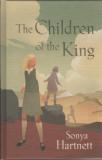
The Sydney Morning Herald reports that Sonya Hartnett was awarded this year’s Book of the Year: Younger Readers award for her novel The Children of the King at the Children’s Book Council of Australia Awards at the National Library of Australia yesterday.

The novel tells the story of three children sent to live in the English country side during World War II.  In an old castle nearby, they meet two strangely clothed boys, who cannot leave.  The protagonists’ uncle then tells them the story of a duke who became king – Richard III.

We congratulate Sonya Hartnett for her well-deserved award.  Richard and his life and times rule ok! And our reviewer Annaliese will be happy to know she enjoyed such a worthwhile book.

In case you haven’t heard that the judicial review where Richard III’s remains should be reburied has been granted, here is the statement by the Richard III Society.

The Richard III Society acknowledges the decision handed down today in the High Court of Justice by The Honourable Mr Justice Haddon-Cave to grant permission for the Plantagenet Alliance to bring a judicial review hearing later in the year against the Secretary of State for Justice and the University of Leicester over the decision to reinter King Richard in Leicester Cathedral.    The matter must now be left to the due process of law, but we hope it will be resolved amicably and quickly so that King Richard’s remains can be reinterred with honour and dignity and without controversy.

For full details of the High Court decision see: http://www.judiciary.gov.uk/media/judgments/2013/king-richard-iii-permission-judgment

11
Aug

MEDIEVAL LAW IN SYDNEY

   Posted by: Rachel Allerton Tags: , ,

On Saturday, 10 August 2013, the NSW branch of the Richard III Society was treated to a lecture on medieval contract law by Dr John Twyford.  Dr Twyford is a member of the Military History Society of NSW and has a background in law.

He spoke about the origins of law in regards to Roman law and common law starting with Justinian.  We learned that common law is legislation which is enacted by precedent and derived from previously decided cases.  The informative Domesday Book, feudalism and the laws of heresy were also touched on as well as some fascinating insights into the Magna Carta!  Trial by Ordeal and methods of determining guilt and innocence were a favoured part of the talk as well as some of the law reforms of Richard III himself.  We learned that Richard’s Parliament passed 18 private statutes and 15 public ones, many of these to do with legal reforms and removing benevolences.

We finished off this delightful talk with afternoon tea and more discussion about the search for truth in law as well as history.