Archive for the ‘Events in History’ Category

22
Dec

22 DECEMBER 1476

   Posted by: Michael Tags: ,

Death of Isabel Neville, wife of George, Duke of Clarence, brother of Edward IV and Richard III

21
Dec

Death of Jasper Tudor
   Posted by: Dorothea Preis Tags: ,

Death of Jasper Tudor

Death of Jasper Tudor

Jasper Tudor, uncle of Henry Tudur (Henry VII), died on 21 December 1495.

Jasper Tudor was the second son of Owen Tudor and Catherine of Valois, the widow of Henry V.  He was born in approx. 1431 at Bishops Hatfield, Herts, which belonged to the Bishops of Ely.

Jasper’s elder brother, Edmund, was married to Margaret Beaufort.  Their son Henry was born after his father’s death and his uncle played an important role in his upbringing and championing his nephew’s cause.  Once Henry became king he rewarded his uncle handsomely.

By 7 November 1485, he had married Katherine Woodville, widow of Henry Stafford, Duke of Buckingham, and younger sister of Elizabeth, Edward IV’s queen.

He died on 21 December 1495 at his manor of Thornbury in Gloucestershire.  Katherine survived him and married two months later Richard Wingfield.

Sources:

R. S. Thomas, ‘Tudor, Jasper , duke of Bedford (c.1431–1495)’, Oxford Dictionary of National Biography (October 2008).  (online accessed: 3 Feb 2011

Susan Higginbotham, ‘Jasper Tudor’s Will’, Medieval Woman (14 Oct 2008).  URL:  http://susandhigginbotham.blogspot.com.au/2008/10/jasper-tudors-will.html Date accessed:  9 Nov 2012

Dorothea Preis

16
Dec

Birth of Jane Austen

   Posted by: Dorothea Preis Tags: ,

Birth of Jane Austen

Jane Austen

Birth of Jane Austen

On 16 December 1775, Jane Austen was born in Steventon, Hampshire, where her Father, George Austen, was rector.  We all know and love Jane Austen’s novels, but her History of England, from the Reign of Henry the 4th to the Death of Charles the 1st is less widely known.   She wrote this at the age of 16 in 1791, but even at this early age it shows the wit she was to become famous for.

Of particular interest to us is of course what she had to say about Richard III.  Jane acknowledges that his character has been badly treated by historians, however, she is “inclined to suppose him a very respectable Man”.  The reason for her positive impression is that “he was York”, so not too many Lancastrian sympathies there.

Quotes taken from:
Jane Austen:  Love and Freindship and other early Works, The Women’s Press, London, 1978, reprinted 1979.  ISBN 0 7043 3823 8, p.71

You can read a short biography here.

Dorothea Preis

16
Dec

16 DECEMBER 1431

   Posted by: Michael Tags:

Henry VI of England is crowned King of France at Notre Dame in Paris

13
Dec

13 DECEMBER 1470 (probably)

   Posted by: Michael Tags:

Marriage of Anne Neville, younger daughter of Richard Neville, Earl of Warwick (‘The Kingmaker”) and Anne Beauchamp, to Edward of Westminster, Prince of Wales, at Amboise.

8
Dec

8 DECEMBER 1542

   Posted by: Michael Tags:

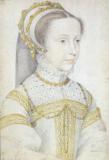
Birth of Mary Stewart, Queen of Scots, at Linlithgow Linlithgow_Palace (D Preis)Palace.  She was the daughter of James V, king of Scots, and Mary of Guise and their only surviving child.  Her father died just six days after her birth.

Mary was executed on 8 February 1587 in the great hall of Fotheringhay.

(Photograph of Linlithgow Palace © Dorothea Preis)

6
Dec

6 DECEMBER 1421

   Posted by: Michael Tags:

Birth of Henry VI of England at Windsor

28
Mar

Skirmish at Ferrybridge

   Posted by: Dorothea Preis Tags: , , , ,

Skirmish at Ferrybridge

Skirmish at Ferrybridge

On 28 March 1461, a skirmish at Ferrybridge, West Yorkshire, was fought in the lead-up to the Battle of Towton.  Richard Neville, Earl of Warwick (‘The Kingmaker”), received an arrow wound to the leg.  John, Lord Clifford, (believed to be responsible for the death of Edward IV’s brother Edmund, Earl of Rutland) fell on the Lancastrian side.

Traditionally the skirmishes at Ferrybridge and Dintingdale (also on 28 March 1461) and the battle of Towton were seen as three separate battles, both in space and time.  However, Tim Sutherland argues, that these were rather three interconnected conflicts. He bases his analysis on archaeological finds and a new interpretation of the sources.

Reference:

Tim Sutherland, ‘Killing Time:  Challenging the common perceptions of three medieval conflicts – Ferrybridge, Dintingdale and Towton  — ”The Largest Battle on British Soil”’, Journal of Conflict Archaeology, Vol.5 No.1 (2010). Available from URL:  http://www.towton.org.uk/wp-content/uploads/killing-time_tim_sutherland.pdf  [last accessed 2 March 2020]

A short description of the various battles of the Wars of the Roses can be found on the website of the Richard III Society.

28
Jan

Birth of Henry Tudor

   Posted by: Michael Tags: ,

Birth of Henry Tudor

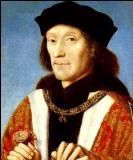
Henry Tudor (portrait at National Portrait Gallery, London)

Birth of Henry Tudor

On 28 January 1457, Henry Tudor was born at Pembroke Castle in Wales, the son of Edmund Tudor, 1st Earl of Richmond, and Margaret Beaufort.  Edmund Tudor was the son of Owen Tudor and Henry V’s widow Catherine of Valois.  Margaret Beaufort, was a great-granddaughter of John of Gaunt (third son of Edward III) and his third wife and previous mistress Katherine Swynford.   The children of this relationship, the Beauforts, were disinherited by Letters Patent of King Henry IV from any claim to the throne. After defeating Richard III at the Battle of Bosworth on 22 August 1485, he took the throne as Henry VII.

Read the History Today article on ‘The Birth of Henry Tudor”.

28
Jan

Death of Charlemagne

   Posted by: Dorothea Preis Tags: ,

Death of Charlemagne

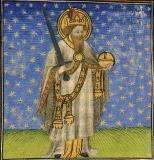
15th century picture of Charlemagne

Death of Charlemagne – the end of the first and most powerful Holy Roman Emperor

Charlemagne (Karolus Magnus, Karl der Große) died on 28 January 814 at Aachen.  He is buried in Aachen Cathedral.

Karl, from the Carolingian family,  was born on 2 April, either in 747 or 748.  Nor do we know where he was born.  Aachen and Liège are possible, but other towns have also been suggested.  His parents were Pepin the Short and Bertrada of Laon (history has given her the rather unflattering nickname ‘Bertrada Boadfoot’).

After Pepin’s death on 24 September 768, the realm was divided between his two sons, Karl and Karlmann (Carlman).  The relationship between the two kings did not go smoothly.  Then Karlmann suddenly died on 4 December 771 of natural causes.  Karl seized the whole realm, which he extended during a number of wars.

On 25 December 800, he was crowned Holy Roman Emperor by Pope Leo III in Saint Peter’s Basilika in Rome. This was the beginning of the Holy Roman Empire, which lasted until 1806.

Traditionally the story went that the Pope unexpectedly put the crown on Karl’s head, while he was praying.  However, modern research has shown that this romantic version is highly unlikely.  As the position of the Pope was fairly weak, it was probably Karl himself who sought the honour.

Under Karl, the Carolingian Empire was at its largest and most powerful position (the extent is shown on this map on Wikimedia Commons).

After his death, Karl was buried in Aachen Cathedral.  He was succeeded by his only surviving son Ludwig (Louis).

More information on Charlemagne from Encyclopaedia Britannica.

Other articles of interest:

Peter Munz, ‘The Imperial Coronation of Charlemagne’, History Today, Volume 9, Issue 7, 1959.  URL:  http://www.historytoday.com/peter-munz/imperial-coronation-charlemagne  [last accessed 2 Jan. 2020]

Kim Rendfeld, ‘Bertrada: Queen Mother and Diplomat’, Kim Rendfeld – Outtakes from a Historical Novelist (21 May 2013).  URL:  http://kimrendfeld.wordpress.com/2013/05/21/bertrada-queen-mother-and-diplomat/  [last accessed 2 Jan. 2020]

Dorothea Preis