17
Aug

AWARD FOR THE CHILDREN OF THE KING

   Posted by: Julia Redlich   in Bookworm, News

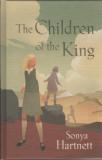
The Sydney Morning Herald reports that Sonya Hartnett was awarded this year’s Book of the Year: Younger Readers award for her novel The Children of the King at the Children’s Book Council of Australia Awards at the National Library of Australia yesterday.

The novel tells the story of three children sent to live in the English country side during World War II.  In an old castle nearby, they meet two strangely clothed boys, who cannot leave.  The protagonists’ uncle then tells them the story of a duke who became king – Richard III.

We congratulate Sonya Hartnett for her well-deserved award.  Richard and his life and times rule ok! And our reviewer Annaliese will be happy to know she enjoyed such a worthwhile book.

Tags: ,

17
Aug

STATEMENT BY THE RICHARD III SOCIETY

   Posted by: Dorothea Preis   in Greyfriars Dig, News

In case you haven’t heard that the judicial review where Richard III’s remains should be reburied has been granted, here is the statement by the Richard III Society.

The Richard III Society acknowledges the decision handed down today in the High Court of Justice by The Honourable Mr Justice Haddon-Cave to grant permission for the Plantagenet Alliance to bring a judicial review hearing later in the year against the Secretary of State for Justice and the University of Leicester over the decision to reinter King Richard in Leicester Cathedral.    The matter must now be left to the due process of law, but we hope it will be resolved amicably and quickly so that King Richard’s remains can be reinterred with honour and dignity and without controversy.

For full details of the High Court decision see: http://www.judiciary.gov.uk/media/judgments/2013/king-richard-iii-permission-judgment

Tags: , ,

11
Aug

MEDIEVAL LAW IN SYDNEY

   Posted by: Rachel Allerton   in Meetings, News, NSW Branch News

On Saturday, 10 August 2013, the NSW branch of the Richard III Society was treated to a lecture on medieval contract law by Dr John Twyford.  Dr Twyford is a member of the Military History Society of NSW and has a background in law.

He spoke about the origins of law in regards to Roman law and common law starting with Justinian.  We learned that common law is legislation which is enacted by precedent and derived from previously decided cases.  The informative Domesday Book, feudalism and the laws of heresy were also touched on as well as some fascinating insights into the Magna Carta!  Trial by Ordeal and methods of determining guilt and innocence were a favoured part of the talk as well as some of the law reforms of Richard III himself.  We learned that Richard’s Parliament passed 18 private statutes and 15 public ones, many of these to do with legal reforms and removing benevolences.

We finished off this delightful talk with afternoon tea and more discussion about the search for truth in law as well as history.

Tags: , ,

10
Aug

Dr Jo Appleby – NZ Lecture Tour

   Posted by: Dorothea Preis   in Greyfriars Dig, News, News from Other Branches

This report of a talk by Dr Jo Appleby during her recent visit to New Zealand was sent to us by the Australasian Vice-President of the Richard III Society Rob Smith.  We thank Rob for making this available to us and we thank Shayne for her photographs.

Dr Jo Appleby – NZ Lecture Tour

Dr Jo Appleby, the Leicester University osteo-archaeologist who uncovered Richard’s remains has just concluded a brief lecture tour in NZ sponsored by The British Arts Council.

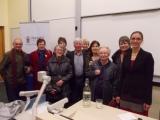
On 6th August, 14 NZ Ricardians and partners travelled to Palmerston North, 130km north of Wellington, to hear Jo talk on the Leicester dig. Held at Massey University, the lecture room, designed for 250, was crammed full with every seat, aisle and floor space taken up; well over 300 attendees were enthralled with her brilliantly presented, well-illustrated and witty talk.Luckily, most of the Ricardian contingent managed to snare front row seating.

The Ricardian contingent (Photograph:  Shayne Parkes)

Jo gave a brief introduction covering the dynastic struggle leading to Richard taking the throne. She explained how he came to be buried at Greyfriars’ Priory after Bosworth and went on to explain that Leicester University had been commissioned by the Richard III Society to undertake the search for and identification of Richard’s remains. She spoke to various photos of the process, and being her specialty, the close examination of the skeleton and the various wounds inflicted on Richard at Bosworth. The search for a DNA match was covered, with John Ashdown-Hill being credited with identifying the Ibsen descent from Anne of York.

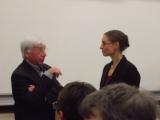
Rob Smith thanking Dr Jo Appleby (Photograph:  Shayne Parkes)

Society Vice President and NZ Branch Secretary, Rob Smith, thanked Jo, on behalf of the Society for her talk and her contribution to the project. She in turn publicly thanked the Society for the opportunity “for without the Richard III Society I would not be in NZ!”

A thoroughly entertaining talk, well worth the trip.

Tags: , , ,

4
Aug

RICHARD III AND SOCIAL MEDIA

   Posted by: Dorothea Preis   in News, NSW Branch News

The New South Wales Branch of the Richard III Society has been on Facebook for quite a while and we would like to thank all our loyal supporters.  Now you can follow us on Twitter, too!

Facebook:  https://www.facebook.com/pages/NSW-Branch-of-the-Richard-III-Society/269971479692592

Twitter:  https://twitter.com/RichardIIINSW

Looking forward to seeing you soon!

3
Aug

MAGNA CARTA AND WITCHCRAFT

   Posted by: Dorothea Preis   in Meetings, News, NSW Branch News

Our next general meeting will take place on Saturday, 10 August, at the Harry Jensen Centre at 14h00. The speaker will be Dr John Twyford.  Dr Twyford is a lecturer at the University of Technology, Sydney (UTS).  He will be talking to us about Medieval Contract Law, and will show us the lesser known aspects of the Magna Carta.  He also indicated that his talk will also cover the burning of witches, so be prepared.

A talk about the Magna Carta is a fitting topic for our August 2013 meeting.  The (northern hemisphere) summer of 2013 marks the 800th anniversary of the first meeting meeting between the barons and the clergy to discuss severe grievances against King John at St Albans, in August 1213.  It was this meeting which ultimately led to the articles that became Magna Carta, sealed at Runnymede two years later in 1215.

Our meeting will more than make up for missing the celebrations planned in St Albans.

Tags: ,

30
Jul

RICHARD, DUKE OF YORK, ON LIVES OF THE WEEK

   Posted by: Dorothea Preis   in News

Should you not yet subscribe to the ‘Lives of the Week’ by the Oxford Dictionary of National Biography, today is a good day to do so.  Today’s ‘Life’ is that of Richard, duke of York, the father of Edward IV and Richard III.

If you subscribe to the ‘Lives of the Day’ you will receive each day one of the biographies of the ODNB by email free of charge.  So even if you don’t have regular access to the ODNB through your library or similar institution, you can read some of their valuable resources.

You can read about Richard, duke of York, for the next week or so and subscribe to the ‘Lives of the Week’ by clicking on this link:  http://www.oxforddnb.com/public/lotw/

Tags:

27
Jul

Book Review: Richard III – A Small Guide to the Great Debate

   Posted by: Dorothea Preis   in Bookworm

Annette Carson, Richard III:  A Small Guide to the Great Debate

As the title indicates this is a small book – only 96 pages – but it is about a big issue.   Annette Carson looks at the debate with her usual thoroughness, focussing on the two main issues:  did Richard III usurp the throne and the fate of the Princes in the Tower.   She analyses the evidence for and against and sets the historical context.   The reader is left to consider the evidence and make up their own minds about Richard’s innocence or guilt.

Whilst this book may not bring much new information to readers familiar with the period, it is a valuable and useful introduction for those new to the subject.  However, even experienced Ricardians will find her logical and concise presentation of the known facts helpful and interesting.  It is inevitable that in a short book there are no detailed references, however the key sources are mentioned and every now and then I found myself inspired to dig deeper.

A rewarding book for anyone interested in the ‘Great Debate’

More information and how to order is contained in this flyer:  Small Guide A4 leaflet (1)-1

Tags: , , ,

The biennial convention of the Australasian branches was held on 12 to 14 July 2013 at the Novotel, Darling Harbour Sydney.  Hosted this year by the New South Wales branch, the convention attracted over 40 attendees from all the wide spread parts of Australasia. Representatives came from New Zealand across to Western Australia and all parts in between.
Registration was on Friday night followed by an informal meal at Pancakes on the Rocks (Darling Harbour branch), which was within easy walking distance from the venue.  Several tables of keen Richardians made a good start to the weekend, setting the scene with good talk and fellowship.

Saturday started with a warm and humorous greeting from weekend Master of Ceremonies Ann (NSW) who introduced the theme for the convention.  As a start to exploring “Richard III: the man behind the myth”, Ann declaimed a pair of clerihews specially written for Richard and I include a sample,

Clerihew 2
In Bosworth Field, did Richard fall
Without a horse, he was nought at all
But forget the nag, and Percy the cheater
My kingdom is for the parking meter.

She also invoked the modern poet Bob Dylan with a final piece of advice ‘don’t trust leaders and watch the parking meters.’ Despite recovering from surgery to an arm injury, Ann gently guided the convention with her special brand of persuasion and humour keeping all on track and informed.

The richly textured programme of speakers began with long term Richardian Peter  from Queensland presenting for the first time at an Australasian convention.  As a consulting physician for 35 years, Peter was very qualified to discuss the various kinds of deformities that Richard has been accused of having and then look at the actual new evidence from the recent discovery at Leicester.  Graphically illustrated with eye catching medical slides and clearly delivered interesting information, Peter’s talk was a fresh and interesting approach.  Though this was Peter’s first appearance at a convention we hope it will not be his last.

Karen (NSW), author and linguist, presented on the Fitzhughs of Ravensworth with a focus on Henry Fitzhugh, a prominent northern lord of a prominent northern family.  This detailed and interesting examination was enlivened with shots of humour.  Karen was an illuminating and knowledgeable guide to the turbulent events of the War of the Roses, following Henry whenever she could see him.  Bringing historic names to life as a good novelist can, Karen brought strong research and human details together to bring the historical figures to life.

Beautifully illustrated with photos from her research in Norfolk, Carole’s (WA) presentation on iconography in medieval churches was informed and revealing. As well as the beautiful carved images made for the main public sections of the churches, she also showed many of the small details tucked away in architectural nooks and crannies.  These ranged from amusing small animals like the singing pigs to fierce demons. This research is part of her doctoral thesis on the relationship between medieval devotional literature and iconography in medieval parish churches.

Chris (NSW) made an arresting comparison of what he identified as the four ‘invasions’ of England and their profound effect on the development of a distinctive English  democracy and parliamentary and governance conventions and the role of monarch.  These were 1. Roman 2. Norman at Hastings 3. Tudor at Bosworth and 4. Willaim and Mary the last of course not a military invasion but one with comparable effects on community and economy.  He drew compelling parallels between these various invasions all of which he contended marked a paradigm shift for English history and culture. The contribution of Richard III was explored with the range of enduring laws and statutes enacted in his short reign.  As a student of political institutions Chris has an enduring interest in how they develop and function.

NSW Branch webmaster and journal editor, Dorothea, looked at one of the lesser known characters of the period, Thomas Barowe, loyal servant to Richard III.  Tracing mentions of Thomas in primary documents, she followed his career under Richard and later under Henry VII.  Following some of the lesser-known characters gives a richer texture to the more mainstream stories adding to our sense of the period and how it was to live and survive and thrive in times so different to our time.

A raft of book reviews of some classic and not so classic offerings and some new additions to Richardian fiction followed.  Gillian (Vic) offered a clear and warm analysis of Rosemary Hawley Jarman’s We Speak No Treason (1971), which she described as a beautifully written book and though detailed, the meshing of the fictional and historical characters was masterly and believable.  A classic, which stood the test of time.  Not so impressed with the new offering of Phillipa Gregory The Kingmaker’s Daughter (2012), Gillian found this novel careless and historically inaccurate, with wooden unengaging characters.  Despite quite enjoying some past novels from this author she could not recommend this one at all.

Hazel (Vic) also picked a classic Richardian text with The Betrayal of Richard III (1959) by V. B. Lamb.  Hazel enjoyed the clear presentation of the case for a reassessment of Richard III reputation, liking Mrs Lamb’s often dry humour and witty style, one which Hazel herself used to make this entertaining talk a reminder of this excellent classic which can be revisited with pleasure.

Margaret (NZ) looked at some contemporary local writers of Ricardian and historical fiction.  The New Zealand branch journal, The Ricardian Times that Margaret has edited since 1985, has a history of supporting fiction writing with the publication of various kinds of original work from an historical Agony Aunt column to stories and poetry. Members Lorraine McArthur and Jane Orwin-Higgs have now had full length works published.  A booklet of short stories from these writers was generously handed out to participants and eagerly taken up.

Moving to a slightly lighter pace, Helen and Denise (NSW) challenged attendees to identify unnamed quotes from a variety of sources on Richard III that they handed out on scrolls. This experimental game, Outrageous Fortune, looks at the changing face of opinion, conjecture and rumour peddled as history on Richard over the centuries.  From well known through malicious to balanced and laudatory, the quotes had the audience on their feet reading out quotes and guessing or naming the authors. After a well earned afternoon tea for all, Helen and Denise moved on to examine the reputation of Richard in light of the Greyfriars find, looking at tweets, humour, worldwide headlines and controversy as the momentous events unfold in a very different world of communications. The hope was expressed that the exciting contemporary story of the finding of the King’s lost bones will take root in popular consciousness providing a counterbalance to the age-old image of the deformed Wicked Uncle.

The formal dinner on Saturday night celebrating the 530th anniversary of the coronation of Richard III was well attended with many in historic costume.  A candle light ceremony opened proceedings accompanied by delightful evocative choral music composed by Graham Keitch who had given special permission for its use on this special night. The crowd was entertained with original songs and theatre presented by NSW members (thanks to Julia, David, Kevin and Philip) in between enjoying more delicious catering.

As the loyal toasts drew to a close, diners were stunned by a magnificent fireworks display that burst over the nearby harbour.  Even discovering that this was a regular event and not another example of the immaculate timing and organization of the NSW branch committee did not lessen the enjoyment of catching a breath of fresh air on the terrace and watching the spectacle.

Watching the fireworks (Photograph by Helen Portus)

Sunday morning provided more contrasts in topics with Chris briefly introducing a new release of a very early film version of Richard III.  This silent film from 1913 is the earliest surviving feature film made in America and features Shakespearean actor Frederick Ward and his company.

Louise (WA) then took attendees on a journey through the wild and turbulent world of 15th century Scotland.  She proved a deft guide to the sometimes complex and often bloody politics and events of this most unsettled times as nobles clashed with monarchs and power shifted frequently.  Invasions, armed encounters, skirmishes and full scale battles followed thick and fast interlaced with treaties and negotiations, in a time when being the Scottish king was a risky career move.  It was a fascinating time with many colourful and vivid characters.

Andrew in full armour (Photograph by Dorothea Preis)

A real life vivid character next strode into the room clothed in full 15th century battle armour.  Following a quick medieval striptease, the next speaker was revealed, slightly sweaty but ready to talk. Andrew (NSW) is an active historical jouster at an international level. Involvement with historical martial combat has given him a good working knowledge of the design, construction and function of medieval armour and for the next hour he spoke and answered a stream of questions from his audience.  During this time he covered the history, function, making and different styles of armour as well as discussing war horses, knight training, knights on horse and foot and then bringing it all together into what happens in actual battle. As well as giving an overview of the knight in his world it was also an introduction into the world of trade and innovation that was generated by the making and selling of this tool of war.  The 15th century is considered the peak of technical development of armour and weapons.  Andrew’s suit was in the English style, so plainer than some continental makes but with wonderfully engineered articulated joints and protection, so it provided a great deal of movement and flexibility.

Following a business session with Rob (Australasian Vice President, NZ), which will be reported separately, the convention closed with an original piece written by Michael (Vic).  Michael has invented the English Broadcasting Guild and written 3 radio style plays that have been ‘broadcast’ by the Guild at different Ricardian events.  In this one, an Interview with Richard III, reporter Reginald Peacock (played by the author) is supported by Hazel delivering a delightful rich BBC accent, Kevin as Francis Lovell speaking about his life with Richard and Rob as Richard himself moving and very human with a well sustained and very real Yorkshire accent. This provided a very suitable ending to a weekend rich with new ideas and information, offering insights and a different angle on the facts and mysteries of Richard’s life and reign.

The closing formalities paid tribute to the NSW branch committee who organised the convention, with Rob proposing a vote of thanks and applause on behalf of the attendees.  Thanks also went to Lynne for her invaluable work on the merchandise stall and to the many others who helped with the raffles and books sales and donated goods and time and energy to this most successful event.

In closing Master of Ceremonies, Ann, commented on the varied and detailed presentations that informed, instructed and entertained in turn and thanked all the speakers for their contributions.

All look forward to the next meeting in 2015 in New Zealand.

Denise Rawling and Helen Portus

Tags: , , , ,

19
Jul

GOOD NEWS WEEKEND

   Posted by: Dorothea Preis   in Greyfriars Dig, News

Just in time for the weekend we all heard the good news from Leicester that Leicester Cathedral has agreed to a tomb for King Richard III.  You may recall the suggestions that a slab would be more suitable given the constraints of space.  The Richard III Society has always maintained that as anointed king Richard should have a raised tomb.  And the Society was not alone, a poll in the Mercury, Leicester’s local newspaper, resulted in an overwhelming 90% majority for a tomb.  Leicester Cathedral say that they “have listened carefully to the different views that were expressed” and are now planning to bury Richard with honour beneath a raised tomb within a specially created area in the Cathedral.

The news were welcomed by the Richard III Society.  Dr Phil Stone, Chairman of the Society, stated “I think that the design is absolutely fantastic”.  Philippa Langley said:

“I am thrilled that the last warrior King of England is to be honoured with a tomb and that Yorkshire stone is being investigated as the material for it. We had always hoped that any design would convey what was important to Richard in his life but also his move into the light of a new future for his much-maligned reputation. The white rose, I believe, conveys this aspect beautifully and the designers, Cathedral and staff are to be congratulated on all their hard work.”

You can find a press release on this topic on the website of the Richard III Society here.

If, however, the ad hoc poll carried out at the Australasian Convention last weekend is anything to go by, any cathedral would be much too small for the number of people wishing to attend the reburial, at least something the size of a big stadium would be necessary.

I would also like to clarify here the misconception which was fairly often repeated that Leicester authorities had objected to a depiction on Richard’s boar on the tomb, as they were afraid of offending people with other religious believes.  I have been assured on very good authority that this was based on a misunderstanding.

If you are after that extra special gift to the Ricardian in your life, and have the necessary funds, you might like to consider a bid in the silent auction of a unique 18 carat gold replica of a Richard III boar badge,  commissioned by the Yorkshire Museum.  It will be the only gold replica of the badge in existence, accurately based on the rare 15th Century silver badge on show in the museum.  The reserve price is £2000 (approx. $ Aus 3300).  The money raised will go to the museum’s acquisition fund.  More information on the auction, but also on the museum’s boar badge can be found here.

Should this be slightly out of your price range, I believe our Sales Officer Lynne still has some of the pewter boar badges from the Society for sale.  However, of interest to all of us is a short YouTube clip by the York Museum Trust about the ‘York Boar Badge, as worn by supporters of King Richard III (c.1483)’.

All who attended the Australasian Convention will vividly remember Andrew’s terrific talk about medieval armour and jousting, which he delivered in full armour.  Andrew is a jouster and features in another short YouTube clip on modern day jousting featuring some of the jousting from this year’s World Invitational “Grail of Chivalry” jousting tournament at Harcourt Park, Upper Hutt, New Zealand.

Tags: , ,