18
Jul

Guest Post by Helen Cox

   Posted by: Helen Cox   in News

History Matters: Shakespearean Battles at Towton

Helen Cox, author of two excellent books on the Battle of Wakefield, here tells us about her meeting with the Bard at Towton.  We are very grateful to Helen for making this article, which was first published on her blog, Helen Rae Rants!, available to us.  You can find out more about Helen on Herstory Writing & Interpretation.

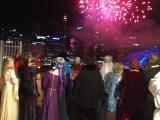
On Sunday 14th July, history was made again on the battlefield at Towton in North Yorkshire, when the world-renowned Globe Theatre company performed a Shakespearean marathon – all three parts of Henry VI, at the site where some of the action in Part III actually took place in 1461.

I went with some trepidation, I confess; Shakespeare can be hard going, so the prospect of three plays back-to-back, (starting at 12.30 and finishing at 10 pm, with an hour’s break between them), was slightly daunting. However, thanks to Nick Bagnall’s superb direction and an equally superb cast, it was a joy – beautifully interpreted, easy to follow and altogether riveting. I boggled in amazement at what they achieved with imaginative use of a very simple set; no fancy backdrops or painted scenery, just scaffolding towers and a few bits of cloth – but it became everything from the gates of Orleans to Wars of the Roses killing fields to the Tower of London, and much more besides. (You’ll find some pictures of it, and a link to BBC 1′s Breakfast News item about the plays, on the News page of Herstory Writing & Interpretation).

The way the fighting was rendered was also massively impressive. How will they recreate Towton, (a battle where more than 20,000 men are said to have died), with a cast of 14, I’d wondered beforehand. Well, now I know: with the beating of enormous drums, the clash of swords on scaffolding poles, and a handful of actors facing the audience, performing slow-motion, stylised movements with their weapons. It worked beautifully – as did the well-choreographed one-on-one fight scenes that crop up throughout.

Although all the actors were marvellous, Henry VI, played by Graham Butler, was possibly my favourite. I particularly enjoyed his appearance in Part I; as an infant or young child while much of the action takes place, he naturally does not speak; but he was a dominant, silent presence in his central tower, reacting to the dialogue, shrinking in horror from the violence, studying his book or twiddling his thumbs. It was a clever, subtle, very effective way of evoking this hapless king’s character; and sometimes very funny, as when the juvenile Henry reaches down for an important scroll, only to have it whisked away from his groping fingers. Wonderful. But Mary Doherty also played a corking Margaret of Anjou, especially in Part III when she gleefully slays Richard of York. Simon Harrison’s Richard, Duke of Gloucester was another real treat, portrayed as the classic limping, withered-armed hunchback (archaeology has proved that he wasn’t really like that, but the acting had to fit Shakespeare’s script!). And he made a delicious, gloating villain; also very funny, and (not surprising!) warmly received by a Yorkshire crowd.

The performance ended with a sprightly dance on stage and a standing ovation from the audience – and by heck, those actors had earned it. But I wasn’t sorry to go home, because Part III (featuring the Battle of Towton) had given me the heebie-jeebies. As a member of Towton Battlefield Society, I’ve studied, written about and talked about that battle ad infinitum. I’ve ‘met’ some of the battle dead – at least, their poor mutilated skeletons. And as one of the Society’s Wars of the Roses re-enactors, I’ve been on that field (the site of the Lancastrian camp, close to the location of the mass graves made famous by Channel 4′s documentary, Blood Red Roses), at all hours of the day and night. I’ve even slept there on numerous occasions, waiting, hoping, wanting to feel some frisson of atmosphere – but it never really happened until Sunday. Maybe it was listening to the hours of near-contemporary language that did it… for the first time, I felt the full horror of Towton not just intellectually but physically. Yes, it had really happened, right where we were sitting… and as the evening wore on I kept tensing, expecting a rout of exhausted Lancastrians to come panting over the hill, pursued by screaming Yorkists on horseback, cut down and hacked to pieces; expecting to see blood and body parts around my chair; becoming deeply unsettled.

So I have The Globe Theatre to thank for that – not only the most amazing day of drama I’ve ever enjoyed, but the deepest, most poignant connection with the true history I’ve ever experienced on that field. I commend it to you, if you get chance to go; the company are taking it to three more battlefield sites: Tewkesbury on 4th August, St Albans on 8th August and Barnet on 24th August. (It’s also on at various theatres round the country… but it won’t be quite the same indoors!).

Tags: , ,

15
Jul

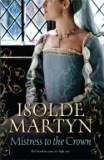
Mistress to the Crown

   Posted by: Felicity Pulman   in Bookworm

Mistress to the Crown

Book Review:  Mistress to the Crown

Isolde Martyn, Mistress to the Crown.  Harlequin Mira, Chatswood, Australia, 2013. ISBN 9781743560211

It’s wonderful to see a new book from Isolde Martyn, and Mistress to the Crown more than lives up to the reputation of Martyn’s award-winning The Lady and the Unicorn and Knight and the Rose. The author’s knowledge and love of medieval history is evident as she deftly weaves fact and fiction together to flesh out the character of Edward IV’s mistress, the hitherto much maligned ‘Jane Shore’.

Jane’s plight (a young girl trapped in a loveless marriage to an older, impotent man) is sympathetically portrayed as is her motivation to change the odds stacked against her by becoming the mistress of a nobleman. She doesn’t just ‘sleep’ her way to success, however; feisty and independent, she forges her own destiny while at the same time keeping her door (and her heart) open to the poor, the needy and the misjudged who petition her for help – with a fitting reward for her kindness just when she most needs it. Historical details flesh out the scenes without intruding on these ‘affairs of the heart’ that make Jane such an appealing and memorable character.

Readers will enjoy this witty and page-turning glimpse into a past that is now so very much in the public eye with the unearthing of the remains of Edward IV’s brother, Richard III, from beneath the council carpark in Leicester.

Note:  This review has been previously published on Goodreads.  I meant every word, I think it’s important to those members who write books about this period that we get behind them and let people know about and enjoy their work.

Tags: , ,

5
Jul

DIGGING UP LEICESTER’S PAST

   Posted by: Dorothea Preis   in Greyfriars Dig, News, Research

ArchaeologyMost of you probably heard that the archaeologists of the University of Leicester have after a very eventful winter started digging again.  They want to discover more of the Greyfriars church, where the remains of Richard III were found last year.

The dig started with removing part of a Victorian wall separating the former Alderman Newton School and 6-8 St Martins.  The wall should be rebuilt once the dig is complete.

The plan behind the second dig is to establish the exact layout of the church to establish where Richard’s grave was in relation to the rest of the church.  The archaeologists also hope to find out other details like the size of the church and whether it had a tower or whether it had undergone alterations during its 300 year existence.  During the previous dig, archaeologists had found evidence that the floor had been changed three times.  Three coffins had also been found and it is hoped to find out more about the other people who were buried here.

However, the researchers also hope to go further back into Leicester’s past and hope to find traces what was on the site before the friary was built.  After all, Leicester was an important Roman centre, so they might even find Roman artifacts.

The machines moved in on Monday and have now finished their part.  Now the areas and trenches which had been dug last year will be uncovered.  A viewing platform for the public will also be erected.

To find out more about the second dig follow the blog on the website of the University of Leicester.  A good selection of photos can be viewed on Flickr.

Tags: ,

18
Jun

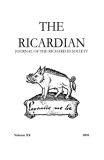
THE RICARDIAN AND RICARDIAN BULLETIN

   Posted by: Dorothea Preis   in News, Society News

The Ricardian and June Ricardian Bulletin should find their way into your letter box these days – if you are a member of the Society that is.

This Bulletin is a bumper issue with 88 pages of fascinating information.  It has all the regular features, an extended research section with the first regular update about the Ricardian Chronicle project, plus in depth press and media coverage.

There is a feature on scoliosis and what it means for people living with the condition. Some of these questions are addressed, with contributions from the Scoliosis Association UK and from members sharing their own experience of scoliosis.

For ‘The Man Himself’ Peter Hammond writes about Richard III’s diet in light of the examination of the king’s remains. There’s also a contribution from Annette Carson reflecting on the impact and outcome of the Greyfriars dig and Stephen York takes a look at Kingmaker, a board game with a Wars of the Roses theme.

The Ricardian offers  a variety of research articles and book reviews.  Seeing how volatile the weather has become with climate change, the examination of “Richard III, Bridges and Floods” sounds very interesting.  Other articles looks at the Order of the Garter, Bosworth, Scottish women and a friar.

Happy  reading!

Tags:

17
Jun

NEW BOOKS BY JOHN ASHDOWN-HILL TO LOOK FORWARD TO

   Posted by: Dorothea Preis   in Bookworm

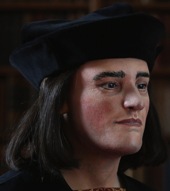
Dr John Ashdown-Hill’s research was instrumental in finding Richard III’s remains and confirming that the skeleton was really his.  This lead earlier this year to a new edition of his book The Last Days of Richard III, originally published in 2010.  The title of the new edition The Last Days of Richard III and the Fate of His DNA: The Book That Inspired the Dig tells us where it has been updated.

In July he has a new book coming out – Royal Marriage Secrets.  It covers quite a wide time-scale – ending up with the little known case involving the present Queen’s grandfather.  But it contains quite a bit of Ricardian interest.  Edward IV Eleanor and Elizabeth, of course, but also when is a Tudor not a Tudor, and samples of medieval love spells and potions in case anyone should want to try them!  I have pre-ordered my copy and am waiting for it with eager anticipation.

Meanwhile John has been spending time underground in the burial vault of the Duke and Duchess of Clarence.  Are they still there?  How did George – and Isabel – really die?  Why did George turn out the way he did?  And what did he really look like?  He is trying to answer these and other questions in a new book called The Third Plantagenet.  According to the Book Depository it should be out on 3 March 2014.

The picture on the left shows John Ashdown-Hill’s suggestion for the cover design. (Picture supplied by John Ashdown Hill)

Tags: , , , ,

9
Jun

POLITICS AND TRUTH

   Posted by: Rachel Allerton   in Meetings, News, NSW Branch News

On Saturday, 8 June, the NSW Branch of the Richard III Society, was treated to a lecture on Richard III, called ‘Between Two World Orders:  Richard III and the Priority of Politics over Truth’, by Ben Cross.  Ben has almost completed his PhD in political philosophy and discussed the different political views of the world throughout history.

We learned that the Greek idea of cosmic justice (dikaiosune) was challenged around Richard III’s time, when people began to understand that they could create or choose their own place in the world, rather than have it decided for them.  However, the one constant theme in history is that power wins and that ‘truth is what your contemporaries let you get away with’ (Richard Rorty).

Hopefully we will continue to question and uncover the truth about Richard III! Thanks to Ben for his fascinating talk!

We also celebrated Queen Anne’s birthday with a gorgeous cake afterwards.

Tags: , ,

5
Jun

THE JUNE GENERAL MEETING

   Posted by: Julia Redlich   in Meetings, News, NSW Branch News

A reminder for our next general meeting on Saturday, 8 June, at 2pm.  The speaker will be Ben Cross, talking to us about ‘Medieval Thought and Philosophy’.  We are so grateful to Ben for finding time for us – he has been frantically busy recently and is shortly to leave for Oxford to complete his PhD thesis on this subject.  However, as we all know, it is those who are the busiest who find the time to fit in something extra.

At every June meeting, we like to make a point of marking the anniversary of the birth of Richard III’s queen, Anne Neville, on 11 June 1456. This means there will be something special to enjoy at our afternoon tea.

Obviously this is a meeting that can’t be missed. See you there!

Tags: ,

1
Jun

THE BONES IN THE URN

   Posted by: Barbara Gaskell Denvil   in Medieval Miscellany, Medieval People

The drama, the tragedy and the thrill of a good colourful story obviously attracts. Villainy can seem far more interesting than honest hard working decency. So can we ever be convinced to relinquish our attraction to myth and propaganda?

The recent discovery of King Richard III’s burial site has renewed so much public interest that many of the old controversies are once again being discussed. Some articles and FB posts are astonishingly antagonistic, even when the writer clearly has never researched the subject at all, let alone seriously studied the few known facts. So why do people still feel so strongly about a historical figure who died more than 500 years ago?

Of course the main accusation against Richard III has always been the assumption that he murdered his nephews, and the discovery of the skeletons of two children under a Tower staircase in the 17th century has often been quoted as virtual proof of this dastardly act.

I should like to try and put a few of these assumptions into perspective.

In 1674  at the Tower of London a group of workmen were employed to demolish a stone staircase attached to the White Tower, and over several days had dug a full ten feet down to the level of the Tower foundations, when they came upon two human skeletons. Seeing little of interest in this discovery, they threw the bones, along with the surrounding rubble, onto the rubbish dump.

When they related these facts afterwards, others realised that this find could be of some importance. Since the skeletons appeared to be of two young people, being neither of fully grown adults nor of small children, someone began to wonder if these could be the remains of the so-called ‘princes in the Tower’ – i.e. the two sons of the late King Edward IV who had seemingly disappeared during the subsequent reign of King Richard III. Sometime later the bones were therefore recovered from the dump. The reigning monarch at the time (Charles II) subsequently ordered the bones entombment in an urn, to be kept in Westminster Abbey. The assumption, given that forensic examination was unknown at that time, was to accept the bones as those of the allegedly murdered ‘princes’.

This was certainly not the first time that human bones had been discovered in and around the Tower. However, not only did these particular skeletons seemingly, judging by size alone, match the ages of the king’s lost boys, but they were discovered under a staircase, and this rang bells with the unfinished story written long before by Sir Thomas More and entitled “The History of King Richard III.”

So those are the simple facts. But a considerable number of myths, misinterpretations and assumptions have gathered around these facts ever since, and the principal one concerns that same unfinished story left by Sir Thomas More.

Neither at the time, nor during the Tudor age following, did anyone else conjecture as to such precise details concerning the boys’ fates – though assumption continued and increased as the blackening of Richard III’s reputation became a political tool of the Tudors. The only reliable account of when they were last sighted (at least by anyone who cared to write of it) appears in a monkish chronicle which indicates they were still resident in the Tower in late August or early September 1483. Yet surprisingly the actual contemporary evidence appears to indicate that little interest was aroused in the vicinity at the time of this disappearance, and Londoners went about their business as usual. Whether the sons of Edward IV then died, were murdered, or were simply smuggled safely away, was guessed at but never proved.

It was not until around 1515 (30 years after the death of Richard III) that Sir Thomas More started to write his ‘history’. Over the years he wrote several versions of this but neither finished nor published any of them. They have survived however, and many researchers have chosen to take them seriously in spite of the anomalies, excessive number of mistakes, and insistence on recording discussions word for word even when the possibility of knowing what had been said was completely non-existent.

Within his pages, More initially records that the fate of the boys remained in doubt. Then later and quite suddenly he offers a detailed scenario of their heinous slaughter. He gives no explanation of how he could possibly know the exact details which he relates, however the story appears to be partially inspired by Polydore Vergil, the man recently employed by Henry VII to write a history of England. More, however, elaborates hugely on Vergil’s account, adding no end of specific extra colour. How (more than 30 years after the fact) he suddenly came by this wealth of gossip is difficult to imagine. Did More chat afterwards with the murderers? Did he talk with the priest, yet decide to confide in no one else even though he then wrote it down for anyone to read? Did he receive information from some other nameless soul, who also chose to disclose these essential facts to no one else? More, however, now confidently tells us that after their violent deaths the two sons of Edward IV were secretly buried at the foot of a staircase in the Tower of London. He then goes on to explain that Richard III (who had ordered the murders) objected to such an improper burial and ordered a priest to dig up the corpses and rebury them in another more suitable (but unnamed) place, and that this was promptly done.

So the burial under a stairwell is certainly mentioned. Yet according to More, (the only one ever to mention burial under a staircase at all) that is NOT where the two bodies were finally left. He specifically says they were moved to a secret place more appropriate to their station. And here the secret supposedly remained – no longer under a staircase at all.

Yet the actual ‘bones in the urn’ were originally found under a stone stair attached to the exterior of the White Tower (known as the Keep). Apart from the contradiction within More’s story, such a rigorous endeavour is difficult to accept as this area was the access point to the only entrance, and would certainly have been one of the busiest parts of the Tower. Anyone digging there would have been clearly visible. So we are asked to accept that a couple of amazingly determined murderers managed between them to dig 10 foot under solid stone, avoiding all passing gentry including the guards, and to deposit there two suspicious bundles – all while the ‘princes’’ staff raised no alarm nor even blinked in curiosity. And the subsequent solitary priest somehow dug them up again? As the night quickly passed, was he, in absolute secrecy, able to dig 10 foot under stone to rebury the boys’ remains? And if so, in accordance with More’s little book – why were they still found under the staircase?

At that time hundreds of busy people, many with their entire families, lived and worked in the Tower. This was no dreadful place of isolated dungeons and cold haunted corners. It was a royal palace with grand apartments and a number of council chambers, beautiful gardens complete with gardeners, clerks and administrators, a menagerie and its keepers, the Royal Mint and all its wealth of workers, a whole garrison of guards, kitchens, cooks, scullions and cleaners. How a pair of strange and suspicious ruffians could have dug such a deep secret grave in one night completely unnoticed by anyone is frankly an impossible situation. Even at night the Tower really was a hive of industry and activity, and the ‘princes’ themselves had servants day and night. They were not under arrest and nor were they locked in the dungeons – they lived together in a comfortable apartment and more than 14 personal staff were paid to look after them. Yet we are asked to believe that their murder was magically accomplished without anyone at all knowing how, who, or even exactly when.

But let us leave that puzzle and return to the urn. It rested undisturbed in the Abbey for many years, but in 1933 it was decided to open it and discover just what was inside.

The complete description of the contents is on record of course, and the boy’s remains were immediately examined by experts of the time.

Apart from the human remains, there were a number of animal bones – clearly all collected together from the rubbish pit. There were, however, no textiles of any kind. So please – let’s forget that other silly myth of the scraps of expensive velvet. Yes – hundreds of years ago an anonymous scribble in a margin evidently mentioned velvet – but no such thing is mentioned elsewhere, no such thing has survived in any form, and the anonymous scribble has also disappeared – if it ever existed in the first place. So no velvet. Another red herring.

I have also read that a dark stain which ‘could’ be blood, was found on one skull. After 200 years underground we are asked to accept an anonymous stain as an indication of violent murder??? And when this same skull had been left for some time rolling around with fresh animal remains from the butchers? Indeed, those who mentioned the possibility of the stain being blood, later entirely retracted their statement, although this important development is often overlooked. So please! Another ludicrous exaggerated myth.

Now the more important evidence – the scientific examination. Oh – but, wait a moment. This was 1933 and science has moved a long, long way since then. No DNA examination was possible back then. Carbon dating was not employed – too suspect, especially with bones that had been so contaminated for so long. Their antiquity could not therefore be established, so simple assumptions were made – which have been seriously questioned since. The age of the children when they died is also extremely open to opinion. There is absolutely no possibility of sexing these bones. They could have been girls and this remains perfectly likely. At the time a conclusion was made that the two children had been related (this from an examination of the teeth and not from DNA) which has now been shown as probably erroneous. Historians and orthopaedic experts are divided. Some still maintain that these remains ‘could’ be the sons of Edward IV, while others point out the inconsistencies and inaccuracies. There really is no consensus of specialist opinion. The arguments have occasionally become quite heated and no confirmed or complete conclusion has been reached. And there are other anomalies.

For instance, it has been shown that the lower jaw bone of the elder child indicates the presence of a serious bone disease. This would have been both painful and visible. Yet the young Edward V is documented as having been fit, active, prepared for coronation, and described as ‘good looking’. No record is shown of any such existing disease which would have seriously undermined his future life and reign.

There’s another red herring here. Doctor Argentine, the elder prince’s long-standing physician, related that, “the young king, like a victim prepared for sacrifice, sought remission of his sins by daily confession and penance, because he believed death was facing him.”

But Dr. Argentine did not visit his charge because of ailing health. All junior royalty were under the permanent care of doctors who were responsible for their day to day health. A doctor’s appearance here was a consistent matter of course, and would have been ever since birth. And the prince’s recorded statement, apart from being second-hand hearsay, is extremely ambiguous. I doubt he was cheerful at the time, poor boy – with his status in doubt, and his expected coronation suddenly delayed. He may well have expected (and been warned by his dour and pessimistic Lancastrian and Woodville guardians) a bitter end. This does not mean it actually occurred.

So these are the basic facts, and as anyone can see, they do not point specifically in any direction. They prove nothing, not even circumstantially, and any assumption that the bones in the urn are almost certainly those of the two lost boys of Edward IV is absolutely unjustified. Until permission is finally given (many have asked and always been denied) for the urn to be opened once more and the contents subjected to up-to-date forensic examination, we cannot know anything at all. So far the very sketchy facts seem to point towards the bones dating from Norman, or even from Roman times, and at least some experts strongly suggest that the elder is female.

Those interested authors of articles claiming these bones are definitely those of the lost boys, are either fooling themselves or attempting to fool their readers.

Should the bones eventually be examined and proved by DNA matching to be the ‘princes’ after all – we may with our present level of technology discover roughly when they died (to the nearest 50 years). We may perhaps also ascertain the causes of their deaths, but unless there are signs of injury it is unlikely we will learn whether they were killed – still less who killed them.

If, on the other hand, as seems most likely, they are proved NOT to be the ‘princes’ it will settle a long-standing controversy, and provide some very interesting material for archaeological study. In particular it will silence some of the more exaggerated and erroneous myths.

There remains the bigger question – WHAT exactly happened to Edward IV’s sons, and on whose orders? Well that is quite another problem – and there is as yet no answer to that either.

Note: Barbara Gaskell-Denvil is a historical novelist and member of the NSW branch of the Richard III Society.  Her new book, Sumerford’s Autumn, which deals with – possibly – one of the princes, is has hit the shelves during the past week.  It is published by Simon & Schuster Australia, ISBN 9781922052582.

This article appeared first on Barbara’s website http://www.bgdenvil.com/ and is reposted here with her permission.

Tags: ,

This article is by Stephen Lark, a Ricardian friends from Ipswich, Suffolk.  We thank Stephen for making it available to us.  It was first published in the Journal of the American Branch of the Richard III Society, Ricardian Register, Vol.43, No.2 (June 2012).

Thomas Stafford was executed on this day in 1557.

Introduction

This is the story of Richard’s controversial and, consequently, short-lived great great nephew. Genealogical tables can be included, showing his Clarence and Stafford descent, also his relationships with the Hastings family (William, Lord Hastings, and the Earls of Huntingdon).

He is of particular interest as the first proven legitimate Yorkist to initiate a rebellion against the Tudor regime and I feel passionately that he does not deserve his present relative obscurity. I shall attempt to answer some of the mysteries surrounding his life and actions.

Beginnings

Thomas Stafford was born between 1530 and 1533, in about 1531, according to the original DNB, or 1533 in the new edition. At this time, four of Henry VIII’s key advisers (Cromwell, More, Cranmer and the recently deceased Wolsey) all bore the forename Thomas, which may explain his parents’ choice.

His father was Henry Stafford, only son of Edward, 3rd Duke of Buckingham and Eleanor Percy. His mother was Ursula Pole, only daughter of Sir Richard Pole and Lady Margaret Plantagenet (daughter of George, Duke of Clarence). Thomas’ parents married in February 1519, expecting to succeed to the Duchy but this did not happen because Edward was executed in 1521 for “treasonable utterances”.

He is supposed to have said that, were the King to die childless, he would seek the throne and to have consulted a fortune-teller about this. Burke’s says that he was executed “for his vanity and loquacity”. Shakespeare, in Henry VIII portrays him as a plotter, as did the recent ITV film.

His attainder was reversed soon afterwards and Henry was recreated Baron Stafford in 1548.

Thomas was the ninth of fourteen children born to Henry and Ursula Stafford during a 44-year marriage. Many of these, as was usual, died in infancy, including Henry, the eldest. Another Henry was, the eldest surviving son and became the 2nd Baron; Edward became the 3rd Baron and progenitor of the senior branch ever since; Richard was the father of Roger (Froyde) Stafford (an old man deprived of the title under Charles I, for his poverty, after it had passed to him on the initial failure of Edward’s male line).

Dorothy married Sir William Stafford of Grafton (a very distant cousin whose grandfather Sir Humphrey Stafford had been executed in 1486), becoming the mother of William Stafford (1554-1612), a later rebel. For further Stafford genealogy, see Robinson or the author’s Stafford Line (Mid-Anglia Group, 2004). The Buckingham and Grafton lines separated some time in the thirteenth century but Sir William and Dorothy’s marriage partially reunited them.

During Thomas’ childhood, his paternal aunt, Margaret Stafford (Lady Bulmer), was executed with her husband (1537) for their part in the “Pilgrimage of Grace”, his maternal grandmother and uncle (Margaret Pole, Countess of Salisbury (1541) and Henry Pole, Baron Montagu (1539)) both beheaded.

He grew up knowing that his father’s family was one of the oldest in England, his earliest known ancestors being born in the tenth century and, also being of Beaufort stock, were closely related to the Tudor monarchs. His mother’s father was of Lancastrian stock and her mother, as daughter of the Duke of Clarence, was of the Yorkist royal line.

He would also have become aware how dangerous this combination of ancestry could be.

Travels

Little is known of his education but Thomas toured Europe in the early fifties, including Paris (1550), Rome (where he was to visit his uncle, Cardinal Reginald Pole), Venice (where he stayed until summer 1553) and Poland, where King Sigismund Augustus received him, writing to Queen Mary to suggest that the young man be restored to his grandfather’s Duchy, although his brother, Henry, was alive and was knighted in 1553.

In Rome, Cardinal Pole tried to re-convert Stafford to Catholicism. In Venice, Stafford was permitted to view the jewels of St. Mark and the armoury halls; furthermore he and two servants were permitted to carry arms.

Thomas returned to join the Wyatt conspiracy (probably under Henry of Suffolk in the Midlands), being briefly imprisoned in the Fleet – at the same time, Stafford’s cousin, Francis of Huntingdon, and his son, Lord Henry Hastings, were detained in the Tower. He then developed a violent objection to Mary’s Spanish marriage although it is not known whether, like Edward Courtenay (12th Earl of Devon), he considered himself as an alternative suitor.

He declared that she had forfeited the throne, thereby ignoring the claims of Princess Elizabeth, Mary Stuart as a descendant of Margaret Tudor, any remaining descendants of Henry VII’s daughter Mary (i.e. Lady Catherine Grey) and his own brother, Sir Henry.

On his release, Thomas travelled to Fontainebleau, residence of Cardinal Pole, who refused to meet him again, embarrassed at his objection to Mary’s choice of husband, moving on to the Low Countries to mix in extreme Protestant circles, which emphasised his belief that he was destined for greater things.

He had a seal made, consisting of the undifferenced royal arms, tantamount to claiming the throne and, therefore, a treasonable act. Thomas fell out with many of his fellow exiles, such as his brother-in-law Sir William Stafford (Hicks calls him Sir Robert), attempting to assassinate Sir William Pickering (April 1554) and, after further imprisonment in Rouen (1556), left for Dieppe.

Scarborough Castle

After his restoration, Edward IV granted Scarborough Castle to the Duke of Gloucester who visited it in 1484. Perkin Warbeck promised it to his “aunt”, Margaret of Burgundy. Robert Aske led a siege during the Pilgrimage of Grace in 1536 but troops led by Sir Ralph Evers withstood it. The castle was located in the Catholic north-east of England, accessible by sea but easily defensible.

Thomas Stafford and his band of thirty-five men sailed in two ships from Dieppe on 18 April (Easter Sunday), landed on the Yorkshire coast, sailed up to the undefended Scarborough Castle on 25 April and took the garrison completely by surprise. He warned that the Spanish marriage would enslave the English people, that Scarborough and other castles would be ceded to the Spanish, proclaimed himself Lord Protector and announced his intention to reclaim his grandfather’s title (a pretext employed by Henry of Bolingbroke in 1399, Richard of York in 1460 and Edmund of Suffolk in 1502).

The keep of Scarborough Castle (photograph by Stephen Montgomery, obtained through Wikimedia Commons)

However, the rebellion failed to gather momentum and the local militia acted swiftly. Under Henry Neville, Earl of Westmorland (Thomas’ uncle), they retook the castle. Many of the rebels (who included four Scots) were summarily hanged (hence the phrase “Scarborough warning”, meaning none at all) and others were executed across Yorkshire. Thomas was taken to London and tried for treason, beheaded at Tower Hill on 28 May and buried at St. Peter ad Vincula. With the other executed rebels, he was attainted. Two of his party were pardoned.

The DNB (both editions) says that he was drawn, hanged and quartered but, his father having been restored to the Barony nine years earlier, this seems unlikely. John Strype (1643-1737) confirms that Stafford was beheaded, his work being re-published in 1822, names many of the co-conspirators and includes both Stafford’s and Mary’s proclamations: “May 28: Stafford was beheaded on Tower Hill”.

As a consequence of the rebellion, Queen Mary declared war on France, during which the French took Calais, England’s last possession on the continent.

Five years later, Elizabeth almost died from smallpox.  Lord Henry Hastings (now the 3rd Earl of Huntingdon), together with Lady Catherine Grey, was on the shortlist of successors considered by Parliament – a Yorkist heir who would have inherited the throne peaceably and went on to serve Elizabeth at the highest level for twenty-three years.

Mysteries

Early sources claimed that the Scarborough raid had official French backing because Thomas was a continental Protestant and England’s Catholic Queen was married to a Spaniard. According to Hicks, this is unlikely, as Henri II would have wished to avoid provoking an Anglo-Spanish alliance. Other theories, such as Thomas as a “stalking horse” or victim of Tudor provocation, are also rejected; indeed the reports you may read can be taken at face value.

Both DNB editions, Burke’s and the Complete Peerage all claim that Thomas had a surviving elder brother. His parents’ first son, Henry, died very young and Thomas’ other brother by that name (later the second Baron) seems to have been born by 1527 and Edward (3rd Baron) in 1536. These three “standard sources” do not correspond perfectly and interpretation is important.

There is a little scope for confusion but, having exchanged e-mail with Professor Hicks during which he summarised one of his sources (1534 pedigree: British Library MS 6672 f.193), Thomas’ position in the family has probably been finalised. However, he claimed on several occasions to have been born before Sir Henry. This seems to be analogous to the Lancastrian fantasy (of Henry III’s sons) that formed the basis to their claim.

Sources

Dictionary of National Biography (Entry by A.F. Pollard, 1897).
New Dictionary of National Biography (Entry by Michael Hicks, 2004).
The Staffords (J.M. Robinson, 2002).
The Earlier Tudors (J.D. Mackie, 1952).
The Tower of London: The Official Illustrated History (Edward Impey & Geoffrey Parnell).
Elizabeth I: A Study of Power and Intellect (Paul Johnson, 1974)
Ecclesiastica Memoria (John Strype, volume 3 part 2, 67-9, 513-9, 1721-33).

Tags: , ,

27
May

MISINFORMATION AND THE MEDIA

   Posted by: Dorothea Preis   in News, Richard III in the Media

Thank you to Judy, who found the article, which sparked this post.

May we suggest to “Telegraph reporters” to do their homework and spend a bit more time proof reading?  In a recent article in the (UK) Telegraph about the find of a boar badge found in October on the Thames foreshore, their reporters inform us that these “badges in the form of the animal were ordered for the king’s cremation in 1485”.  Eh, what?!

King Richard III was not cremated as the recent find of his skeleton proofs beyond doubt.  Even the present reporter goes on to mention this in his article.  Nor is it likely that Henry Tudor, who had just assumed the crown by invading England and fighting Richard at the Battle of Bosworth, where Richard was killed, would order badges of his opponent’s emblem to celebrate his cremation.

So we suspect the reporter meant to say “coronation”.  And that’s where the homework comes in.  As any reference work, even Wikipedia (generally not the most reliable source), could have told them, Richard was crowned on 6 July 1483.  He was killed two years later at the Battle of Bosworth on 22 August 1485.

This is an article which deals with a topic of special interest for me and it was easy to spot the mistakes.  However, it makes you wonder how much more misinformation we are fed by our media, either by negligence, as in this case, or on purpose.  Unless we happen to know better, we would take this misinformation as fact.  Quite a scary scenario!

You can find the article here.  It does contain a very good photograph of the boar badge.

Tags: , ,