28
Apr

RIDING FOR KING RICHARD III

   Posted by: Dorothea Preis   in News

Prior to the Battle of Bosworth, Richard III spent the night in Leicester and then rode – on his horse – to the site of the battle.  Swap Richard’s horse for a bike and you can follow in Richard’s footsteps – though probably with a less drastic outcome – and take part in a bike ride, which will be the start of this year’s Sky Ride events.

The Church of St James, Sutton Cheney (photograph by D Preis)

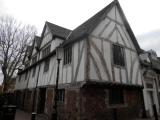
Planned is a 35-mile (approx. 56km) round-trip starting off at Leicester Town Hall Bike Park.  The tour will pass the car park, where Richard’s remains were discovered, then on to St James’ Church in Sutton Cheney, where Richard is said to have attended his last Mass, before dying in battle, and the battlefield itself.   Then riders will return to Leicester, where the ride finishes at the Guildhall, where the Richard III exhibition is being shown.

The Guildhall in Leicester (photograph by D Preis)

The ride is classified as ‘Challenging’, but suitable for anyone, though I expect you would have to be reasonably fit and experienced.  The trip is scheduled for 4 May, participation is free.  It starts at 9h00 and is expected to take 4 hours 20 mins (3 hours 20 mins cycling), so you can expect to be back in Leicester by about half past one in the afternoon.

More information:

Tom Mack, ‘Sky Ride event to trace Richard III’s last days‘, This is Leicestershire (25 April 2013).

The Richard III Ride‘ on the Sky Ride website.

Tags: , ,

20
Apr

THE LEICESTER CONFERENCE IS ON YOUTUBE!

   Posted by: Dorothea Preis   in Greyfriars Dig, News

Once again “Thank you” to my friend Renate, who found this!

The various talks from the Greyfriars Dig Conference, which took place in Leicester on 2 March this year, are now available on YouTube.  While you will not be able to experience quite the same atmosphere as the audience did, they are a great way to catch up with – or revisit – the information.

And a very big “Thank you” to the Richard III Society as well, for making this available to us!

You can find the YouTube clipes here.

Tags: , , ,

16
Apr

THE ROCKS WINDMILL

   Posted by: Dorothea Preis   in News

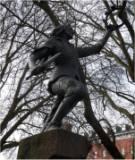
Have you been lately to the Rocks?  I was there last Saturday.  As I had some time to spare before the general meeting of the NSW Branch, I had a short look around the Rocks Market.  And came across this big wooden windmill, which as far as I could remember I had not seen before.

Today, all was revealed when we received an email from Amber from The Nest in Surry Hills, who are partnering with the Sydney Foreshore Authority to work on their project, The Rocks Windmill.  The windmill opened on 12 April and will run to 12 May and promises a month of workshops, performance, film, music and more.

As part of the project, Bell Shakespeare is offering workshops during the school holidays, but also – and of more interest to us – an evening event, Theatre in The Rocks: Then and Now.  This includes scenes from Henry IV and Nicholas Rowe’s The Tragedy of Jane Shore.

Incidentally, the latter is one of the first plays ever performed in Sydney.  The earliest surviving document from Sydney’s first printing press is advertising the performance of this play at the Sydney Theatre on 30 July 1797 (9 years after the arrival of the first fleet).*

The idea behind this performance is to promote “the relevance of Shakespeare’s work to new audiences, understanding that his work was never meant to be a static representations of the time in which they were written.”

And by the way, I do enjoy Shakespeare plays, even if I copped quite some disbelief on social media when I revealed that I watched his Richard III.  Shakespeare’s plays are great on stage, that’s what they have always been intended for not for the non-fiction history shelves of a library.

Sounds like an interesting idea and well worth a trip into the Rocks area of Sydney.

More details here.

* Elizabeth Webby, ‘The beginnings of literature in colonial Australia’, in:  The Cambridge History of Australian Literature, edited by Peter Pierce, Cambridge University Press, 2009, p.34

Tags: ,

15
Apr

RICHARD III AT THE GENESIAN THEATRE

   Posted by: Dorothea Preis   in News

Last Sunday, I had the pleasure to attend a performance of Shakespeare’s Richard III at the Genesian Theatre in Sydney.  A friend of mine, who has a subscription to this theatre, knew of a spare ticket and immediately thought of me and my interest in Richard III.

The Genisian Theatre is a non-professional group, named after the patron saint of actors, St Genesius, and is operating from a historic church.  The term ‘non-professional’ might be a bit misleading as the programme tells us that for example  Baz Luhrmann, Bryan Brown and John Bell are alumni of this theatre.

This production was directed by Gary Dooley, who had lately been working in Northampton in the UK.  Another example of  the serendipity we have seen in the whole project of finding Richard’s remains:  he was offered the position at the same time as Richard’s remains were found in Leicester.

At the general meeting of the NSW Branch the day before I saw this Richard III, our speakers had talked about ‘Richard III in movies’, which had been serendipitous as well, as it allowed me comparisons.  Like the McKellan film version, this production was set in a 1940s England.  You can find a short YouTube clip of Gary Dooley talking about his production here.

The title character was played by Roger Gimblett, who dominated the stage, both physically – he was easily the tallest and most strongly built actor in the cast – as well in his performance.  He had all the attributes of Shakespeare’s baddie:  a substantial hump, one arm immobile and in a sling, and limping around the stage.  Of course, we now know that the real Richard was completely different, as well as younger.  And somehow I could not keep recent events out of my thoughts:  when Richard says in the evening before the Battle of Bosworth “Up with my tent.  Here I will lie tonight, but where tomorrow?”  (Act 5.3), I wanted to shout “Under a carpark!”

Another mentionable performance was that of Dominic McDonald, whose Buckingham was wonderfully flamboyant, complete with a cigarette nearly constantly in his fingers (which interestingly never seemed to get any shorter).

Surprisingly, the princes were played by actors with the upper half of life-size dolls strapped to their bodies.  I have to admit that I found this difficult to explain.  Possibly it was to symbolise that they are not individual characters, but just objectified obstacles in Richard’s way to the throne.

It might have been my Ricardian bias, but after all the killing and general deviousness Richard had displayed throughout, I could not help but feel sorry for him during his sleepless night before the Battle of Bosworth with a bottle of red wine and ghosts haunting him.

On the other hand Richmond (Patrick Magee) appears as the superstar, giving his rousing speech on a radio.  However, his speeches seemed not to reflect his true feelings, while his finishing speech in spite of all its conciliatory words – rather like Richard’s earlier speech to the Mayor and Citizens (Act 3.7) – appeared like spin and even had a certain menacing aura about it, as if there was really very little difference between the two.  Or was this just a bit of wishful thinking on my part?

As this is a relatively small theatre, many actors played two or more roles.  It was probably historically quite appropriate to have Patrick Magee play both Richmond and the Bishop of Ely, John Morton.  Earlier in the play, he had also played Dorset and it was amazing how different he was in each role.  Dorset was a lanky youth, Ely a churchman of some standing and Richmond the superstar.

Several of our branch members had attended an earlier performance on 10 March, which was followed by a panel discussion featuring the director, Gary Dooley,  the actor playing Richard (Roger Gimblett) and our branch secretary Julia speaking on behalf of the historical Richard.

The Genesian Theatre is well aware of the difference between the stage and the historical character.  Gary states in the programme that the play “was never intended to be a history lesson.  If you want to find out about the historical character, read a history book” – or you could give the Richard III Society a try!  In the foyer there is also an information board with information on the historical Richard, with a picture of the facial reconstruction.

A big thank you to Elaine for inviting to this memorable experience!

Tags: ,

14
Apr

Review of 13 April 2013 Richard III Society Meeting

   Posted by: Leslie McCawley   in Meetings, News, NSW Branch News

The NSW Branch of the Richard III Society met on 13 April 2013 at the Harry Jensen Centre in The Rocks, Sydney. Our Branch Chairperson Judith welcomed all the regulars, members from overseas, and a number of visitors, whose interest had been aroused by the recent discovery of the remains of Richard III in the Leicester carpark.

The Committee has been busy since the last meeting with Judith and Dorothea speaking to the Military Historical Society at Victoria Barracks, and Judith and Julia to students at Chifley College who were studying Richard III for their HSC. Julia was a member of a panel discussing the Genesian Theatre’s approach to Richard III in their current production. In addition, of course, the Committee has been finalizing the extensive arrangements for the July conference, with some last minute changes.

Julia presented the Secretary’s report and reminded us that although it is past the official deadline that it is not too late to get our registrations in for the upcoming conference in Sydney on the weekend of 12-14 July 2013. It is going to be a great weekend of learning and social activities with Ricardians, and not to be missed.

Julia also explained that because of full programs for the rest of the year no Scrabble Speakers will be needed. That means that all of our eager public speakers will just have to wait their opportunity next year!

The Minutes from the February 2013 meeting were taken as read. There was no Treasurer’s report as the Treasurer was away. Dorothea presented the Webmaster report. This branch website continues to receive many visitors. Dorothea has also extended the Branch online presence to Facebook, so everyone who has access to the internet should visit and “like” it! It can be found at http://www.facebook.com/pages/NSW-Branch-of-the-Richard-III-Society/269971479692592

Lynne announced the arrival of the new pewter boar pins for those who had pre-ordered them. More may be obtained in the future if there is a demand from members.

An extra feature today was Dorothea reporting on her recent trip to the University of Leicester conference entitled “The Greyfriars dig: a new Richard III”. Dorothea had previously posted elements of her presentation on the branch website for online visitors to read.

The Guest Speakers were Yvette Debergue and Rachel Allerton from the University of Sydney Centre for Continuing Education and the WEA, where they teach medieval courses. Yvette recently completed her PhD at the University of Sydney on the area of Gender and Medieval Heresy. She has taught at the University of Sydney’s Centre for Medieval Studies as well as the Departments of History and Religion; her area of expertise being Heresy in the Middle Ages. For more information on upcoming her courses visit http://cce.sydney.edu.au/course/HAWI Their interesting presentation was on the different interpretations of Richard’s physical presence and character in several film versions of Shakespeare’s Richard III. They referred particularly to those featuring Lawrence Olivier, Ron Cook and Ian McKellen. Sadly the technology was not completely cooperative, so I have attached some of the YouTube clips from their presentation:

Olivier’s version of the soliloquy.

The BBC’s version with Ron Cook as Richard.

Horrible Histories Richard III Song.

The next meeting will be on Saturday, 8 June 2013, and the speaker will be Ben Cross on Medieval Thought and Philosophy.

Tags: , , ,

11
Apr

GUEST POST BY HELEN COX

   Posted by: Helen Cox   in News

Helen Cox, author of two excellent books on the Battle of Wakefield, here shares with us some thoughts about Richard III.  We are very grateful to Helen for making this article, which was first published on her website Herstory Writing & Interpretation, available to us.

In Life and Death: Richard III

Events in Leicester last summer have pulled King Richard III from the obscurity of a lost grave and transformed him into the most intimately known of all English monarchs. The forensic archaeological analysis of his skeleton has revealed a grain of truth in the Shakespearean caricature, but he was not ‘hump-backed’ (afflicted by kyphosis) – he was a ‘crook-back’, suffering from severe scoliosis (abnormal lateral curvature of the spine). The degree of normal bone development shows that this was not a congenital defect but began in adolescence, from an as-yet unknown cause (as with 80% of modern cases). So Richard should have enjoyed a normal, active boyhood, and presumably began the customary martial-arts training several years before the onset of his condition. Presumably, too, he continued to practice skill-at-arms despite the back-ache and strain on his heart and lungs imposed by the scoliosis, since at the age of 19 he is recorded as having fought at the Battles of Barnet and Tewkesbury. He then continued a hawkish career in Edward IV’s war-camp, opposing the 1475 Treaty of Picquigny, campaigning in the northern borders, and in 1482, recovering Berwick after mounting a full-scale invasion of Scotland – military achievements remarkable for one of such slender build and with the extreme curvature of his spine in adulthood:

© University of Leicester

However, it is worth noting that the condition appears far more dramatic in the skeleton than it does in the living body, as photographs of modern sufferers show; and based on contemporary images, Richard’s scoliosis seems to have manifested as one shoulder slightly higher than the other. He may also have had an uneven waist and a twist to the torso, barely noticeable when he was fully dressed. Interestingly, modern medical advice is for scoliosis sufferers to remain as active as possible – so in pursuing a military career, he was in fact doing the best thing for his condition. I wonder if he also wore a back-brace, as doctors today advise in some cases?

Aside from this, Richard had no physical abnormalities (contrary to the ‘withered arm’ story related by Sir Thomas More, and the famous ‘Broken Sword’ portrait painted after his death, showing him with deformed fingers). Without scoliosis, he would have stood approximately 5’ 8” (1.73m) tall, an average height compared with the Towton skeletons, but the spinal bend would have reduced his stature somewhat. (Nonetheless, he was still ‘three fingers taller’ than Nicolas von Poppelau, a German knight who met and described him in 1484).

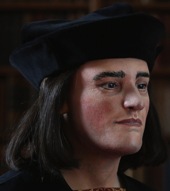
We also know that his teeth, apart from the loss of a few molars, were in good condition and not excessively worn, (consistent with eating well-refined flour); and that he enjoyed a high-status diet rich in animal protein, especially fish – indicating a devout adherence to religious fast-days, and/or a liking for seafood! And the facial reconstruction based on his skull shows that his portraits were accurate: Richard in life was a personable, square-jawed man with a determined nose and chin, dark brown wavy hair, and dark blue-grey eyes.

His skeleton also tells the full, gruesome story of his death and posthumous fate, again with close correspondence to the historical record. Having launched a cavalry charge in an effort to reach and kill Henry Tudor, Richard somehow became unhorsed, possibly because his mount stumbled in marshy ground. The jolt may have flung off his helmet, or it may have been knocked off by a blow that broke the chin-strap, because the concentration of wounds to his skull shows that he must have been un-helmed as he continued to fight on foot, hacking desperately through Tudor’s bodyguard. He received two relatively superficial cuts to his face, one on the right jaw and one on the right cheek, possibly inflicted by a dagger and consistent with close-quarters engagement; then a series of catastrophic head wounds suggesting that he was soon surrounded and overwhelmed (see illustration below).

The first of these probably came from a swordsman on his left, aiming to cleave his head apart with a downward sweeping action. Richard may have seen it coming and tried to side-step or turn away, but the sword caught him a glancing blow on the left-hand side back of the head, shaving away a disc of scalp and the outer layer of skull to expose the porous bone underneath. An injury of such stunning force may well have driven him to his knees, because another assailant was able to strike the top centre of his head, using a square-section weapon consistent with a rondel dagger or war-hammer beak; this penetrated his skull, driving two flaps of bone into the upper surface of the brain. In all likelihood this rendered Richard unconscious so that he slumped forward, exposing the back of his head. Two opponents then stepped in to deliver the coup de grâce; one of them may have been the swordsman who had inflicted the ‘shaving’ wound, and now thrust in his blade from the left with such force that it penetrated all the way through the brain and made a mark on the inner table of the skull. The second assailant, probably armed with a heavy weapon like a poll-axe or halberd, struck from the right, cleaving off a massive slice of bone and cutting into the cerebellum; either of these wounds would have been instantly fatal. A bloody end, indeed – although it could have been over mercifully quickly, with Richard aware of very little after the first major blow.

© University of Leicester: Micro-computed X-ray tomography image showing the fatal sword wound (B) and halberd slice (C) either side of the area (A) where the cervical spine meets the skull.

Richard’s corpse was then stripped, and at least two more injuries inflicted post-mortem: a dagger cut to a right rib and a sword cut to the pelvis, the latter consistent with a stab to the buttock while his body was slung face-down over the horse that carried him back to Leicester. Judging from the position of his hands in the grave they appear to have been bound, (perhaps in order to drag his corpse from the field), and were not later untied; but if his body suffered other wounds and indignities, (as it may well have done, pre- or post-mortem), they have left no trace on his bones.

The last Plantagenet king was then hastily buried by the monks of Grey Friars, without a coffin and in a grave not long enough to accommodate his corpse at full stretch; but since he had lain exposed for three days in late August, covered in blood and open wounds, their haste is perhaps understandable – it must have been a stomach-churning task.And thus Richard III lay undisturbed for 527 years, in a grave lost until August 2012; the rest, as they say, is history.

© Helen Cox
March 2013

Tags: ,

10
Apr

LOOKING FORWARD TO SUMERFORD’S AUTUMN

   Posted by: Julia Redlich   in Bookworm

I just received the advance notice of Simon & Schuster’s June releases.  Almost top of the list is:

Sumerford’s Autumn, by Barbara Gaskell.

Described as:  “Four sons, and four very different personalities, children of the Sumerford Castle and estates, and their father the earl watches their varied interests with misgiving.”

Barbara is a valued member of our branch and we are very happy that her enjoyable books will finally be available in print format, making them accessible to a much wider audience than her self-published ebooks.

You can find Dorothea’s review here.

(Please note, the above was the cover design of the ebook,  The cover of the print book has not been published yet.)

Tags: , , , ,

10
Apr

SKULL-DUG-GERY IN LEICESTERSHIRE

   Posted by: Dorothea Preis   in News

Should you be in Leicester this coming weekend, possibly for the entertainment on 14 April 2013, you might feel the need for some refreshment.  A brewery in Old Dalby, approx. 25 km northeast of Leicester, has introduced a new beer to commemorate the dig for Richard III’s skeleton, which might just hit the spot.

Belvoir Brewery creates a special beer every month and their creation for March/April is called ‘Skull-dug-gery’.  It is described as “a golden amber light, crisp and fruity beer” with a strength of 4%.  The beer had its premiere on 19 March, but was made for the Leicester Beer Festival.  20-23 March, it will be available until the end of April.  One of the co-owners of Belvoir Brewery said: “The beer is our light-hearted way of remembering King Richard III.”  Well, if you have enough of it, you will certainly get light-hearted.

It seems you will now have to go to the brewery to be able to drink it, they do have a restaurant though.  I would have thought it might be the perfect accompaniment to the Wild Boar & Chorizo Burger at O’Neills in Leicester (which I can only recommend) to stay with the Ricardian theme.

Cheers!

More info:  ‘New beer inspired by the discovery of king’s skeleton‘, Melton Times (10 April 2013)

Tags: , ,

5
Apr

MUSIC FOR A KING

   Posted by: Dorothea Preis   in News

Again something for those of us who can be in Leicester this month.  Should your feet be tired after having spent the day  battling for the crown, you an afternoon with medieval music might just be the perfect end to a Ricardian day. Historical entertainment company Blast From The Past are bringing a concert of medieval music in honour of Richard III under the heading ‘Music for a King’.

More information here (you have to scroll down a bit).

Tags: , ,

4
Apr

A BATTLE FOR THE CROWN IN LEICESTER

   Posted by: Dorothea Preis   in News

Should you find yourself in Leicester later this month and at a loss of what to do after having finished the Richard III Trail and all its sights, there is a full day of Richard III-themed events to look forward to.

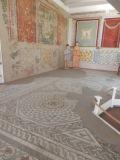
Jewry Wall in Leicester (photograph by D Preis)

When in Leicester, I can only recommend a visit to the Jewry Wall Museum, especially for the beautiful Roman mosaics.  However, on 14 April 2013 in addition to its usual interesting displays, it will also be the setting for a “day of events and activities based around the life and times of King Richard III” under the title ‘Battle for the Crown’.

There will be demonstrations of 15th century warfare and weaponry, dramatic readings from Shakespeare and an exhibition about the Greyfrairs Dig (I am not sure whether this is in addition to the one at the Guildhall).  At 14h00 Michael Morris will be talking about finding Richard’s remains.

According to local legend Richard III stayed the night before moving out to Bosworth at the White Boar Inn, which led the organizers to recreate what his final meal at the Inn might have been like.

We just hope for everyone concerned, organizers and visitors alike, that the weather will be also be in the mood for a party!

You can find more information here.

Tags: ,