3
Nov

The Children of the King

   Posted by: Julia Redlich   in Bookworm

Book Review:  The Children of the King

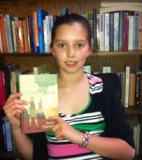
One of the rewards of speaking to groups about King Richard III and the Society is the appreciation received afterwards. When Dorothea and Julia spoke to U3A Harbourside North at Mosman recently, not only did we enlist two new members, but also received a welcome book token. Our choice was to buy The Children of the King, by Sonia Hartnett, an Australian author who has won multiple awards for her books including the prestigious Astrid Lingrin Memorial Award in 2008.  Because Hartnett’s books are specially for young people, we asked an 10-year-old to read it for us and share her thoughts.

The Children of the King, by Sonia Hartnett, Viking, rrp $24.95. ISBN 978 0 670 07613.

The Children of the KingThis story is about two girls and a boy during World War 2. Cecily and her brother Jeremy move with their mother to their Uncle Peregrine’s house in the north of England to escape the bombing in London. They also decide to look after another girl called May who is there on her own. Jeremy, who is older, is worried about his father who has to stay in London, and wants to be with him.

The girls find two strangely clothed boys hiding in old crumbling Snow Castle nearby. They learn they were brought there and can’t leave. Uncle Peregrine tells them about an old kingdom when Snow Castle was not a ruin. Over time he tells more of what happened then, of a Duke who became king and did his best, but was killed. May believes that the two boys in the castle who reappear at times were two who disappeared mysteriously long ago. Together the girls find out whether the past can live with the present.

My favourite part of the story is definitely when Uncle Peregrine tells the story of Snow Castle and its mysteries. No-one ever found out about it. The story is really engaging, the history is told slowly. It made me want to find out more about the times – and especially about the two boys, who they were and what happened to them. I give this book Three Stars out of Three!!!

Annaliese

Note: The Children of the King is a great gift idea for young people in your life. Annaliese’s Aunt Lucy and her grandmother couldn’t put it down, which accounts for the all ages queue waiting to read it!

Tags: , ,

The following Press Release was published by the Executive of the Richard III Society in the UK on 30 October 2012.

DISABILITY IS NOT A DEFORMITY

• Greyfriars dig raises questions over Richard III’s ‘hunchback’ appearance
• Richard III Society calls for reassessment of ‘lazy hunchback myth’
• What is the difference between scoliocis and kyphosis?

It is time to end the lazy acquiescence with the Tudor and Shakespearean myths about Richard III. If the body found at the Greyfriars dig is Richard III, it proves he was no hunchback and if he suffered from scoliosis that is no reason to denigrate him. In this Paralympic year, we celebrate the achievements of all who overcome disabilities, let’s do the same for Richard III…

On 12 September at a press conference in Leicester’s Guildhall, Richard Taylor of the University of Leicester outlined the evidence that points to the skeleton discovered on the site of the Greyfriars being that of King Richard III. He also confirmed that it had a curvature of the spine known as scoliosis.

Scoliosis is a fixed and abnormal sideways curvature of the thoracic and lumbar regions of the spine. It can result in one shoulder being slightly higher than the other, in the case of the Greyfriars skeleton, the right shoulder.

The press conference also made absolutely clear that the skeleton did not have kyphosis, which can result in a hunchback.
So if this is Richard III, he was not a hunchback, contrary to the myths about his physical appearance.

Nowadays severe scoliosis can be corrected by surgery, although those with the condition still face challenges in their lives.

The Scoliosis Society notes that some are inspired by older siblings to overcome such challenges; Richard may well have been similarly inspired by his charismatic elder brother Edward IV. As duke of Gloucester and king Richard led an active life as an effective administrative and military commander, if he had a disability he clearly overcame it.

However there is no contemporary evidence that Richard III suffered from any visible physical problems. The only surviving description of the king is provided by a Silesian visitor, Nicholas van Poppelau, who spent time at Richard’s court in 1484. He described the king as lean, with delicate arms and legs and that he was ‘three fingers taller’ than Poppelau himself.

The legend of Richard’s hunchback began in the early days of the new Tudor dynasty when it was expedient to denigrate the reputation of the dead king; to contemporaries, a deformed body was easily associated with an evil mind. This reached its climax with Sir Thomas More, who described Richard as being ‘little of stature, ill-featured of limbs, crook backed …’.

Tudor chroniclers repeated the legend and provided the basis for Shakespeare’s portrayal of a king who is ‘determined to prove a villain’. It was all character assassination and historical ‘spin’.

-ends-

About the Richard III Society

With a worldwide membership and local branches the Society is actively engaged in original research through its own initiatives and through collaboration with other institutions bodies and scholars. Through the Richard III and Yorkist History Trust, a charitable body established by the Society, we publish important academic works and make research grants. The Society publishes an annual journal, The Ricardian, with original articles on fifteenth century history and a quarterly members’ magazine the Ricardian Bulletin.

Members of the Richard III Society are available for media interview on any topic concerning the life and times of Richard III, the Leicester dig or any related matter.

Richard III Society Press Office
NEW CONTACT DETAILS
Press Officer
Peter Secchi

+44 7780 866225
peter@crunchcommunications.co.uk
www.richardiii.net

Or contact the NSW Branch on:  webmaster@richardiii-nsw.org.au

Tags: , ,

31
Oct

Who is the Mystery Woman?

   Posted by: Dorothea Preis   in Greyfriars Dig, News

ArchaeologyDuring the dig, which has hopefully recovered Richard III’s remains, the archaeologists also found female remains.  Obviously the find (potentially) of Richard overshadowed everything else, but at last there is also some information on the female remains.

Although these have not yet been investigated in as much detail, it has now been suggested that these could be those of Ellen Luenor.  It is thought that she and her husband Gilbert founded the friary in the 13th century.

Her incomplete skeleton was found in a different part of the friary than the male remains.  Archaeologists suggest that the skeleton may have been dug up by a gardener when the site was the garden of a mansion house in the 17th century and then reburied.   The manager of the dig site said: “They were buried at a higher level than the church floor and the bones were not intact, which suggests that someone dug them up by accident and reburied them in a different spot, just not as deep.”

A more thorough investigation of the female skeleton will be undertaken, once the analysis of the male remains has been completed.   They also announced that any identification of the former king’s body is at least two weeks away, with the results likely to be released in the new year, when Channel 4 will screen its documentary of the search.

Tags: , ,

30
Oct

Yes, Minister?

   Posted by: Dorothea Preis   in Greyfriars Dig, News

The last thing I read last night before going to bed was that it had been decided that, if the remains found during the dig in Leicester be confirmed to be those of Richard III, they should be reinterred in Leicester.  According to the BBC, justice minister Helen Grant said:  “Should they be found to be those of Richard III, the current plan is for them to be reinterred in Leicester Cathedral.”  So far so good.  That was the original plan, as also outlined in the June 2012 Ricardian Bulletin.

However, this morning I find that the answer does not seem to be as certain as the BBC thought.  In a move reminiscent of the old TV series Yes, Minister, the Ministry of Justice seems to be backtracking from its minister’s statement.  According to ITV, a ministry spokesman refused  to confirm the plan and instead said:  “We will await the results before any burial arrangements are made.”

It seems we are back to square one.

Tags: , ,

26
Oct

The Commons debate Richard III

   Posted by: Dorothea Preis   in Greyfriars Dig, News

Part of yesterday’s debate in the House of Commons dealt with a topic of great interest to all of us:  where Richard III should be reinterred, if the remains found in Leicester are confirmed to be his.

In the debate both a member for Leicester and one for York argued in favour of their cities.  As a compromise, a MP for Nottinghamshire suggested Worksop as a halfway point between the two.  It seems, however, that Worksop is not in the running.

The MPs for the other rival cities stated their respective claims in a debate which was at times quite humorous.  Jonathan Ashworth for Leicester South argued that the site where Richard had been for 500 years is “a stone’s throw from Leicester cathedral”.

The MP for York, Hugh Bayley, pointed out how well regarded Richard III was in York even 527 years after his death, to be interrupted by another MP asking whether Richard was still on the electoral roll.  Mr Bayley also reminded us that it was not appropriate “to argue on the Floor of this place over his mortal remains [which] is more like medieval cathedrals fighting over saints’ relics.”

MP Tony Baldry answered questions for the Church Commissioners, which seems to tend more to Leicester as “the tradition is that they would be buried and reinterred at the nearest Christian cathedral, which happens to be Leicester Cathedral.”  However, there was not yet a final decision and emphasized that “once those tests are concluded, the nature, place and marking of any reinterment will need seriously to be considered”.

For a more humorous take on the whole issue, watch the Richard III video on ‘David Mitchell’s Soapbox’ in the Guardian.

Our readers will remember that we reported on Philippa Langley being awarded the prestigious Robert Hamblin Award for her dedication and hard work in making the dig possible.  I received an email from Philippa this morning thanking the NSW branch for our message of congratulation.  This is what she said to all our branch members:  “The Robert Hamblin award was very much a shock (and then some!) but I was incredibly honoured to receive it. Please will you pass on my thanks to everyone in NSW, I was so touched to see your message.”

Information on the debate in the House of Commons can be found on the BBC or you can read the transcript of the discussion.

Tags: , , , ,

Everyone in the Ricardian community is waiting for the results of the tests on the human remains found during the dig in Leicester.  And nobody is probably waiting more impatiently than the person, whose research made the whole project possible:  Dr John Ashdown-Hill.

This research was published in his 2010 book The Last Days of Richard III.  This book not only investigates the last 100 days of this king’s life, but also argues that Richard III’s remains could still be found in the place, where they were buried in the Greyfriars church in 1485.  In addition to this he traced Richard’s mtDNA in an all female line descent from Anne of York, Richard’s eldest sister, to a Canadian family.

A member of this family, Michael Ibsen, lives in the UK and has given his DNA to be compared with DNA the scientists are hoping to find in the remains.  Mr Ibsen attended the dig at Leicester and given his possible relationship to the remains described the experience of looking at the grave as “fascinating and spine tingling”.

That human remains were found at the spot where Dr Ashdown-Hill describes they would be, has obviously given him” a great sense of personal triumph, because without [his] prior research, it might never have happened”.

We all share his hope that the tests will confirm what we all see as pretty strong circumstantial evidence that these remains are indeed Richard’s:  “male; right age group and social class; died a violent death; had a twisted spine; found in the right place.”   How many people, who fit all these criteria, would have been buried in a small friary church?

Dr Ashdown-Hill is also planning a new edition of his book including evidence from the dig and more details on the descent of the Ibsen family from Richard’s sister.

The full article from the University of Leicester can be found here.

Tags: , , , ,

Editor’s Comment: The following article is by Pauline Pogmore of the Yorkshire Branch of the Richard III Society.  We are most grateful to Pauline for making this interesting investigation available to us.

Tewkesbury Abbey (Photograph by Saffron Blaze, obtained through Wikimedia Commons)

Recent activities in Leicester have once again brought to our minds the question of how many members of the House of York have no known resting place. In April 2012 I had an article printed in Blanc Sanglier (magazine of the Yorkshire Branch of the Richard III Society) on the Clarence Bones, those of George, Duke of Clarence and his wife Isabel Neville. Most of the facts related in this article are based on those in an excellent book Tewkesbury Abbey. History Art and Architecture by Richard Morris and Ron Shoesmith first printed in 2003. The relevant pages dealing with the matter are Chapter 4, pages 31-40. This is a much simplified account of why these bones cannot be those of the Clarence’s.

There is no record of exactly how George was killed. He is said to have been drowned in a butt of Malmsey but in actual fact could just as easily have been beheaded, stabbed or poisoned.  Neither can we be certain as to Isabel’s cause of death. Isabel may have died of the aftereffects of childbirth or of consumption (tuberculosis), but poison is very unlikely except in George’s fertile imagination. As to the bones in the Clarence vault in Tewkesbury Abbeythere is no trace of violence on either set of bones.

Far from being undisturbed since George of Clarence’s interment the vault has been opened at the very least eight times and these are only the recorded occasions. To begin at the beginning the vault was first used in 1477 for the interment of Duchess Isabel. Whether or not it had been planned during Duke George’s lifetime it is the only underground vault in the Abbey and whether it was complete at this time is a matter of conjecture. What is known is that Isabel’s body lay in state in the choir of the Abbey for thirty five days before her interment. Was the vault hurriedly constructed during this period or had the couple already made arrangements for a final resting place. It is also unclear as to who finally paid for the vaults construction George or either of his brothers Edward and Richard or possibly all three met payments at various times. It was opened again the following year for the burial of George after his execution in February 1478.

The next recorded opening was in 1709 for the burial of Alderman Hawling one of Tewkesbury’s citizens. Just how a town Alderman managed to appropriate a royal vault for his burial place remains a mystery. The vault was opened again in 1729 for the burial of the Alderman’s wife Mary and again in 1753 for that of their son John.

The next recorded opening was in 1829 and was recorded in an article in the “Gentleman’s Magazine”, and records 2 skulls and other bones in the vault. The article also makes a valid point that between the burial of George of Clarence and Alderman Hawling there had been the Dissolution of the Monasteries. This point is well made. Henry VIII had every intention of stripping the Abbey of everything of value and then leaving it to fall into decay. This was averted when the townspeople bought the Abbey from the crown. However, before the purchase Henry’s henchmen would have stripped out anything of value and the article in the “Gentleman’s Magazine” states that at that time the vault had been ransacked. Could the coffins of George and Isabel, especially if they were decorated with gold or silver plates or handles, have been opened and the bodies removed. The vault was again opened in 1829 this time for the removal of the three Hawling’s who were buried in a new grave to the south of the vault. The bones assumed to be those of George and Isabel were at this time deposited in a stone coffin. In 1876 the vault was opened again. Although the vault was completely dry the stone coffin was full of water. This may have been a result of a great flood in 1852 which had reached the Abbey. There is no record of when the bones were actually deposited in a glass case but it was certainly prior to the 1830’s when a new glass case was made. At this time the vault also contained 6 coffin handles, part of a coffin plate, a nailand the bottom half of a medieval coffin lid. Of the stone coffin there was no trace.

The next opening of the vault in Tewkesbury was on 13th June 1982 in the presence of the vicar Michael Donmall. This time the bones were removed from their case for examination and cleaning.

The findings of this exercise are interesting to say the least. The bones were 2 separate partial skeletons in poor condition. The male skeleton consisted of most of the leg and hip bones, the upper left arm, left shoulder and the upper part of the skull. On examination it was discovered the man had what amounted to mild arthritic changes and a degree of cranial closure consistent with late middle age 40 to 60 years. His height was approximately 5feet 3inches. This therefore hardly matches George of Clarence. While not on the scale of his elder brother Edward’s height of 6feet 4inches George is thought to have been tall or at the very least average which for the time was 5feet 7inches. Evidence for this is that his brother Richard is always described as of much less height than Edward but the same remark is never made of George. If George had only stood 5feet 3inches it would surely have been remarked on. Added to this is the approximate age of the skeleton. George was born in 1449 and twenty nine when he died which doesn’t fit the age either.

The female skeleton is even more of a mystery. It consists of almost the entire legs minus feet, hips, upper and half of lower right arm and the upper skull. Examination found advanced localised osteo arthritis and a degree of suture obliteration of the skull which suggests an age between 50-70 years. The height was approximately 5ft 4ins. If there was doubt about the male being George it is impossible to believe this is Isabel. Born in 1451 Isabel died aged only twenty five on 22nd December 1476. As previously mentioned she lay in state in the Abbey for thirty five days before her burial in 1477. We have no idea of her appearance since the only known likeness is the stylised drawing in the Rous Roll but we do know that she would not have the skele3ton of a woman of 50-70 years of age. A further mystery is where was Isabel’s baby Richard whose birth could have been a cause of her death. He died in January 1477 and one would have expected him to be buried at the same time as his mother. The only conclusion on the evidence here is that these bones cannot possibly be those of George and Isabel. So who are they.

Conjecture

For the female there is at least a possible identification. Isabel’s mother Anne Beauchamp born in 1426 was, as the heiress of Isabella Despenser, Lord of Tewkesbury. Every Lord except one had been buried in the Abbey since its consecration.  Both Anne’s daughters and their husbands were dead by the date of her death, her nearest relations would have been her grandson Edward, Earl of Warwick a prisoner in the Tower of London aged 17 and his sister Margaret aged 19. They would very likely have had no say in Anne’s interment since neither was allowed to inherit from her. Almost every record says Anne was buried at Tewkesbury the others say Bisham Abbey where her husband Richard “Kingmaker” Neville was buried.Neither give a location for a tomb. It does not stretch the imagination too far that if the burial was at Tewkesbury It was in the vault of her daughter and son in law. Anne was 66 when she died which certainly fits the age of the female skeleton.

However, what of the male skeleton. Could this possibly be the Kingmaker. We know he was buried at Bisham in 1471 after his death at the battle of Barnet. During the Dissolution of the monasteries many remains disappeared. However a great many others were moved to other locations. The Mowbray and Howard dead were taken from Thetford Priory to Framlingham. The Earl andCountess of Essex were transferred from Beeleigh Abbey to Little Easton Church. By this time 1536 Anne’s aforementioned granddaughter Margaret was no longer an insignificant girl but Margaret Pole, Countess of Salisbury in her own right and a very pious lady. It does not stretch the imagination too far that she would have had her grandparents moved and reburied. However at this point were George and Isabel still in situ.

The question that remains is what happened to George and Isabel. It appears that they havejoined a long line of members of the house of York with no known resting place. The list is a long one.

Tags: , ,

Editor’s Comment: We are in the fortunate position of having two reports of last Saturday’s Annual General Meeting.  Thank you very much to everyone, who supplied material.  We are lucky to have these stalwart supporters of our website!

The Annual General Meeting of the New South Wales Branch of the Richard III Society was held on Saturday, 13 June 2012, at the Harry Jensen Centre in the charming, historical Millers Point area of Sydney, our new venue.  Being directly at a bus stop makes it very convenient, and being on the ground level means it is easily accessible for everyone, too.  The good turn-out of members attests to its being a good choice by the committee.

Opening remarks were made by Chairperson Judith Hughes, with a review of recent branch activities including the St Mary’s Anglican church service to remember the Battle of Bosworth and the death of Richard, the evening with the Heraldry Society with their talk on depictions of medieval garb, and pizza shared for Richard’s 2 October birthday.

Apologies were related by Lynne Foley, and included Julia Redlich who sadly was ill, and Dorothea Preis, our webmaster who was on a well-deserved holiday.  We were also informed that Julia intends to move from Sydney in the next year and will be unable to continue working for the branch in all the capacities she currently does.  That was very unhappy news, indeed, as she has been the heart, as well as the public face, of the branch for so many years.

Judy Howard delivered her report as Treasurer, handing out supporting materials.  All appeared to be in order.  She also read out the Webmaster’s report.  Lynne reported on the Sales role she handles so well.

Kevin read out Julia’s report which included a look-back at the highlights of the branch activities over the past year.  For a small group this branch achieves a great deal of excellent publicity for Richard III, with talks to various community groups, and interviews with the media when Ricardian topics are in the headlines, as they have been recently with the Leicester carpark dig excitement.  Elections were then held for all of the offices of the branch, and everyone currently in an office was re-elected, with the addition of Rosemary as Social Secretary.  Margie adeptly facilitated the election business.

Our Guest Speaker for the meeting was our own Kevin Herbert, who delivered an in-depth look at the centuries of the family intrigues, marriages, and circuitous trails of the titles of Earl and Duke of Norfolk, and the Earls of Arundel.  His research has been ongoing for many decades, and his grasp of the intricacies of the interactions of the succeeding generations is staggering. We were a lucky audience to hear his grand synopsis.

Our next gathering will be at our Christmas meeting scheduled for 8 December 2012.  This is always a festive, light-hearted meeting and a highlight of the year, so would provide an excellent opportunity for a first visit to the Branch, if you have been contemplating it. We look forward to welcoming you!

Tags: ,

17
Oct

New South Wales Branch Annual General Meeting

   Posted by: Julia Redlich   in Meetings, News, NSW Branch News

There was a good attendance at the AGM held on Saturday, 13 October at the Harry Jensen Centre, including Suzi who had just returned from Greece and Christena with her brand new knee.  Sadly there was a list of apologies that almost matched the attendance in length!  Two people were in culture mode and had tickets for a matinee at the Opera House and another was booked for Opera in the Vineyards in the Hunter Valley that evening.  Unfortunately our Secretary Julia was ill and unable to attend.

Chairperson Judith welcomed everyone, apologies were noted and past minutes approved and signed.  Judith summed up the past year in her report, and Treasurer Judy then presented her annual report.  Kevin read Julia’s report, thanking her fellow committee members for their work during the year, all members and friends for their support and enthusiastic attendance at the conference in Mittagong – and requesting the help of more volunteers.  Judy read Dorothea’s analysis of a very successful year with our website, thanking those who had contributed items (the usual suspects, plus welcome contributions from Sally Henshaw of the Midlands East Branch,  Annette Carson and Barbara Gaskell Denvil).

The current committee stood down and Electoral Officer Margaret Shaw declared all positions vacant, and the election proceeded.  There was discussion on finding more people to help with the many duties of the Secretary.  Rosemary offered to be Social Secretary as well as Tea Convenor and the incoming committee would discuss other positions and personnel at their next meeting.

All those nominated and seconded were elected without dissent, and Margaret was thanked for her work and presented with a small gift.
Kevin Herbert was our speaker for the afternoon and provided us all with a great collection of notes to follow his well-researched talk on the Dukes of Norfolk who have played a considerable role in English history.

This was well received and after questions and answers, a member of the South Australia Branch who was an unexpected visitor, spoke to us about the AGM in the UK.  She also wanted to let us know about the dig in Leicester in case we didn’t know about it.  She must have been quite surprised to learn that we were already well informed, thanks to the general publicity in local and international media, Dorothea’s research and the numerous messages from our UK contacts and friends.  In turn, we were quite surprised to learn that a member of another Australasian Branch with internet access hadn’t yet managed to find our increasingly popular website.

The meeting as usual ended with the raffle draw and afternoon tea and a reminder to look forward to our special December meeting when Judy was scheduled to tell us about the Triennial Conference in the UK, Isolde and Julia would entertain with something probably fairly disrespectfully Ricardian. As usual there would be a lighthearted test of our Medieval Historical knowedge  (prizes!) before our Christmas tea.

As I was unable to attend, my special thanks go to Judith and Kevin, who provided the information for the above.

Tags: , ,

17
Oct

This time luck was on Richard III’s side

   Posted by: Dorothea Preis   in Greyfriars Dig, News

ArchaeologyIt seems to be purely by luck that the archaeologists carrying out the dig at Leicester were able to find human remains, which are likely to be those of Richard III,  at all, as they could easily have been destroyed in Victorian times.  It has recently emerged that the head of the remains was found just inches below Victorian foundations.

Site director Mathew Morris said:  “If the Victorians had dug down 30 cm more they would have built on top of the remains and destroyed them.”

The Mayor of Leicester City, Sir Peter Soulsby added:  “They obviously did not discover anything and probably would not have been aware of the importance of the site… If their plans had been just a little different, they could have destroyed a most significant historic find.”

Further information:

Victorian builders came within inches of destroying Richard III bones’, Science Blog.

Body found in Richard III search was almost destroyed’, Science on NBC News.com (16 October 2012).

Tags: , , ,