Today the website of the NSW Branch of the Richard III Society is celebrating its second birthday. We asked our members to share their thoughts about Richard III, the Society or the branch or all of them. Following are some of their replies. Celebrate with us and read their experiences.

From Narelle Bartley (QLD):
In the early eighties I read an historical novel which gave Richard a pretty good image but it was a very small statement at the bottom of a page that really intrigued me. The statement simply advised the reader that “this document is extant”. That statement led me to investigate the truth about Richard by reading books written by professional historians. What I actually discovered was the truth about historians and historical chroniclers i.e. that like lawyers in criminal trials only the facts that support their particular view are used to make their argument. Also, many of them, both for and against Richard, employ extraordinary feats of extrapolation about his motives with phrases such as “he must have” or “this meant”. There is, in reality, so little actual evidence about Richard’s motives and thought processes that extrapolation at a personal level is futile. And that’s why I thank goodness for the Richard III Society whose aims include the promotion of research into the life and times of Richard III. The truth may emerge yet!
From Julia Redlich (Secretary, NSW Branch):
I’m one of the NSW Branch members who talk to various groups on a variety of Ricardian and medieval subjects. Admittedly a fair percentage of each audience is there mainly to have a chat with friends, enjoy a cup of tea and maybe find the guest speaker interesting.
How rewarding it is when people come up afterwards – and want to know more. And they are not just being polite! This echoes the excitement I felt, aged 10, after watching a stage production of Stevenson’s The Black Arrow and realising that the Richard, Duke of Gloucester, was portrayed as someone quite different to the monster in my history book. I became determined to learn more about “the real Richard”.
Now, when I answer questions about his life and times, explain the connections of obscure characters on the family tree during a tea break or talk about the achievements of his short reign, I recognise the same spark of interest I felt so many years ago. I hope they continue on the same path I did, that brings fresh ideas and logical explanations – and the pleasure of meeting friends on the same voyage of discovery, and enjoy the loyalty that binds us all.
Happy birthday to our website that brings us so many friends from around the world!
From Isolde Martyn (Former Chairperson of the NSW Branch of the Richard III Society and author of two published novels set in the Wars of the Roses):
In this age of ultra-communication when information, public and private, significant or trivial, is spinning across the globe like invisible cobwebs, often there is no time to stop and say, ‘Wait a minute…’, ‘How?’ or ‘Can this be really true?’
The existence of the Richard III Society is a continual reminder that historical events can be — and should be — seen from many angles. The right to be open-minded, to evaluate the facts in discussion, is a precious liberty that is lacking in many countries of this world. Five hundred years on, it doesn’t really matter whether a fifteenth century king murdered his nephews when he seized the crown, but isn’t it wonderful for those of us who are members of the Richard III Society to have a present day society (both with a small ‘s’ and a big ‘S’) to discuss it?
From Leslie McCawley (NSW):
Discovering Richard III
My husband, Doug, follows the lovely Victorian custom of reading aloud to me every evening for an hour or two, as we wind down from our busy days apart. In our 14 years of marriage we have, in this way, shared hundreds of wonderful books, and we share the memories of them as other couples recall their shared journeys – for, of course, that is what they are.
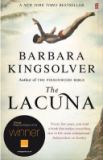
One such book was an old favourite of his, The Daughter of Time by Josephine Tey, that he was pleased to introduce me to one winter several years ago. We would lose ourselves every evening into the quest for the historical truth about King Richard and the tragic fate that befell his nephews. Who was truly to blame? After we finished that excellent volume, we decided to seek out more books about Richard III who we now agreed had been unfairly maligned by the conquering Tudors. We were hungry for more.
Doug’s next selection was The Sunne in Splendour by Sharon Kay Penman, and we enjoyed immensely being immersed in the cultural milieu of the War of the Roses. It also had the effect of making us yearn for yet more information about this historical underdog. It was during a search for biographical information on the internet that I came across the website of the NSW Branch of the Richard III Society.
I was both astonished and thrilled that other people actually had the same interest in, and the same sense of indignation about the maligning of a good man, even though it had happened many centuries ago. Seeing the posted titles of the upcoming Branch programs, we couldn’t wait to go along and learn all we could. Until then though, I could enjoy the website’s riches: wonderful book reviews, articles of interest, information about meaningful anniversaries such as birthdays or battles. I learned a lot in the interim waiting for the first meeting we could attend.
What a nice group of people we encountered at the meeting room at the Sydney Mechanics’ School of Arts! True history buffs with a profound love of books, ideas, and learning. It was like coming home to find so many fascinating people who shared our, we had thought, rather arcane interests! We joined the Branch on the spot and have not missed a meeting since. That was several years ago.
Membership in the Richard III Society has greatly enriched our lives, offering us intellectual stimulation through excellent programs and the fun companionship of a wide range of personalities. And our reading list is now so full of books recommended by fellow members that we shall never get through them all in this lifetime! But what a joy it is to open another volume about Richard III and hear once again the tales of 15th century England.
From Judy Howard (Treasurer, NSW Branch):
Being a member of the Richard III Society, I have access to like-minded people and a wealth of knowledge regarding King Richard III, the House of York and this fascinating period of mediaeval history. The website is great and I often marvel at how convenient and easy it is to keep up to date and in touch with people with the internet and websites such as ours. The quarterly Ricardian Bulletin and the annual Journal are also a wonderful source of information which provides up to date knowledge of the latest thinking and discoveries regarding all things Ricardian.
From Denise Chambers (QLD):
I became of member of the Richard III Society after reading Sharon Penman’s famous novel The Sunne in Splendour. Up until that time I had not the slightest interest in medieval history and had only vaguely heard of Richard III. I now read any book or article on medieval history I can find (or afford!). The excellent journals published by our local branch and our “head office” in England keep me informed on so many topics regarding people and events from this fascinating period in time. Now, being retired, I’m so happy to have lots of time to spend doing something I love.
From Margaret Shaw (NSW):
In July 1990 while on a tour of the UK I visited Bosworth Field. When I saw the well from which it is claimed Richard had drunk just before his death I decided I would like to know more about the life and times of Richard III.
I visited the shop on the site and bought some souvenirs, then I saw a notice that in England there was a Richard III Society. I thought at the time I am sure Richard III has been unfairly treated through history thanks to the Tudors and Shakespeare. I certainly did not know that there was a Society in Australia.
Some years later my friend Christena Dawson found out through a friend that we had a branch of the Society in Sydney, we joined and have been members ever since.
Over the years I have enjoyed the many meetings I have attended, conferences and other functions. I have learnt a lot about Richard and other historical events and made some wonderful friends.
Being a member of the Richard III Society is one of the best things in my life.
Tags: NSW Branch