29
Jan

THE STIRLING WARRIOR

   Posted by: Dorothea Preis   in News

ArchaeologyObviously we are all waiting impatiently for the revelations of the press conference on 4 February 2013, which should tell us whether the human remains found in Leicester are indeed those of King Richard III.

During this time, last Sunday’s (27 Jan 2013) History Cold Case on SBS was of special interest.  It dealt with the skeleton of a man found in Stirling Castle in the 1990s.  It is thought that the remains are from a man who died in the 14th or 15th century and was buried in a former chapel of the castle.  The aim of the project was to find out, who the man might have been, how he died and why he was buried in the castle.

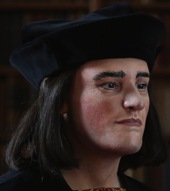
The tests carried out on the ‘Stirling Warrior’ are in many aspects similar to those carried out on the remains found in Leicester, including a reconstruction of the face and body of the knight.  When seeing his face, you can imagine coming across a man looking like this with the physique of possibly a rugby player.  The facial anthropologists, who made the facial reconstruction of the man in Scotland, Caroline Wilkinson of the University of Dundee, also made the reconstruction of the man found in Leicester.

They also carried out isotope tests, which revealed where the man had grown up.  And with the help of original records kept at the National Archives it was even possible to tentatively name him.  Of special interest was a barbed arrowhead found with the ‘Stirling Warrior’, as a similar arrowhead was found in Leicester as well.

Though the actual science aspect was possibly somewhat skimmed over in the interest of telling a story and lots of aerial shots of a car driving over a bridge, it is still an interesting insight into what can be done and what we can expect the press conference on 4 February to reveal.

Should you have missed the programme, you can still catch it on SBS On Demand, which is what I did on yesterday’s rained out afternoon.   You might also be interested in reading an article on the programme from BBC News.

Tags: , ,

28
Jan

SECOND LINE OF DESCENT FOUND

   Posted by: Dorothea Preis   in Greyfriars Dig, News

ArchaeologyWe have heard a lot about Michael Ibsen, who as John Ashdown-Hill established is a descendant of Richard’s sister Anne in a direct all-female line.  His DNA was to be compared to the DNA the scientists were hoping to extract from the remains found in Leicester in September 2012.

However, DNA does mutate over time and generations, so the scientists were not sure whether a DNA comparison between Michael Ibsen and the remains would be conclusive.  That is why genealogists from the University of Leicester have been searching for an alternative line of descent.  It has now been revealed that they were indeed successful in tracing another descendant.

However, whether this second line of descent confirms that the remains are those of Richard III or not, will only be revealed at the eagerly anticipated press conference on 4 February 2013.

More information:

Natasha Sheldon, ‘The Secrets of the Bones: DNA Analysis and the Search for Richard III’, Decoded Science (27 Jan 2013).  URL:  http://www.decodedscience.com/dna-analysis-and-the-search-for-richard-iii/24792 Date accessed:  28 Jan 2013

Tags: , ,

25
Jan

Ricardian Bulletin Update

   Posted by: Dorothea Preis   in News, NSW Branch News

Just a short note to our members: The March Bulletin will be delayed by about one month to allow full coverage of the findings, which are due to be announced in Leicester on 4 Feb.

However, there will be a Bulletin Extra as soon as possible after 4 Feb to bring us all the very latest, as well as a registration form for the conference on 2 March. This Bulletin Extra will be emailed to members, who have supplied us with an email address, and posted by snail mail to the others.

Tags: , ,

24
Jan

BREAKING NEWS: Monday, 4 February 2013, is THE day!

   Posted by: Dorothea Preis   in Greyfriars Dig, News

ArchaeologyThis morning, when I first switched my computer on, there were two emails waiting for me from my friend Renate, which really made my day:

It has just been announced that the much anticipated press conference to reveal the results of the scientific and archaeological investigations carried out on the male human remains found during the dig in Leicester, has been scheduled for Monday, 4 February 2013, at 10h00 UK time – this means 21h00 Australian EST.

Channel 4 will broadcast the documentary on ‘Richard III:  The King in the Car Park’ at 21h00 UK time on the same day, which means 8h00 on 5 February 2013 Australian EST.

More information:

‘Date set for Search for Richard III press conference’, University of Leicester (23 Jan 2013).
‘Richard III:  The King in the Car Park’, Channel 4 Press Info (23 Jan 2013).

Tags: , , ,

14
Jan

MISTRESS TO THE CROWN

   Posted by: Dorothea Preis   in Bookworm, News, NSW Branch News

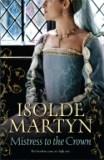
Thursday, 31 January 2013, sees the official launch of Isolde Martyn’s much anticipated new novel Mistress to the Crown, about Edward IV’s mistress “Jane Shore”.

‘What joy to find a novel that blends sound research with a love story that, on its own would attract a wealth of romance readers. Isolde Martyn links her skill as an award-winning novelist with her depth of historical knowledge to reveal the life and loves of Elizabeth Lambard (Mistress Shore), and presents her as one of the strongest, most accomplished, lovely and lovable women of the 15th century. It’s fact and fiction at its best, a must-have for your bookshelves.’

Julia Redlich, Former Fiction Editor of Woman’s Day; Secretary of the New South Wales Branch of the Richard III Society

We all remember Isolde’s previous novels The Lady and the Unicorn (1996) and The Silver Bride (2002), both of which also play during the Wars of the Roses.  Isolde is a member and former chairperson of our branch.  Incidentally it was The Silver Bride, which brought me to the NSW branch of the Richard III Society.

If you can make it to Sydney, all members of the Richard III Society are very welcome to attend the launch, but please let Isolde know if you are attending.

Booklaunch for Mistress to the Crown

When: Thursday, 31 January 2013; 18h00 for 18h30 start
Where: Shearer’s Bookshop (beneath Palace Cinema), Norton Street, Leichhardt
RSVP: isolde@isoldemartyn.com (by 21 January 2013)

Looking forward to seeing you there!  And of course making the acquaintance of the Mistress to the Crown.

Tags: , ,

10
Jan

RICHARD III ON THE ONE SHOW

   Posted by: Dorothea Preis   in Greyfriars Dig, News, Richard III in the Media

As announced yesterday, last night, or rather early this morning Australian time, The One Show on BBC 1 had a short item on the Greyfriars Dig.  Of course, as soon as possible I sneaked into the BBC iPlayer and watched the programme.  The format of The One Show is light early evening infotainment.  There was an item on car clampers in public car parks and another about an upcoming second series of a TV programme, but after about 20 minutes they came to the car park story I was interested in.

The item on Richard was presented by Dan Snow, who is referred to on the show’s website as “Our history man”.  Initially he had a short rather fat and bend-over man standing next to him, who was supposed to be Richard, so I started fearing the worst.  However, my fears were premature.  The programme itself was objectively presented, scoliosis was explained as a lateral curvature of the spine.  Dan first interviewed Richard Buckley, who explained where they found the remains.  He then had a chat with Michaeil Ibsen, Richard’s great great great …. nephew, at the Bosworth Battlefield Centre.  There were also some re-enactors fighting with each other, the one side proudly displaying their white boars, Richard’s emblem.

After the item the hosts of the show asked Dan of his opinion whether the remains were those of Richard.  Dan said that through his talks with the experts he had been convinced that it is indeed Richard.  He also mentioned that the Minister of Justice is supposed to announce next week, where Richard (if it is him) would be reburied.

Dan also said that Richard had had very bad PR and though “he may have had his nephews killed”, this was fairly insignificant compared to what other kings before and after him were up to.  He also stressed that Shakespeare painted Richard as dark as possible as he lived in Tudor times.

The whole segment finished with a short clip from Richard III with Laurence Olivier.

Though the programme did not offer any new insight to anyone who has been following the developments, it would have been a concise informative item for those who were not approaching it with any special interest.  However, The One Show is not aimed at medieval history buffs, so for its target audience it was not a bad programme.

Tags: , , ,

10
Jan

PATIENCE, PLEASE!

   Posted by: Dorothea Preis   in Greyfriars Dig, News

ArchaeologyThe University of Leicester has announced that the results of the test being carried out on the human remains found during the Greyfriars Dig will be published in the first week of February.

The tests are being concluded at present and will then be analysed.  A press conference by the University of Leicester has provisionally been scheduled for the first week of February to announce the conclusions of its investigations.

Though this is a bit later than we had maybe originally hoped, at least we now have an a bit more definite date.  The important thing is that the tests are done thoroughly and their results hold up to scrutiny in years to come.  Not that we end up with a situation like with the examination of the bones in Westminster Cathedral, claimed to be those of the Princes, where the results do not hold up to today’s scrutiny.

Tags: , , ,

Undoubtedly, once the test results of the human remains found during the Greyfriars Dig in Leicester have been announced, a renewed discussion of Richard III’s reign will break out.

In preparation for this, the Richard III Society has issued a Press Release on Richard’s ‘Achievements as King of England’.  It offers an interesting insight into how many of the legal issues we take for granted today go back to Richard’s short reign.  An example for this is shown in an article on ‘Richard III’s Effect on US Laws’.

If only all of our politicians were as genuinely interest in the law and a committed to the fair administration of justice for all!

You can find the Press Release here.

And the article on his effect on US Laws here (and thank you, Renate, for reminding me of this article!).

Tags: ,

9
Jan

RICHARD III COMES TO THE BBC

   Posted by: Dorothea Preis   in Greyfriars Dig, News, Richard III in the Media

Our friends in the UK informed us that ‘The One Show‘ on BBC1 is scheduled to include an item about the Leicester Greyfrairs Dig at some stage during this week.  Unfortunately we do not know exactly when it will be screened, it might be in tonight’s show.

Unfortunately if you are not a resident of the UK, you cannot view BBC programmes on their iPlayer, unless you have a software that disguises your whereabouts (which is free to download off the internet).  It would be good, if we managed to catch it – or if our ABC finds it of sufficient interest to show it here.

Tags: , , ,

5
Jan

TESTS, TESTS, TESTS

   Posted by: Dorothea Preis   in News

While preparing a Ricardian Calendar entry about the death of Queen Eadgyth (on 26 January 946), I read again about all the tests which have been carried out on the remains of a woman found in 2008. Thinking of the tests being carried out on the skeleton found in Leicester, kindled my renewed interest in Eadgyth’s remains.

Eadgyth was the first wife of Otto I, king of the East Franks and later Holy Roman Emperor.  She was a daughter of Edward the Elder (870s?–924), king of the Anglo-Saxons.  She was born in Wessex, probably around 910, and married Otto in either 829 or 930.  After her death in 946, she was buried at Magdeburg Cathedral.

Her name is spelled in a number of different ways, one of them being Edith, and as I had an Aunt Edith (well, she was really my dad’s cousin), I will call her Edith in this post.

In late 2008 a lead sarcophagus was found in Magdeburg Cathedral with the inscription ‘Edit regine cineres hic sarcophagvs habet…’  (the salvaged remains of Queen Edith are in this sarcophagus…).  However, this sarcophagus and its inscription only date from 1510, 500 years after Edith’s death, and therefore some skepticism about the truth of this statement was indicated.   The tests have proven that they are most likely indeed those of the Anglo Saxon princess – and that without DNA analysis.

It has been established that the bones in the coffin all belong to the same person.  Unfortunately it is incomplete, the feet, parts of the hands and most of the skull, except for the upper jaw bone, are missing.

  • Morphological and metric analysis of the skeleton showed that it was a woman, who was at the time of her death between 30 and 40 years old (Edith was approx. 36) and who was 1.57m tall.
  • Stress markers reveal that she probably had a serious infectious disease when she was between 10 and 14 years of age (they might also be a result of malnutrition, but this is less likely in a princess).
  • The head of the femur shows that it belonged to a person who spent a lot of time on horseback, which is to be expected in the bones of a medieval noblewoman.
  • Strontium and oxygen isotope analysis show that the woman grew up in Wessex in the area of Winchester.  Up to the age of nine, she constantly moved around in Southern England, but then she remained stationary.  In 919, when Edith was around 9 years old, her mother was divorced and together with her daughter banished to a nunnery.
  • The analysis also revealed that this woman had eaten a high proportion of protein, especially fish, which would be expected of someone following Christian food rules.  The teeth show only little abrasion, which indicates a high proportion of soft food in her diet.
  • The sarcophagus was discovered in the foundations underneath the cenotaph attributed to Edith in the ambulatory of Magdeburg Cathedral.  Several components of an earlier burial were integrated.  The earliest is a simple sandstone sarcophagus, probably from the 10th century, which could very well be Edith’s original coffin.  This sarcophagus has been opened and closed several times, it is known that Edith’s remains were reburied several times.
  • Several fabric remnants were found with the bones, which could be dated by C14 analysis to between the 10th and 16th century, which coincides with the repeated reburials.  Some of the fabric has been dyed red with kermes, a highly valuable dye in the Middle Ages, and some of it is silk, indicating a royal funeral.
  • The lead of the sarcophagus comes from the Harz Mountains near Goslar.
  • The coffin also contained numerous insect remains, as well as oats.  The last are supposed to have been in the stuffing of a pillow, on which the dead had been laid.  There were also fragments of an evergreen juniper plant, which was grown as an ornamental and medicinal plant in medieval gardens.  All this indicates that the dead was treated with all honour when she was reburied in 1510.

All these tests confirm that this is as good as certain that these are indeed Edith’s remains.

Similar tests are being carried out on the remains, which could very well be Richard’s.  As we have seen,even without DNA analysis it is possible to match the results of scientific tests and the known biography of an individual.  Reading what can be found out, certainly heightened my anticipation for the test results of the Leicester remains.

If you can read German, here is a press release about Edith’s test results:  http://www.lda-lsa.de/de/aktuelles/meldung/datum/2010/06/15/identitaet_koenigin_edithas_bestaetigt

You can find out more about Edith in an earlier post about her.

Tags: , , ,