We are pleased to present the following essay by Audrey Lising, which formed part of her HSC Extension History project.
(The essay represents the opinions and research of the author.)
RICHARD III, AS DEFINED BY HISTORY
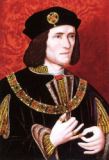
“Richard III has been seen by posterity almost exclusively through the eyes of his enemies and as a consequence has been grievously wronged in history, literature and legend.” To what extent is this statement true?
Richard III, the last Plantagenet King of England has been stigmatised throughout history and popular culture as one of the most infamous and enigmatic of monarchs. He has been seen throughout posterity as the villainous, hunched-back, conniving tyrant who usurped the throne in 1483 subsequently giving orders to murder his two younger nephews: Edward V and Richard Duke of York [1]. This notoriety has been constructed by Tudor propagandists such as Polydore Vergil, Sir Thomas More and Dominic Mancini, who in their work have consciously or unconsciously tarnished the reputation of Richard III, perhaps in favour of the new Tudor King Henry VII. Richard III’s bedevilled character was further magnified in William Shakespeare’s celebrated tragedy ‘Richard III’. Contrary to this portrayal, contemporary historians like Jeremy Potter and Michael Hicks argue that Richard III’s negative portrayal has been as a result of Tudor propaganda also perpetuated in Shakespeare’s enduring play. The Richard III Society supports this argument and aims to revise the way in which Richard III has been “grievously wronged in history”[2]. While these contemporary efforts are beginning to alter the 21st century view of Richard III, it is the infamous Richard who has lived in the public’s consciousness for nearly four hundred years.
This villainous depiction of Richard III has become the legendary myth, which has been reiterated and retold throughout time. Richard III has been known in legend as an evil monarch since his death at the Battle of Bosworth, on the 22nd August 1485. Henry VII, the first Tudor king of England effectively ended the Wars of the Roses [3] in his usurpation of the throne from Richard III and in his marriage to Elizabeth of York in December 1483. In order to legitimise and defend his ascension to the throne, the new Tudor King needed to ruin the reputation of his predecessor. This would not only disregard and silence anti-Tudorists, but would also celebrate his own reign and rule, depicting him as the hero, and Richard III as the enemy. Many Tudor propagandists during this time perpetuated the same message.
Sir Thomas More wrote ‘History of King Richard III’ from 1512 – 1519 during the Renaissance period and this was published posthumously in 1535. In his work More painted Richard III as a tyrannical ruler who plotted the usurpation of the throne as well as the murder of his nephews. More portrayed Richard III as an almost inhuman, deformed figure who was born “untoothed” and had to be “uncut” from his mother’s womb, as this excerpt shows:
“(Richard III) was of little stature, ill-featured of limbs, crook-backed, his left shoulder much higher than his right … He was malicious, wrathful, envious, and, from before his birth, ever forward… he came into the world feet forward… and also not untoothed.” [4]
More was born in 1478 and was just a small child when the Battle of Bosworth was fought; he therefore could not have had first-hand acquaintance with the affairs of state during Richard III’s life and reign, thus deeming his work to be plausibly unreliable. An educated lawyer, philosopher, author and humanist, More wrote his work according to the dramatic and literary style of the Renaissance. His work included imagined and dramatized dialogue as well as a number of historical inaccuracies and absurdities. He also wrote during the Tudor era while serving as Chancellor of England from 1529 – 1532, under the reign of Henry VIII. Try as he might, More would not have been devoid of the Tudor influence that insisted on the damnation of Richard III’s reputation, thus his work may be referred to as a Tudor form of propaganda. It is Sir Thomas More’s portrayal of Richard III that greatly influenced Shakespeare’s own portrayal of Richard III in his play.
Polydore Vergil was an Italian humanist, scholar, diplomat, priest and historian whose work the ‘Anglica Historia’ contains the account of Richard III’s life and usurpation of the throne. Vergil, unlike More, was a trained historian and drew on a wide range of sources, including published books and oral history. Despite the range of his sources, he was guilty of selectivity and often omitted information that put Richard III in favourable light [5]. However, similar to More, Vergil wrote in the Renaissance style, using artistic and poetic licence as well as embellishing events for entertainment purposes. In the same manner as More, Vergil created speeches and dialogue for his characters. Influenced by the highly regarded religious tradition of the Tudor times, and his occupation as a priest, Vergil highlights the immorality of Richard III’s character stating that “It is divine justice that the wicked provoke the punishment they deserve.” [6] Vergil’s description of Richard III is similar to that of More’s:
“He was little of stature, deformed of body, the one shoulder being higher than the other, a short and sour countenance, which seemed to savour of mischief, and utter evidently craft and deceit.” [7]
This depiction of physical deformity features in Shakespeare’s play. Like More, Vergil painted Richard III as an enemy; in 1505 he was commissioned by Henry VII to record the official history of England. Though a diligent and renowned historian, dubbed as the “Father of English History”, Vergil would not have been excluded from the influence of his context. Under the commission of the Tudor King, Vergil would have made conscious efforts in portraying Henry VII in a favourable light, thus having to defame the reputation of his predecessor, Richard III.
Along with More and Vergil, Dominic Mancini was an Augustinian friar and scholar who worked as an envoy in England in 1482, under the instructions of his patron, Angelo Cato, Archbishop of Vienne. Mancini authored ‘The Usurpation of Richard III’ and was a respectable and intelligent scholar who wrote his complete account of history in sober prose. Historian Michael Hicks argues that Mancini’s work is perhaps “the fullest and most accurate narrative that we possess” [8] on Richard III. Mancini strove for objectivity in his work and wrote only of what he knew; he also admitted his ignorance and doubts in some parts of his account, beginning statements with phrases like “men say” or “it is commonly believed” [9]. He took account of all the alternatives, and believed that Richard’s usurpation was premeditated. Mancini states that:
“Men say that in the same will he (Edward IV) appointed as protector of his children and realm his brother Richard Duke of Gloucester (Richard III), who shortly after destroyed Edward’s children and then claimed for himself the throne.” [10]
Despite his diligence in writing his history, and his acclaimed objectivity, Mancini was not free from preconceived doubts in his accounts. There are evident inconsistencies in his work, perhaps due to his lack of proficiency in English. Mancini also did not name his sources, except for one, Dr John Argentine who was known to have Lancastrian sympathies, and who later became a member of Henry Tudor’s court, strongly suggesting a biased position. Mancini’s information was primarily derived from rumours about the activities of the royal family, rendering his source most unreliable. Tudor writers like Mancini, Vergil and More have painted this villainous figure of Richard III, which has echoed throughout history. It is this same Richard III that Shakespeare brought into life in 1592.
William Shakespeare’s ‘Richard III’, though a work of incomparable literary genius, is a historical play which can only be deemed as a work of fiction, not of historical accuracy. Shakespeare based his portrayal of Richard III mainly on the Tudor sources like Vergil, More and Mancini. In Act I Scene I, Richard III delivers his first soliloquy:
“Deformed, unfinished, sent before my time / Into this breathing world, scarce half made up, / And that so lamely and unfashionable / That dogs bark at me as I halt by them / … And therefore since I cannot prove a lover / …. I am determined to prove a villain / … Plots have I laid, inductions dangerous …” [11]
It is this picture of Richard III, as the deformed and archetypal wicked uncle, that has survived throughout the public’s consciousness for many generations, until today. Shakespeare wrote his play during the reign of the Tudor Queen Elizabeth I, his context and position thus demanded writing in favour of his Tudor monarchy. Shakespeare’s own historical sources were loaded with incredible bias and inaccuracies, thus resulting in a slanderous portrayal of Richard III. Shakespeare’s Richard III has been played by a variety of famous international actors, from Richard Burbage, to Al Pacino and perhaps, most famously and most memorably, by Laurence Olivier in his 1951 film ‘Richard III’. Olivier’s film has become increasingly popular, and since its release has been seen by millions of audiences all around the world. It is Olivier’s limping, hunched-back, deformed depiction of Richard III that has perhaps stuck most ardently in the public’s consciousness. Since Shakespeare’s ‘Richard III’, and Olivier’s performance of the slandered King, Richard III has been understood in public opinion as the “skeleton on which we hang our changing conceptions of evil” [12]. He has been compared to historical dictators such as Adolf Hitler, and in some cases, to notorious figures like Osama Bin Ladin. [13] As Jeremy Potter best explains, “Shakespeare made the worst of Richard III, and Richard III brought out the best in Shakespeare” [14]. Richard III’s monstrous and villainous reputation had first been constructed as a result of the Tudor propagandists, who aimed to sanctify the reign of the first Tudor King. Shakespeare’s own play amplified this reputation to last throughout posterity.
In hindsight, contemporary historians postulate that Richard III was not as malicious as previous Tudor historians had depicted. Today, the traditionalist, Tudor view on Richard III has fallen into the minority, and the revisionists and supporters of Richard III champion the notion that Richard III’s reputation has been grievously wronged and needs immediate reassessment. Jeremy Potter, author of ‘Good King Richard?’ reassesses and analyses the legitimacy of the Tudor historians and propagandists, and their claims on Richard III’s character and actions. He was once appointed chairman of the Richard III Society and makes no claim to impartiality, admitting that his book represents a revisionist’s perspective. Potter does however attempt, and at times succeeds, to portray a balanced analysis of the Tudor works. Potter begins his account with the following statement:
“History is not made by great men and women, not by social and economic forces. It is made by historians. They it is who, scavenging among the relics of the past, select, interpret and speculate – and the more distant the period, the larger the element of speculation.” [15]
Potter states that Richard III has been perceived in history not by his true character, but through the perspectives of Tudor and contemporary historians. Potter argues that “History is the winners’ version of what happened” [16], thus emphasising the fact that because Henry Tudor won the Battle of Bosworth, consequently, Richard III has been shamed in history. Potter poses rhetorical questions to further narrow his argument like; “Just how inaccurate and prejudiced were the early chroniclers and later historians? How powerful is the influence of literary genius on history?” Potter supports his argument by selectively including a quote from Paul Murray Kendall:
“The forceful moral patterns of Vergil, the vividness of More, the fervour of Hall and the dramatic exuberance of Shakespeare have endowed the Tudor myth with a vitality that is one of the wonders of the world. What a tribute this is to art; what a misfortune this is for history.” [17]
An admitted Ricardian, Potter evidently points out that Richard III’s reputation has been extracted from the embellished stories of the Tudor propagandists and Shakespeare’s play. As a Ricardian, he endeavours to convince the readers that they must reassess their pre-conceived notions of Richard III, and must look more analytically and with scrutiny, at the evidence presented to them by Tudor historians. To support his final claim Potter ends with a quote from Sir George Buck: “Malice and ignorance have been the king’s greatest accusers” [18].
Michael Hicks, like Jeremy Potter, aims to analyse the accuracy and validity of the Tudor accounts, as well as reinstating the tremendous impact these sources have had on Richard III’s reputation. Hicks is a Professor of History, who has written extensively on medieval England, and is regarded by many as the leading expert on the Yorkist dynasty. His book ‘Richard III’ focuses on the details of Richard III’s usurpation as well as providing thorough analysis of the Tudor records and contemporary sources. Hicks takes an empirical approach to his history, closely working with a variety of primary sources and ensuring that that he portrays an objective and balanced view. He clearly states however that Richard III’s negative reputation has been due primarily to the Tudor historians of his day:
“The real Richard was never as good or as bad as he was portrayed, but it was the successive images, not the reality, that influence events.” [19]
In his book, Hicks is able to explain and give detailed contextual information about Richard III’s time and context, thus giving weight to the reasons behind the Tudor propagandists’ portrayal of Richard III. Hicks analyses not only the accuracy of these Tudor sources, but also discusses the construction and purposes of these sources, coming to the conclusion that the influence of Henry VII was greatly to blame for the Tudor historians’ depiction of Richard III. Hicks concludes that “We know now that Richard was not the monster he was portrayed as being, but for many generations his tyranny and monstrosity were indisputable” [20] He further emphasised that it is the Tudor interpretation of Richard III that has prevailed throughout posterity.
Since the discovery of Richard III’s remains in December of 2012, the Great Debate over Richard III’s reputation has once again been placed under public scrutiny. Many devout members of the Richard III Society, founded in 1924, are bold revisionists who aim to clear the name and reputation of Richard III. Nowadays there is a great shift in the perception of this ‘tyrannical’ and ‘villainous’ king. Twenty-first century society has become more sympathetic to the notion of the ‘underdog’ [21]. Due to the fact that Richard III’s history has been presented by Tudor historians: Vergil, More, Mancini and Shakespeare’s play; he has thus been seen in posterity exclusively through these sources, and has thus been grievously wronged in history.
Notes
1. Also known as ‘Richard of Shrewsbury’
2. Potter, Jeremy. (1983) Good King Richard? An account of Richard III and his Reputation. Great Britain: St Edmundsbury Press Ltd (Foreword, written by Livia VIsser-Fuchs) page xii
3. Wars of the Roses were a series of sporadic , dynastic wars fought between supporters of the royal House of Plantagenet, including the House of Lancaster and York. This civil war lasted from 1455 to 1485.
4. More, Sir Thomas. (1512-1519) The History of King Richard III England: published after his death, J. Potter (1983) Good King Richard? (Great Britain: St Edmundsbury Press Ltd), page 111.
5. J. Potter (1983) Good King Richard? (Great Britain: St Edmundsbury Press Ltd)
6. Vergil, Polydore (1512 – 1513) Anglica Historia England. Published in 1534, J. Potter (1983) Good King Richard? (Great Britain: St Edmundsbury Press Ltd), page 106
7. Vergil, Polydore (1512 – 1513) Anglica Historia England. Published in 1534, J. Potter (1983) Good King Richard? (Great Britain: St Edmundsbury Press Ltd), page 106
8. Hicks, Michael. (2003.) Richard III Great Britain: Tempus Publishing Limited reprinted in 2009 by The History Press. Page 126
9. Hicks, Michael. 2003. Richard III Great Britain: Tempus Publishing Limited, reprinted in 2009 by The History Press. Page 129
10. Mancini, Dominic. 1483. The Usurpation of Richard III Found in the Bibliotheque Nationale in Lille, France in 1936 and was published by the English scholar Charles Armstrong, The Richard III Foundation, Inc. 2013. http://www.richard111.com/Dominic%20Mancini.htm (accessed 6th of August)
11. Shakespeare, William. 1592 (republished in 1968) Richard III Great Britain at the University Press: The Syndics of the Cambridge University Press
12. Keenan, Catherine. 2002. “The many faces of a Shakespearean villain we so love to hate” Sydney Morning Herald 1st March
13. Keenan, Catherine. 2002. “The many faces of a Shakespearean villain we so love to hate” Sydney Morning Herald 1st March
14. Potter, Jeremy. (1983) Good King Richard? An account of Richard III and his Reputation. Great Britain: St Edmundsbury Press Ltd
15. Ibid
16. Potter, Jeremy. (1983) Good King Richard? An account of Richard III and his Reputation. Great Britain: St Edmundsbury Press Ltd
17. Ibid
18. Potter, Jeremy. (1983) Good King Richard? An account of Richard III and his Reputation. Great Britain: St Edmundsbury Press Ltd page
19. Hicks, Michael. 2003. Richard III Great Britain: Tempus Publishing Limited, reprinted in 2009 by The History Press, page
20. Hicks, Michael. 2003. Richard III Great Britain: Tempus Publishing Limited, reprinted in 2009 by The History Press, page
21. Ibid
Synopsis
I began my research with the intention on focusing completely on the life and work of William Shakespeare. When I discovered that there was not many topics of debate on the personality of Shakespeare, I looked to his historical plays instead, which led me to focus specifically on his play on Richard III. When researching on Richard III’s reputation, I discovered that in today’s society, there is a great shift to clear the name of the wrongly accused Plantagenet King. Historical novels like Josephine Tey’s ‘Daughter of Time’, the works contemporary revisionist historians, as well as the Richard III Society aimed to reassess the original reputation of Richard III. This led me to questioning how Richard III’s defamed reputation came about, and by whom was it created by. This resulted in my essay question: “Richard III has been seen by posterity almost exclusively through the eyes of his enemies and as a consequence has been grievously wronged in history, literature and legend.” To what extent is this statement true?
Prior to my research on Richard III, my assumed knowledge of Richard III’s reputation and reign came primarily from the legacy of the tyrannical character which Shakespeare had created in his play, ‘The Tragedy of Richard III’. Shakespeare was very much a product of his time and was heavily influenced by the Tudor dynasty that ruled during that period. Many early historians that recorded history on Richard III, like Sir Thomas More and Dominic Mancini, were also writing their histories during the Tudor period. Does their loyalty to the Tudor throne (specifically Henry VII, a Lancastrian who took the crown from Richard III) affect their opinion and bias towards Richard III? Does this mean their portrayal of Richard III is unreliable and inaccurate? Is it due to their works that Richard III’s reputation has been blackened throughout legend and history?
The statement in my question, derived from the foreword of Jeremy Potter’s book ‘Good King Richard?’ allows me to examine the purpose and construction of the Tudor historians, and their portrayal of Richard III. I will also address contemporary historians and writers and their analysis of the Tudor works and the significance of this on Richard III’s reputation This essay aims to analyse whether or not it is due to Tudor works that Richard III’s reputation has been so grievously misunderstood in time and history.
Source Evaluation (alphabetical)
Hicks, Michael. 2003. Richard III Great Britain: Tempus Publishing Limited, reprinted in 2009 by The History Press
Michael Hicks is a Professor of History at King Alfred’s College, and is an expert in English and European Medieval history. He has also written extensively on the topic of Richard III, Medieval History and the Wars of the Roses, thus giving credibility to his work. He is prolific in his source analysis and is empirical in his writing, he refers to a variety of contemporary and Tudor historians in his work and tries profusely to presents an objective and balanced view on the Tudor historians.
Hicks work was integral to my essay, as his contemporary commentary on the Tudor historians and the reliability and validity of the Tudor sources, was extremely helpful in creating my argument.
Mancini, Dominic. 1483. The Usurpation of Richard III Found in the Bibliotheque Nationale in Lille, France in 1936 and was published by the English scholar Charles Armstrong
Dominic Mancini was an Italian visitor to England who wrote his history prior to the usurpation of Richard III. Due to the fact that he was writing most closely to Richard III’s time, Mancini can be seen as a reliable source. However, he did not speak fluent English and based his information largely on the gossip of the time, as he did not have close encounters with Richard III or people closely linked to him. He did however cite one source, Dr John Argentine, who was believed to have Lancastrian sympathies, meaning his information may also be bias, as he did not favour Richard III. Mancini also has clear doubts about his observations as he employs phrases like “men say” and “it is being said” in his work. Though greatly analytical and objective, Mancini still has flaws in his work.
Assessment of Mancini’s work will be integral to my essay as it will help to explain the Tudor works of the era, and their perception of Richard III as well as assessing the purpose and context that which Mancini wrote in.
More, Sir Thomas. 1512-1519 The History of King Richard III England: published after his death
Sir Thomas More is a Tudor writer and scholar who wrote his works under the reign of the Tudor dynasty, thus his work contains bias. Despite this however, Thomas More creates his history in a vivid and entertaining manner, dramatizing parts of his work, and at times creating dialogue in order to help the readers the content of his work. More embellishes events in his history and dramatizes personalities, specifically that of Richard III. It is from More’s work that the image of Richard III, as a hunched back villain was seen, and thus influenced Shakespeare’s play Richard III. His information coincides with that of Vergil and Mancini and is extremely useful in assessing the purpose and the way in which Tudor writers created their works.
More’s work will be valuable to my essay as it will provide the Tudor work that I need to analyse and assess.
Potter, Jeremy. 1983. Good King Richard? An account of Richard III and his Reputation. Great Britain: St Edmundsbury Press Ltd
Jeremy Potter’s book provided the quote for my essay, and thus is integral to my work as his own book assesses Tudor historians and Shakespeare’s play. Despite being a previous Chairman of the Richard III Society, Jeremy Potter attempts, and at times, succeeds, to provide a balanced view on the Tudor historians and Richard III. Despite this however, his context and bias cannot be ignored and conclusively he agrees to revisionists opinions on the Tudor historians.
Jeremy Potter’s book is extremely helpful to my essay as it provides revisionist commentary on Tudor propaganda and challenges the legitimacy of the Tudor works as well as providing details about the context and events that led up to the usurpation of Richard III. He also spends an extensive amount of time commenting on Shakespeare’s play and its influence on the reputation of Richard III.
Vergil, Polydore. 1534 Anglica Historia England: published in 1534
Vergil’s history provides a variety of details and information which gives context and information on the Tudor period and the life and times of Richard III. An accurate observer, Vergil diligently seeks a variety of sources in order to construct his history. Despite this however, he is still flawed in his bias as he was appointed by Henry Tudor himself to write the official History of England, thus his history cannot be read without great analysis as he is indeed writing to champion the Tudor King, and thus, defames Richard III in his work. Vergil still however, provides great historical information about the context and details of his time; he is known as the “Father of English History”.
Polydore Vergil’s work will be important to my essay as it will provide an example of Tudor work and their purposes as well as their context and their reasons for portraying Richard III in a negative light.
Bibliography (alphabetical)
Books – novels/historical books and sources
Barber, Charles. 1981. York Notes on Richard III by William Shakespeare England: York Press, Eleventh Impression.
– Annotated version of William Shakespeare’s play Richard III
– Gives detailed introduction, historical context and easy to understand summary of the play
Bennet, S. Michael. 1994. Richard III: On Trial for Murder. The Case for and Against England’s Most Notorious King. Great Britain: Complete Publications
– This source was extremely helpful in stating the facts of the case against Richard III and the details of his ascension of the throne
– Gives detailed reasons for and against the case, lists a number of sources for and against Richard III
– The author, Michael S. Bennet worked extensively in tourism in the York area and co-opened the city’s ‘Richard III Museum’ at Monk bar in 1993
Hanham, Alison. 1975. Richard III and his early historians 1485-1535 Oxford: Clarendon Press, Oxford University Press
– This source looks at Richard III’s reputation among his subjects, and the early historians of the Middle Ages and the Tudor dynasty
– It also assess the accuracy and reliability of these early historians
Hicks, Michael. 2003. Richard III Great Britain: Tempus Publishing Limited, reprinted in 2009 by The History Press
– Extremely helpful source in assessing the accuracy and reliability of Tudor resources as well as contemporary historians and their portrayal of Richard III
– “Where early historians simply accepted the Tudor myth and later ones denied it, Michael Hicks returns to the original sources” (The Independent On Sunday)
Norwich, John Julius. 1999. Shakespeare’s Kings: The Great Plays and the History of England in the Middle Ages 1337 – 1485. New York: Scribner
– This source compares Shakespeare’s history plays to the actual people and events that inspired them
– This was one of the first books I read about Richard III and how Shakespeare portrayed him in his plays
Pierce, Glenn. 1986 King’s Ransom Unite States of America: Medallion Books, Inc.
– A work of fiction about Richard III and his reputation
– First looks at the actual event of the young princes being murdered then assess modern information to change the perception about Richard III
Potter, Jeremy. 1983. Good King Richard? An account of Richard III and his Reputation. Great Britain: St Edmundsbury Press Ltd
– This source looks at Richard III’s reputation throughout history, and also argues its own portrayal of who the real Richard III was
– This source really helped me in forming my question, I took the quote from this book
– The quote mentioned is actually from the foreword of the book, written by Livia Visser-Fuchs (she has also written books on Richard III)
– “Searching for the man behind the portraits, Jeremy Potter adduces a formidable array of colourful and quarrelsome voices from St Thomas More to Laurence Olivier and makes “an enormous advance on previous attempts to write about Richard”’ (Times Literary Supplement)
Shakespeare, William. 1592 (republished in 1968) Richard III Great Britain at the University Press: The Syndics of the Cambridge University Press
– Shakespeare’s historical play on Richard III depicting the Machiavellian rise to power and the subsequent short reign of Richard III of England
Tey, Josephine. 1951. The Daughter of Time Great Britain: C. Nicholls & Company Ltd
– Work of fiction – crime novel
– Portrays a new light on the murder of the Princes in the Tower – a detective novel investigating Richard III’s alleged crimes
Tudor Historians
Edited by Pronay, Nicholas and Cox, John. 1453-1486 (re-published in 1986) The Croyland Chronicle Continuations, 1459 – 1486 Great Britain: The Richard and Yorkist History Trust by Alan Sutton Publishing
– Important, reliable (?), primary source for English medieval history
– Written at the Benedictine Abbey of Croyland, in Lincolnshire
Mancini, Dominic. 1483. The Usurpation of Richard III Found in the Bibliotheque Nationale in Lille, France in 1936 and was published by the English scholar Charles Armstrong
– An Italian Augustinian friar, came to England to work as an intelligence agent and perhaps envoy in 1482
More, Sir Thomas. 1512-1519 The History of King Richard III England: published after his death
– Tudor sources, the most prevalent and prominent historical source on Richard III
Vergil, Polydore. 1534 Anglica Historia England: published in 1534
– An Italian humanist scholar, historian, priest and diplomat who spent most of his life in England
– Dubbed the “Father of English History”
Websites
A&E Television Networks, LLC. History. 1996-2013 http://www.history.com/this-day-in-history/birth-and-death-of-william-shakespeare-celebrated (accessed constantly throughout my research)
Britannia.com, LLC. 20111. http://www.britannia.com/history/monarchs/mon39.html (accessed early in my research)
Richard III Society. 2013. www.richardiii.net (accessed constantly throughout my research)
Richard III Society – American Branch. 2013. http://www.r3.org/ (accessed throughout my research numerous times)
Richard III Foundation, Inc. 2013. http://www.richard111.com/ (accessed throughout my research)
Articles
Bond, Anthony. 2012. “Human remains found in Leicester car park DO belong to Richard III…” Mail Online. 15th December
Collins, Nick. 2012. “Scientists to reconstruct Richard III’s face.” The Telegraph UK 15th November
Cooke, Jeremy. 2012. “Is Richard the Third buried in a car park?” BBC News UK. 24th August
Harvey, Claire. 2013. “Time to dig up the truth” The Telegraph 10th February
Hogenboom, Melissa. 2012. “Richard III: The people who want everyone to like the infamous king.” BBC News UK 14th September
Karim-Cooper, Farah. 2012. “Finding Richard III would expose the ever-shifting ground of history.” The Guardian 13th September
Keenan, Catherine. 2002. “The many faces of a Shakespearean villain we so love to hate” Sydney Morning Herald 1st March
Telegraph Reporters. 2012. “’Strong evidence’ Richard III’s body has been found – with a curved spine” The Telegraph UK 12th September
Wrenn, Eddie. 2012. “The grave of a Monarch? Search for King Richard III’s body finds human remains where his grave stood in 1612” Mail Online UK 12th September
Richard III Society Magazines
The Richard III Society. 2002. The Ricardian – Journal of the Richard III Society March, June, September, December issues.
The Richard III Society. 2003. Ricardian Bulletin – Magazine of the Richard III Society Summer, Autumn, Winter issues
The Richard III Society. 2004. Ricardian Bulletin – Magazine of the Richard III Society. All issues from the year.
The Richard III Society. 2005. Ricardian Bulletin – Magazine of the Richard III Society. All issues from the year.
The Richard III Society. 2006. Ricardian Bulletin – Magazine of the Richard III Society. Spring, summer, winter.
– These magazines were particularly helpful in understanding the Ricardian viewpoint of the society, as well as understanding their beliefs and purposes in trying to redeem Richard III’s reputation
Videos/Documentaries/Films/TV show
Horrible Histories: Series 1 Episode 13 2009 (motion picture) Great Britain: Lion TV, Citrus Television, BBC HD
– Though a children’s show, watching these shows gave me a number of ideas about what to do for my extension history project and watching their section on Richard III and Shakespeare’s accuracy of his play was one of the first things that inspired me to do Richard III as a topic
Richard III 1955. (Motion picture). Great Britain: London Film Productions, L.O.P.
– British film adaptation of William Shakespeare’s historical play, Richard III
– Directed and produced by Lord Laurence Olivier, who also played Richard III
– Perhaps the most famous adaptation of Shakespeare’s Richard III
Richard III 1995. (Motion picture). US: Mayfair Entertainment International, British Screen, Bayly/Pare Productions
– Adaptation from William Shakespeare’s play of the same name
– The film relocates the play’s events to a fictionalized version of Britain in the 1930s
– Directed by Richard Loncraine
Richard III … The King in the Car park 2013 4th February (Documentary) Great Britain: Channel 4 UK
– A very current and extremely helpful documentary on the finding of Richard III’s remains
– Tells of the story, focuses on Ricardians and Traditionalists view on Richard III’s reputation, how the new finds and the scientific evidence found relates to the reputation of Richard III – how it changes our view on Richard
Shakespeare The Animated Tales: King Richard III 1992 -1994 (Animated motion picture) Great Britain: BBC Wales
– A series of twelve half-hour animated television episodes based on plays by William Shakespeare
– Extremely helpful to understanding Shakespeare’s plot and the storyline of the play as well as other minor details
Interviews/Internet – Email
Hicks, Michael. 8th February 2013. RE: King Richard III inquiry.
– I sent an email to Mr. Hicks, inquiring about his thoughts on Richard III, overall he suggested that I should read medieval sources to get a grasp on Richard III’s reputation in his time, as well as today. He explains and lists a number of Shakespeare’s sources for his plays, all of which are Tudor and Medieval sources.
– He also talks about Richard III’s reputation today, and how we would not see Richard “as black as he was painted”
– He also argues that “… it is not true, as the Ricardians say, that the more we know, the more favourable will be our view or Richard. Further research has revealed him as ruthlessly ambitious, cruelly dispossessing a series of dowagers, and contracting an invalid marriage with his wife and then planning to discard her.”
– He was extremely helpful in helping me to come to a non-bias conclusion about Richard III
Redlich, Julia. 15th January 2013. RE: History Extension Project.
– Julia Redlich is a part of the Richard III Society in New South Wales
– I asked her about Shakespeare’s interpretation of Richard III and suggested that I read John Bell’s book ‘On Shakespeare’
– She explains that many people forget or don’t care that Shakespeare was as much as an actor as a playwright, and his plays are mainly made for entertainment rather than a reliable source of history
– She also states that Shakespeare’s Richard III was not the only play written at the time on the same subject, and others like John Caryll had also written: ‘The English Princess or the Death of Richard III’, another play about Richzrd III
Pidgeon, Lydia. 24th February 2013. RE: School Extension History project
– I emailed the Richard III Society in England, and they replied, giving me a whole list of historians and sources that I could look at who explore Richard III and his reputation
– They also give me Tudor sources, as well as a number of articles
– Attached to the email was a pdf file of notes made by the society for speakers who gave talks about Richard III these were also useful
– They also suggest I look at the Leicester university website for more information
Tags: Richard III
 On Monday, 3 February 2014, BBC 1 broadcast a programme in the UK on what has gone wrong since it was revealed a year ago that the remains found in Leicester are indeed those of Richard III. It investigates how a High Court hearing will affect the king’s final resting place. Both parties, Leicester University and Plantagenet Alliance, were interviewed. While we in Australia cannot watch the programme easily on the BBC iPlayer, some excerpts are available here.
 ichard III by David Baldwin